

October 8, 2026
Webinar: Digital Nicotine: Why Social Media Is So Addictive for Teens
Written by Guest Author
Posted in Child Counseling, Emotional & Mental Health, Teen Counseling, Webinars and with tags: addiction, social media, teens

Take the first step toward understanding what’s happening behind the screen and how you can support your teen.
You tell your teen to put the phone down, and five minutes later, they’re scrolling again.
Maybe you’ve noticed your child spending more time online than with family. Maybe conversations are constantly interrupted by notifications, or you’re seeing changes in their mood, sleep, attention, or willingness to participate in everyday activities. And you may find yourself wondering: How much is too much? And when does normal social media use become a problem?
For parents, it can be difficult to know where to draw the line.
Social media is woven into teenage life. It can help teens connect with friends, express themselves, and feel part of a community. But when scrolling becomes difficult to control, parents may worry about the impact prolonged or unsupervised social media use could have on a developing adolescent brain.
The concern isn’t simply about screen time. It’s about understanding why social media can be so compelling and what happens when a teen begins relying on it more and more.
When the Scroll Starts Taking Over
For some adolescents, checking social media can become a habit that is hard to interrupt. One notification leads to another video, another post leads to another hour, and suddenly homework, sleep, family time, and other activities are pushed aside.
Parents may also worry about the possible connection between problematic social media use and mental health concerns such as anxiety and depression.
That can leave parents feeling frustrated, worried, or even powerless. You want to protect your child, but simply saying “Get off your phone” doesn’t always address what’s happening underneath the behavior.
Understanding the Pull Can Change the Conversation
The good news is that parents don’t have to navigate this alone.
Our Focus on Wellness webinar, Digital Nicotine: Why Social Media Is So Addictive for Teens, helps parents better understand why certain forms of social media can be so difficult for adolescents to step away from.
You’ll learn more about the potential risks of unsupervised access and prolonged exposure, why adolescents may be particularly vulnerable to developing problematic patterns of use, and why setting thoughtful boundaries can matter.
Most importantly, you’ll leave with a better understanding of how to approach the issue with your teen.
Instead of feeling like you’re constantly fighting with your child over their phone, you can begin having more informed conversations about healthy boundaries, responsible use, and protecting their emotional well-being.
At Eddins Counseling & Therapy Group, we provide counseling for children, teens, and families who are navigating challenges that affect emotional and mental well-being.
If you’ve ever wondered whether your teen’s social media habits are becoming more than just a habit, this webinar is for you.
Watch a replay of the presentation here.
Thank you for joining Tali Tesler this evening for the monthly Focus on Wellness webinar. Tali is a pre-licensed therapist at Eddins Counseling & Therapy Group, supervised by Kelsey Engdolf.
She is currently completing her master’s degree in clinical mental health counseling at Texas A&M in Kingsville. During the webinar, she will review information that will offer parents a better understanding of social media addiction in adolescence.
As parents, we are navigating an environment where smartphones and social platforms are deeply woven into all of our lives. What we now know is that many of these platforms are designed to keep our teens scrolling, liking, and continuously logging back in, no matter what the consequences may be.
Our goal with this presentation is to offer insight and some practical tools that parents may find helpful to protect their adolescents’ mental and emotional well-being.

If you had to choose one word to describe how you feel after looking at this comic, what would it be? One word that comes to mind is sadness. Sadness that the kids prefer to be on their phones instead of playing on the playground.
One of the challenges that Generation Z faces is the fact that real-world play has been replaced with a virtual world that deprives this younger generation of the social skills needed to navigate growing up.
Agenda
- Background of Behavioral Addictions
- Internet Addiction Disorder
- Cognitive and Emotional Development in Adolescents
- Social Media Addiction
- Techniques to Cope with Social Media Addiction
We’ll begin by reviewing the definition of behavioral addictions and then move on to discuss internet addiction disorder, the fastest-growing behavioral addiction. We’ll also review the cognitive and emotional development in adolescence, which will lead us to understanding how they can get hooked by the various social media platforms. Finally, we’ll review a few techniques that parents may find helpful when dealing with social media addiction.
What is Behavioral Addiction?
Behavioral addiction is when an individual persistently practices a behavior despite the consequences that may affect that individual’s health and well-being, including one’s personal, social, and emotional life.
The basic elements of behavioral addictions are impulsivity and compulsivity.
Impulsivity is a harmful tendency to act too quickly without thinking, struggle to control immediate urges, and a strong dislike of waiting that leads to choosing instant gratification over better long-term rewards. Compulsivity is repeatedly doing the same action or behavior even when it doesn’t fit the current situation and does not help achieve the actual goal.
While they can be just as serious as Substance Use Addictions, Behavioral Addictions do not receive as much attention due to:
- Substance abuse is recognizable.
- Substance abuse is viewed as a moral issue.
- Substance abuse could lead to lethal consequences.
- Substance abuse has been extensively researched.
- Substance abuse has been in several editions of the Diagnostic and Statistical Manual, and Behavioral Addictions just made their debut in the DSM-5.
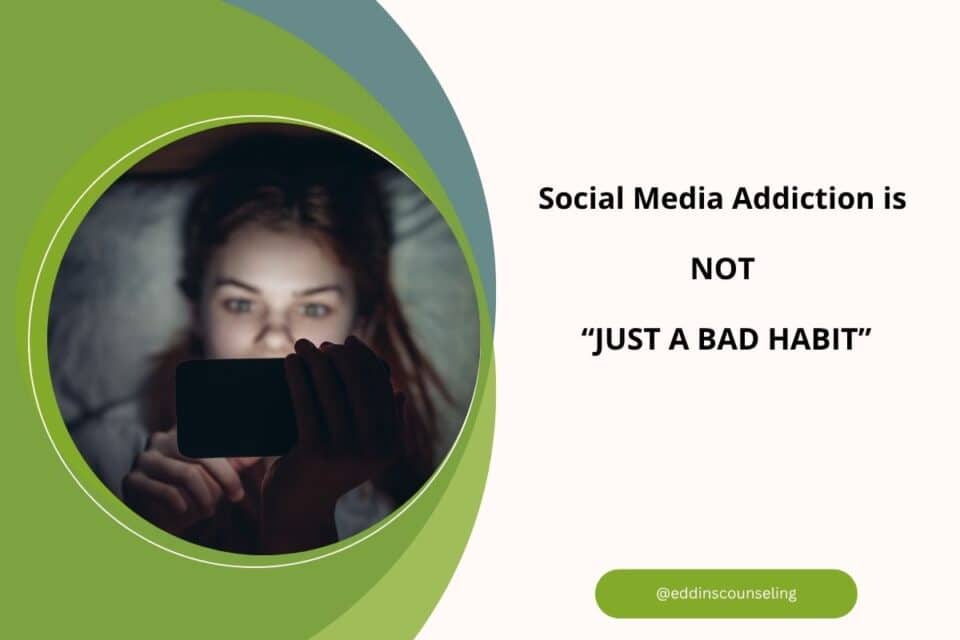
- Behavioral addiction is many times considered “just a bad habit” since they involve “typical” human activities.
Behavioral Addiction can be identified by the following criteria:
- A higher frequency of addictive behaviors than the person first intended, often associated with unsuccessful attempts at behavioral control despite persistent desire for change.
- An excessive amount of time is lost when engaging in addictive behaviors. As a result, there is significant adverse impact on functioning in both social and occupational dimensions of the individual’s life.
- The individual is unable to take action to change, despite an awareness or recognition of both physical and psychological problems.
Cognitive and Emotional Changes
Noticeable Cognitive and Emotional Changes occurring during the process of becoming addicted
There are both cognitive and emotional changes that occur during the process of becoming addicted. Some of the cognitive changes are preoccupation with the behavior, an altered evaluation of benefits and afflictions associated with a rewarding behavior, and believing that the problems are attributed to other causes rather than being a consequence of the addictive behavior.
Some of the emotional changes include an increase in anxiousness, emotional pain, and dysphoria, Increased sensitivity to stressors, and difficulty distinguishing between emotions and body sensations.
Symptoms of Behavioral Addiction
- Obsession with the behavior
- Attempts to hide the behavior
- Denial
- Lack of control
- Increased Anxiety
- Depression
- Low self-esteem
- Changes in mood
- Changes in sleep patterns
Some examples of behavioral addiction are gambling disorder, exercise addiction, compulsive buying disorder, and internet addiction disorder. As of now, gambling disorder is the only behavioral addiction that is currently listed in the DSM-5.
Internet Addiction Disorder (IAD)
One of the fastest-growing behavioral addictions is internet addiction disorder. Adolescents with this disorder will notice increased tolerance of the behavior, a significant dependence on the behavior, and will experience withdrawal symptoms if they stop the addictive behavior.
Some of these withdrawal symptoms may include intense anxiety, irritability, boredom, and depressed moods. Those with preexisting depression, social anxiety, and substance dependence may be even more prone to developing internet addiction disorder.
Adolescents with internet addiction disorder are usually unable to cope with stress, developmental challenges, and social anxiety.
Individuals who may have a predisposition to impulse control disorders find themselves in a position where the use of the internet has become a problem for them, for their families, at work, and with their finances. These individuals isolate themselves from others and spend most or all of their time on the internet.
Internet Addiction Test for Adolescents (IAT-A)
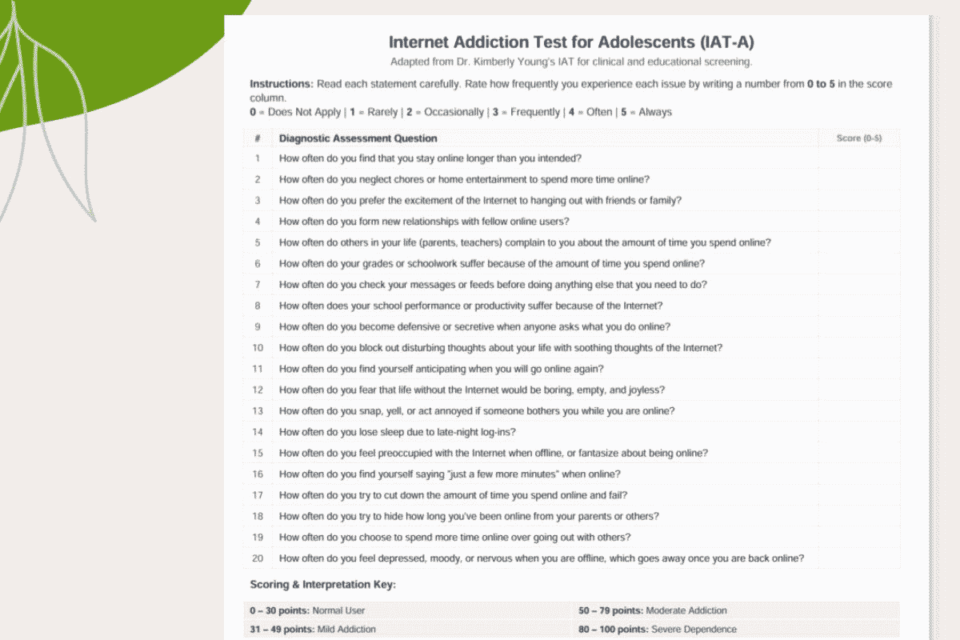
The most effective way to assess this disorder is to use Kimberly Young’s Internet Addiction Test for Adolescents.
Using a Likert scale from 0 to 5, where 0 does not apply, 1 is rarely, 2 is occasionally, 3 is frequently, 4 is often, and 5 is always, how would you score the following questions?
- How often do you stay online longer than intended?
- How often do you find yourself saying, just a few more minutes, when you’re online?
- How often do you check your messages or feeds before doing anything else you need to do?
- How often do you choose to spend more time online over going out with others?
- How often do you lose sleep due to late-night logins?
Social Media Addiction
Social media addiction mostly affects teens and young adults. Some evidence suggests that increased social media use is linked to unsatisfying face-to-face social experiences, boredom, and unhappiness. Social media platforms encourage endless scrolling, impulsive behaviors, and the need for instant gratification.
Variable reward systems have been incorporated into social media platforms to increase engagement among users, particularly among teenagers. YouTube and TikTok are the most heavily used online platforms among U.S. adolescents, with Instagram and Snapchat following close behind.
There’s no set amount of time that indicates whether someone is addicted to social media. Experts agree, though, that over 3 hours a day is considered heavy use and can indicate that someone may have a problem with social media use.
Emotional and Social Development in Adolescents
The adolescent years are defined as the shift from childhood to adulthood, and it’s a process that spans over a decade. The cognitive control network in adolescents does not function optimally, leading to stronger reactions to stressful events, and it is therefore more challenging for them to manage powerful feelings.
Adolescents experience Erik Erikson’s theory of Identity vs.Role Confusion, where they explore within themselves to find their distinguishing identities based on their morals and desires for the future.
Adolescents place more emphasis on social virtues due to their increased concern with being viewed positively by others, relying heavily on being accepted by their peer group.
How Tech Giants Hook Adolescents
Adolescents can lose track of time and find themselves engaged in prolonged platform sessions simply by continuously scrolling since there are no page breaks. Posts are personalized based on the adolescent’s previous interactions and preferences. Adolescents are prompted to check their profiles often by the thrill created by alerts about new likes, comments, or messages.
Communication Channels used by Adolescents
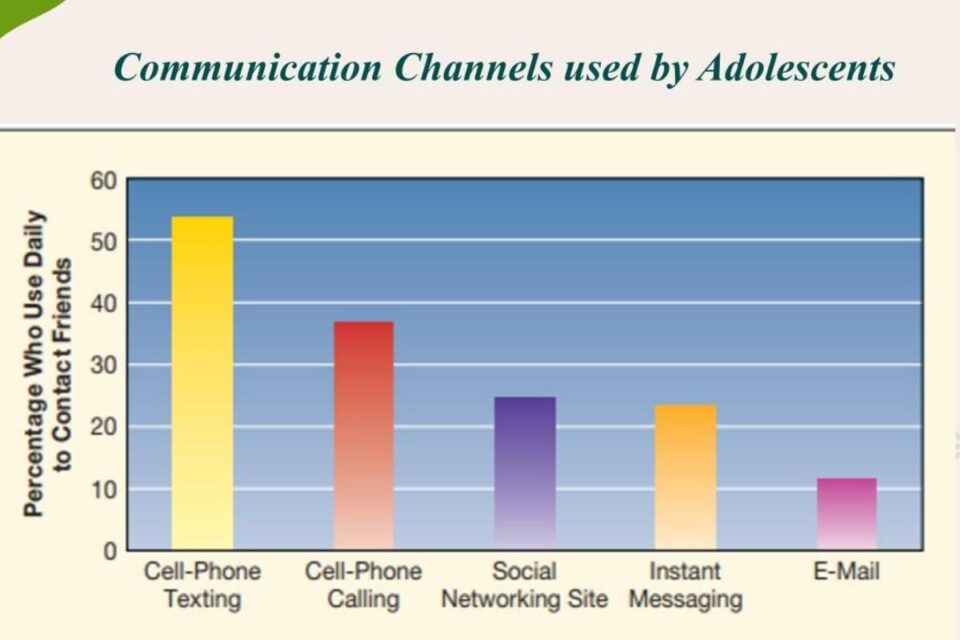
The way adolescents communicate with each other is primarily through some form of technology. It is not restricted to cell phones only, as we see on this graph. These other channels of communication take more time and attention away from healthier face-to-face interactions with peers.
Adolescent Brain Development
Let’s take a moment to discuss adolescent brain development. The prefrontal cortex is the brain’s logic and impulse control center and is still not fully developed during adolescence.
The amygdala helps adolescents process social cues, peer acceptance, and status. It matures faster than the prefrontal cortex, causing adolescents to feel emotions that are more intense, volatile, and difficult to self-regulate, giving them a feeling that they are on an emotional roller coaster.
Due to the mismatch of development between the cognitive control system and the socio-emotional incentive processing system, adolescents are more likely to act on impulse, misinterpret social cues and emotions, or engage in risky behavior.
What Happens when Adolescents are on Social Media Platforms
Social media addiction can disrupt the way the brain manages dopamine, a neurotransmitter involved with feelings of pleasure. A simple thumbs-up will result in their brain releasing a tiny bit of dopamine, giving them a feeling of gratification. Adolescents will scroll through various platforms and constantly check their phones, waiting for that coveted like symbol.
The impulse control center development is disrupted as adolescents receive more of these continuous rewards, and weakens their ability to manage their own impulses. For younger internet users, this disruption can wreak havoc on their still-developing brains, leading to impulsive, addictive behaviors and poor mental health.
A loop is created every time an adolescent receives a thumbs-up or a like. This social reward leads to repetitive checking behavior in the hope of receiving even more likes, and the cycle continues.
Negative feedback on posts leads adolescents to feel anxious and also leads to compulsive scrolling to avoid the possibility of missing out. Algorithms pick up on the adolescent’s triggers and feed them more of it, keeping the emotional motor running to maximize screen time.
Possible Effects of Social Media Addiction
Peer pressure is evident in digital environments where the pursuit of validation can lead to increased social media usage, negatively impacting mental health and resulting in depression, low self-esteem, and anxiety.
Depression can negatively affect how a person thinks, feels, acts, and perceives the world, disrupting an adolescent’s sleep, eating habits, or studying.
Adolescents with poor self-esteem turn to social media for affirmation, which may heighten their already inferior feelings.
Occasionally, anxiety is a part of life. However, adolescents who develop anxiety disorders have excessive and persistent worry about everyday situations.
Pew Research Center Survey Results from 2025
45% of adolescents self-report they spend too much time on social media.
Adolescent girls are more likely than boys to say social media hurt their mental health, hurt their confidence, or hurt their sleep habits. When parents are asked about what most negatively impacts their adolescents, social media is the top reason they give.
What Can Parents Do to Prevent Social Media Addiction?
- Enforce the ‘No Phones in the Bedroom Overnight’ Rule.
- Designate dinner time to be a tech-free zone.
- Remove social media apps from the phone and use them only on a computer.
- Disengage from all social media platforms at least one hour before going to sleep.
- Parents should put their own phones away when talking to their teens.
Many schools have already implemented a rule that no phones may be taken out during the school day. This is definitely a step in the right direction.
Techniques Used to Manage Social Media Addiction
Some techniques that can be used to manage social media addiction are cognitive behavioral therapy, which can assist adolescents in identifying and reframing unhelpful patterns in their thoughts and feelings that trigger maladaptive behaviors.
Mindfulness training can encourage adolescents to become more aware of their thoughts, feelings, and behavior in the moment.
Self-regulation strategies can include setting specific time limits on social media use and creating designated offline times.
Using CBT to Reframe Digital Anxiety
Using CBT to reframe digital anxiety. Here’s an example. Adolescents feel an intense, immediate physical urge to check their phones due to an unhelpful cognitive distortion.
The Unhelpful Thought:
After receiving a text, an Adolescent’s reaction may be: “If I don’t reply right now, my friends will hate me and leave me out.” Ask the Adolescent if any friend has truly ever stopped liking them because it took extra time to reply.
The New Thought:
“My true friends know I care about them. They get busy, and I’m allowed to step away from my screen.”
Social media addiction is not just a bad habit. It is a real struggle caused by tech apps that target an adolescent’s developing brain. This constant screen time can hurt their mental health. By replacing digital likes with real-world connections, we can help our kids win back their sleep, their time, and their mental health.
Thank you for joining us this evening.
Feel free to visit additional resources:
1. Articles on specific topics on our blog.
2. RSVP for one of our free monthly webinars (or view past webinars)
3. Follow us on Facebook and Instagram for additional interviews and tips
4. Take another one of our self-test quizzes
5. Schedule a consult and find out how we can support you.
Social media can become such a constant part of daily life that we may not realize how much time and attention it takes away from other things. Scrolling through feeds, checking notifications, and comparing ourselves to others can become automatic habits that are difficult to break. Over time, excessive social media use can affect sleep, concentration, self-esteem, relationships, and emotional well-being. When online activity starts to feel more like a compulsion than a choice, taking a step back can help you recognize your habits, understand what drives them, and regain a healthier sense of balance.
At Eddins Counseling & Therapy Group, we understand how difficult it can be to change habits that have become part of everyday life. Through therapy, you can explore the emotional needs behind excessive social media use, recognize triggers, and develop healthier ways to manage stress, loneliness, boredom, or anxiety. Therapy can also help you set boundaries around screen time, strengthen self-esteem, improve relationships, and reconnect with activities that bring meaning and fulfillment beyond the digital world. With greater self-awareness and practical coping strategies, you can work toward a healthier relationship with technology without feeling disconnected from the people and interests that matter to you.
We offer both in-person and online therapy sessions to meet your needs. Call us today at 832-323-2355 or book an appointment online to explore how therapy can help you understand your social media habits, regain control of your time and attention, and build healthier daily routines.