
July 9, 2026
Emotional Triggers That Keep You Stuck in Unhealthy Coping Cycles
Written by Guest Author
Posted in Emotional & Mental Health, Self Help / Personal Development and with tags: coping skills, emotion regulation, mental health challenges

A single text message, sharp tone, crowded room, or sudden change in plans can send the nervous system into protection mode. Many people do not realize that emotional triggers that keep you stuck in unhealthy coping cycles often begin as fast reactions to old pain. The coping pattern may feel helpful at first. It may numb anxiety, avoid conflict, reduce shame, or create a short break from pressure. The problem is that short-term relief can become a loop. A person feels triggered, reaches for the same coping response, feels temporary relief, and then feels worse when the original emotion returns.
Why Do Emotional Triggers Feel So Automatic?
Emotional triggers feel automatic because the brain reacts to threat before the thinking mind can slow things down. A trigger can activate fear, sadness, anger, shame, or panic in seconds. The reaction may seem too strong for the situation, but the nervous system may be responding to an older pattern.
Unhealthy coping cycles are not signs of weakness. They often develop because a person learned to survive stress in the fastest way available. Someone may shut down, overthink, lash out, isolate, people-please, binge, scroll, avoid, or overwork. Each response may offer quick relief, but the deeper feeling often remains unresolved.
What Are Emotional Triggers?
Emotional triggers are cues that activate a strong emotional reaction. A cue can be a person, place, tone, memory, expectation, conflict, or body sensation. The trigger does not need to look dramatic from the outside. A small moment can feel intense when the brain connects it to past stress.
Triggers often point to places where emotional safety feels threatened. A person may react strongly to criticism because criticism once felt humiliating. Another person may panic during silence because silence once meant rejection. Someone else may feel anger when plans change because unpredictability once felt unsafe.
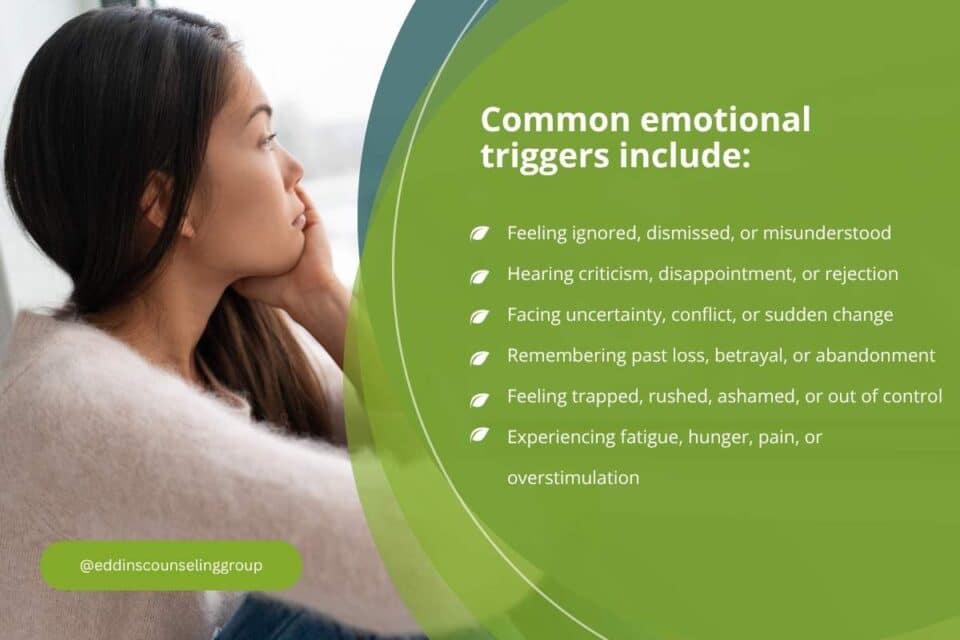
Common emotional triggers include:
- Feeling ignored, dismissed, or misunderstood
- Hearing criticism, disappointment, or rejection
- Facing uncertainty, conflict, or sudden change
- Remembering past loss, betrayal, or abandonment
- Feeling trapped, rushed, ashamed, or out of control
- Experiencing fatigue, hunger, pain, or overstimulation
Why Do Triggers Lead To Unhealthy Coping?
Triggers lead to unhealthy coping because the body wants relief faster than the mind can process the emotion. The nervous system often chooses the most familiar response, not the healthiest one. Familiar coping can feel safe because the brain already knows the pattern.
Some emotional triggers that can cause relapse are connected to shame, loneliness, conflict, grief, or feeling out of control. A relapse can be emotional, behavioral, or substance-related. In each case, the trigger creates pressure, and the coping response offers a temporary escape.
How Can Support Change The Cycle?
Support changes the cycle by giving a person more tools before the next trigger appears. A healthy support system helps people identify patterns, reduce isolation, and practice safer responses. Support may include therapy, group care, recovery programs, family education, or structured wellness routines.
People who are healing from substance use, trauma, anxiety, or depression often need more than advice. They may need consistent care, accountability, and a plan for high-risk moments. Lake Point Recovery & Wellness has seen this play out often enough to notice a pattern: people who rebuild that stability fastest are the ones with structure and accountability built into their daily routine, not just a weekly appointment to look forward to.
Why Is Avoidance So Hard To Break?
Avoidance is hard to break because avoidance works in the short term. Avoiding a conversation, task, feeling, or memory can lower distress quickly. The brain then learns that escape equals safety. Over time, the avoided situation may feel even more threatening.
Avoidance can look productive from the outside. A person may stay busy, overachieve, clean, plan, work, or help everyone else. The pattern becomes unhealthy when activity is used to outrun emotion. Real healing requires making room for the feeling without letting the feeling control every choice.
What Happens When Anxiety Becomes A Loop?
Anxiety becomes a loop when fear leads to safety behaviors that keep fear alive. A person may seek reassurance, check repeatedly, avoid uncertainty, or mentally replay every possible outcome. These responses reduce anxiety for a moment, but they teach the brain that uncertainty is dangerous.
Learning how to manage the anxiety cycle begins with noticing the pattern before trying to force calm. A person can ask, “What am I afraid will happen?” and “What am I doing to feel safe right now?” Clear questions help separate real danger from emotional alarm.
Why Do Difficult Emotions Feel Unmanageable?
Difficult emotions feel unmanageable when a person has not learned how to feel them safely. Many people were taught to ignore sadness, hide anger, suppress fear, or move on quickly. Emotional control may have been praised, while emotional honesty may have been discouraged.
Coping with difficult emotions does not mean liking the emotion or letting it take over. Healthy coping means noticing the emotion, naming the need, and choosing a response that does not create more harm. The goal is not to feel calm all the time. The goal is to feel capable when calm is not available.
What Are Healthier Ways To Respond To Emotional Pain?
Healthier responses to emotional pain help a person stay connected to the present moment. Emotional pain often demands immediate action, but immediate action is not always wise action. A pause can create enough space to choose care instead of escape.
Healthy ways to cope with emotional pain may include:
- Naming the emotion without judging it
- Taking slow breaths while relaxing the shoulders
- Writing down the fear before reacting to it
- Calling a trusted person instead of isolating
- Walking, stretching, or moving gently
- Setting one small boundary before resentment grows
- Scheduling therapy when patterns keep repeating
How Does Shame Keep A Coping Cycle Alive?
Shame keeps a coping cycle alive by turning a painful moment into a painful identity. Guilt says, “I did something I regret.” Shame says, “Something is wrong with me.” Shame makes people hide, defend, withdraw, or punish themselves emotionally.
Shame also makes support feel risky. A person may fear being judged, rejected, or exposed. The more shame grows in private, the stronger the coping cycle can become. Safe therapy helps a person speak honestly without being reduced to the hardest habit.
Why Do People Repeat Patterns They Want To Stop?
People repeat unwanted patterns because emotional habits are built through repetition. A person may know what would be healthier and still return to what feels familiar. Knowledge helps, but practice changes the nervous system.
A coping cycle often has a clear sequence. A trigger appears, the body reacts, the mind tells a story, and the person responds. The response creates relief or regret. Emotional triggers that keep you stuck in unhealthy coping cycles lose power when that sequence becomes easier to notice.
What Role Does The Body Play In Emotional Triggers?
The body plays a major role because emotions are physical experiences, not just thoughts. A racing heart, tense jaw, tight chest, upset stomach, or shallow breathing can make a trigger feel urgent. The body may react before a person understands why.
Body-based awareness can help a person interrupt the cycle early. Someone may notice clenched hands before yelling, nausea before avoiding, or heaviness before shutting down. These signals are not failures. These signals are early warnings that care is needed.
How Can You Tell The Difference Between A Trigger And A Real Problem?
A trigger is not always false, and a real problem is not always dangerous. The difference often becomes clearer when a person slows down. A trigger usually carries emotional intensity from the past. A real problem usually requires a practical response in the present.
A helpful question is, “What part of this situation belongs to today?” Another helpful question is, “What part feels older than today?” These questions reduce emotional flooding. They also help a person respond to the current situation instead of reacting to an old wound.
What Are The Signs Of An Unhealthy Coping Cycle?
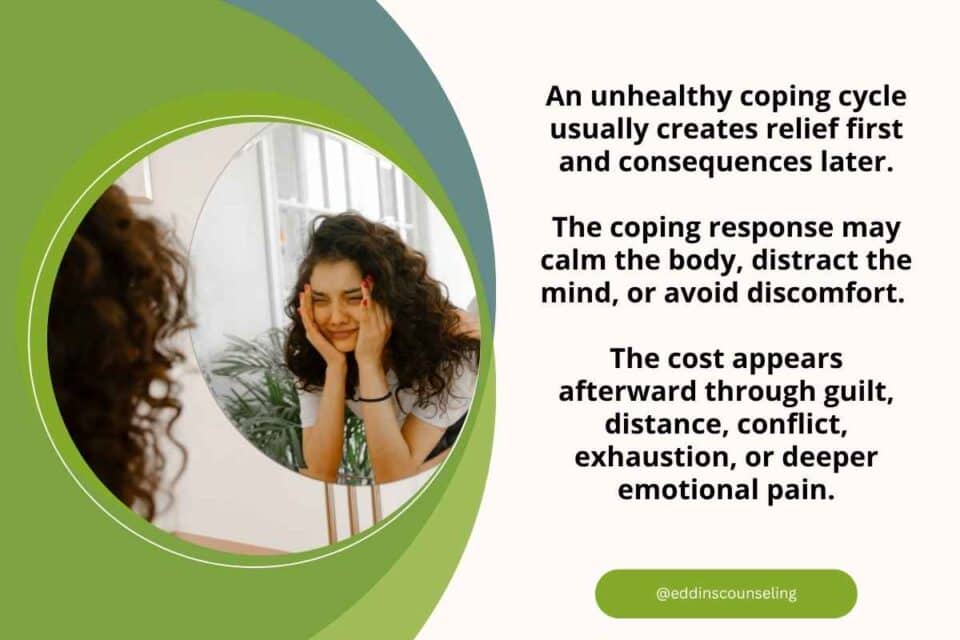
An unhealthy coping cycle usually creates relief first and consequences later. The coping response may calm the body, distract the mind, or avoid discomfort. The cost appears afterward through guilt, distance, conflict, exhaustion, or deeper emotional pain.
Warning signs may include:
- Feeling controlled by the same reaction
- Needing more intensity to feel relief
- Avoiding people, responsibilities, or feelings
- Feeling shame after coping behaviors
- Making promises that are hard to keep
- Returning to the same emotional crisis
- Feeling unable to pause before reacting
How Can Therapy Help With Trigger Patterns?
Therapy helps by making hidden patterns easier to see and change. A therapist can help identify triggers, emotional beliefs, body signals, and coping responses. Therapy also offers a safe place to practice new responses before life becomes overwhelming.
Different therapy approaches may help in different ways. Cognitive behavioral therapy can address anxious thoughts. Trauma-informed therapy can help the body feel safer. Emotion-focused work can build tolerance for painful feelings. Couples or family therapy can change patterns that happen in relationships.
How Can You Create A Plan Before The Next Trigger?
A trigger plan helps because the hardest moment is not the best time to invent a new coping strategy. A person can prepare while calm. The plan should be simple, realistic, and easy to use during emotional stress.
A strong trigger plan may include three parts. First, name the common trigger. Second, name the usual coping response. Third, choose one healthier action that can happen before the old response takes over. Emotional triggers that keep you stuck in unhealthy coping cycles become easier to manage when the plan is small enough to use on a difficult day.
What Can You Do In The First Five Minutes?
The first five minutes matter because the body often decides the direction of the coping cycle early. A person does not need to solve the whole problem immediately. A person only needs to create enough space to avoid making the situation worse.
A useful first step is to stop and orient to the room. A person can name five things they see, place both feet on the floor, and lengthen the exhale. These actions tell the nervous system that the present moment is safer than the emotional alarm suggests.
Why Do Boundaries Matter In Emotional Healing?
Boundaries matter because emotional healing requires protection from repeated overload. A boundary is not a punishment. A boundary is a clear limit that helps a person stay honest, respectful, and emotionally safe.
Healthy boundaries can reduce triggers tied to resentment, pressure, and overextension. A person may limit certain conversations, slow down commitments, or ask for time before answering. Boundaries also teach the nervous system that safety can come from direct communication instead of avoidance.
When Should You Seek Professional Help?
Professional help is important when triggers interfere with relationships, work, health, recovery, or daily functioning. Therapy can also help when coping behaviors feel hard to control or emotional reactions feel frightening. A person does not need to wait until life falls apart before asking for support.
Counseling can provide structure for people who feel stuck in repeating cycles. A therapist can help create a plan for anxiety, grief, trauma, depression, relationship stress, or major life changes. Support is especially useful when self-help strategies have not been enough.
The Healthier Path Forward
The healthier path forward begins with understanding that emotional triggers that keep you stuck in unhealthy coping cycles are signals, not life sentences. A trigger points to a place that needs care, support, and new skills. The old coping response may have helped once, but a person can learn safer ways to respond now.
Healing takes patience because coping patterns are often formed during painful seasons. Therapy, support, self-awareness, and daily practice can help the nervous system learn new options. A person does not have to be controlled by every emotional alarm. With the right support, a trigger can become the start of insight instead of the start of another unhealthy cycle.
Author’s bio:
Stephanie Garner is the CEO of Lake Point Recovery & Wellness, a residential addiction and mental health treatment program in Russellville, Arkansas, operated under ARVAC Incorporated. A graduate of Arkansas Tech University and based in Dardanelle, Arkansas, she leads Lake Point’s mission to treat substance use and mental health challenges with dignity and individualized care, with a particular focus on keeping families together through services like the program’s onsite childcare for mothers in treatment. Under her leadership, Lake Point has continued a legacy of care that traces back to the facility’s founding in 1975.
Feel free to visit additional resources:
1. Articles on specific topics on our blog.
2. RSVP for one of our free monthly webinars (or view past webinars)
3. Follow us on Facebook and Instagram for additional interviews and tips
4. Take another one of our self-test quizzes
5. Schedule a consult and find out how we can support you.
Breaking the Cycle Starts with Support
Emotional triggers and unhealthy coping cycles can affect every part of life, from relationships and work to physical health and overall well-being. When familiar patterns of avoidance, emotional shutdown, people-pleasing, overthinking, substance use, or other coping behaviors become the default response to stress, it can feel difficult to imagine a different way forward. Over time, these cycles often contribute to increased anxiety, depression, shame, relationship conflict, and emotional exhaustion, leaving people feeling stuck despite their best efforts to change. The good news is that these patterns are learned, which means they can also be unlearned with the right support, guidance, and practice.
At Eddins Counseling & Therapy Group, we understand that lasting change comes from addressing both the emotional triggers and the coping patterns that follow them. Our therapists help clients identify the experiences driving automatic emotional reactions while developing practical skills to respond more intentionally. Through evidence-based approaches, clients learn techniques for emotional regulation, grounding, mindfulness, boundary setting, healthier communication, and managing anxiety before it escalates into familiar coping behaviors. Whether you’re navigating anxiety, depression, trauma, relationship challenges, or recurring emotional overwhelm, our goal is to help you build greater resilience, self-awareness, and confidence in responding to life’s challenges.
We offer both in-person and online therapy sessions to meet your needs. Call us today at 832-559-2622 or book an appointment online to begin breaking free from unhealthy coping cycles and developing healthier, more effective ways to respond to emotional triggers.
Why You Feel This Way
Get instant access to your free ebook.
Blog Categories
Join a Therapy Group
Events
List of events in Photo View
-
Adult DBT Skills Evening Group | Eddins Counseling
Virtual Event -
-