
November 8, 2024
How to Support Your Children Through Divorce: Building Resilience and Stability
Written by Guest Author
Posted in Parenting & Family and with tags: divorce, family, parenting

Divorce is challenging and can cause uncertainty and stress as a family navigates changes in the home and family structure. Hence, supporting your children through this transition is crucial for helping them build resilience and a sense of stability.
Below, we explore strategies to ease this process for your children. We also discuss the importance of keeping children out of parental conflicts and recognizing when professional support may be necessary.
Practical Strategies to Support Your Children Through Divorce
Divorce proceedings can significantly impact children, even if indirectly. The legal process can be stressful, and when emotions run high, children often pick up on this tension, leading to feelings of confusion, fear, or insecurity.
One effective way to minimize the impact on your children is by seeking compassionate representation that prioritizes their emotional well-being. Choosing an attorney who understands the importance of maintaining a respectful, child-centered approach can help ease the process.
To further protect your children, avoid courtroom drama whenever possible. Opting for mediation or a collaborative divorce process can keep the proceedings out of a public courtroom setting, reducing the adversarial nature of the process and minimizing the likelihood of drawn-out battles.
Throughout the process, keep your children’s well-being at the center of your decisions.
In addition to those strategies, do the following:
Seek Professional Support if Needed
Recognizing when extra help is necessary begins with observing your child’s behavior and emotional responses. Withdrawal, severe anxiety, changes in eating or sleeping patterns, or noticeable shifts in behavior may indicate that they are finding it hard to process their emotions. These signs often suggest that they could benefit from talking to a professional who can provide them with the tools and guidance they need to navigate their feelings.
As such, a trained therapist can facilitate open communication, helping family members express their emotions constructively. This guided support can strengthen the parent-child relationship and give parents insights into their children’s feelings and concerns. Family counseling can also teach effective coping strategies for everyone involved, promoting a healthier adjustment to the new family structure.
In addition to individual or family therapy, peer-support programs can be a valuable resource. Group therapy sessions designed for children of divorced parents allow them to connect with others who are experiencing similar challenges. These settings provide a sense of community and can help children feel less isolated in their experiences.
Open, Honest Communication

Younger children may need simple explanations without too many details, while older children and teens may benefit from a more thorough conversation. Regardless of age, ensure clarity. Avoiding vague explanations can help prevent children from drawing conclusions, which are often more alarming than the truth.
In addition to clarity, honesty is crucial. Children will likely have questions, some of which may be difficult to answer. Hence, respond truthfully but gently, focusing on what they need to know without involving the negative aspects of the other parent.
Further, regular reassurance is vital. Divorce can stir feelings of guilt and self-blame in children, as they may mistakenly think they are responsible for the family changes. Remind them often that they are loved and that nothing they did caused the divorce.
Maintain Stability and Routine
Sticking to familiar routines, such as mealtimes, school pickups, and bedtime rituals, allows children to feel grounded, reinforcing the idea that not everything in their world has changed.
This steady rhythm can be incredibly comforting when so much else feels uncertain. In addition to maintaining established routines, creating new traditions with each parent can be a positive way for children to adjust and still feel connected to both parents. These new traditions don’t need to be elaborate; they can be as simple as a weekly movie night, a special breakfast ritual, or a weekend outing.
It’s also beneficial to avoid major disruptions, like moving houses or changing schools, especially in the early stages of the divorce. Such changes can add stress and make it harder for children to adapt. If possible, minimizing these adjustments can allow children to focus on emotionally processing the divorce without additional upheaval.
Encourage Emotional Expression
Validating their feelings is the first step in supporting them through this journey. Parents can do this by actively listening to their children and acknowledging their emotions, whether they’re feeling sadness, anger, confusion, or even relief. Simple affirmations like, “I understand this is hard for you,” can provide immense comfort, letting children know their emotions are valid and that they are not alone in how they feel.
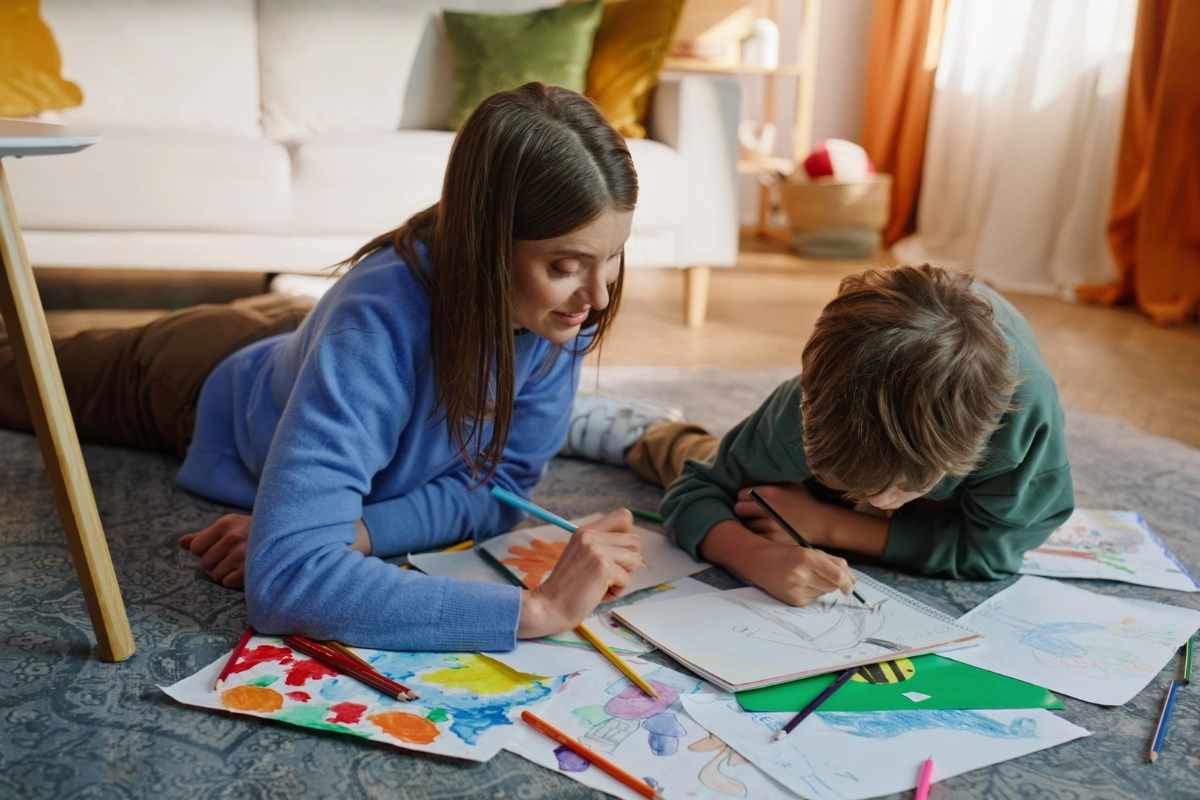
Teaching healthy coping mechanisms is another way to support children emotionally. Encouraging activities like journaling, drawing, or talking with a trusted adult provide them with constructive outlets for their feelings. Journaling, for example, allows them to express their thoughts privately, while creative activities like drawing or painting can help release emotions
they may not be able to put into words.
Children may act out or revert to previous behaviors like bedwetting or clinginess. Rather than reacting with frustration, understanding that these changes are temporary and linked to their emotional processing can make a big difference.
Avoid Putting Children in the Middle
One way to do this is by ensuring children do not play the “messenger” role between parents. Using children to relay messages can place unnecessary stress on them. This practice can also make them feel responsible for managing the relationship between their parents, which is a burden they shouldn’t have to bear. Instead, parents should find other ways to communicate directly with each other, keeping children out of these adult conversations.
Protecting children from conflict is equally important. Witnessing arguments, tension between parents, or hearing negative comments can make children feel torn, anxious, or even responsible for choosing sides.
Conclusion
The journey through divorce can be deeply challenging for children, reshaping their sense of family and security. As parents, your involvement and commitment to their well-being impact how they process this change and rebuild a sense of stability. As such, show them they’re unconditionally loved and that both parents care about their happiness. Such commitment creates a foundation of trust and resilience.
Feel free to visit additional resources:
1. Articles on specific topics on our blog.
2. RSVP for one of our free monthly webinars (or view past webinars)
3. Follow us on Facebook and Instagram for additional interviews and tips
4. Take another one of our self-test quizzes
5. Schedule a consult and find out how we can support you.