

September 25, 2024
Top 15 Mental Health Activities for College Students to Stay Balanced
Written by Guest Author
Posted in Emotional & Mental Health and with tags: mental health, mental health challenges, self improvement, students

College life, while exciting, can also be a source of significant stress with its academic demands, social challenges, and often a student’s first foray into living independently. Maintaining mental health during these formative years is crucial as it can affect learning, relationships, and overall well-being. Engaging regularly in mental health activities tailored for college students can help manage stress, reduce anxiety, and enhance academic performance, paving the way for a healthier lifestyle.
As students navigate their rigorous academic schedules, many find themselves overwhelmed with coursework and major assignments such as capstone projects. Choose DoMyEssay to write your essay as a practical solution, allowing students to allocate time to take care of their mental wellness without compromising their academic goals.
Top 15 Mental Health Activities for College Students
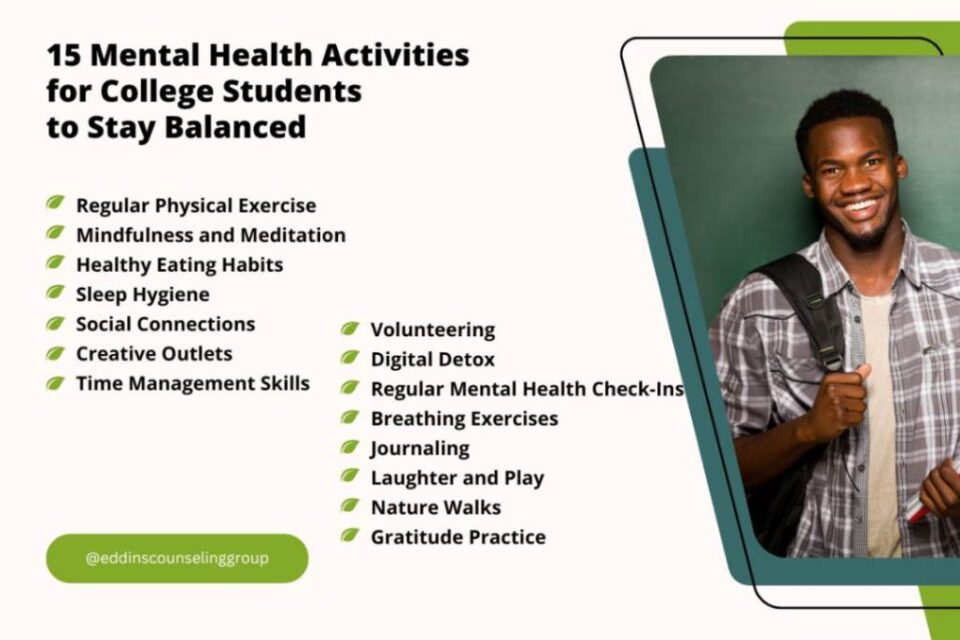
1. Regular Physical Exercise
Boost Your Mental Health Through Movement
Engaging in physical activities ranks among the most beneficial mental wellness activities for students. Regular exercise, whether it’s yoga, running, or team sports, can significantly lower stress levels, improve mood, and enhance mental clarity. It’s recommended that students incorporate at least 30 minutes of moderate exercise into their daily routine to experience these benefits.
Physical activity stimulates the production of endorphins, which are natural chemicals in the brain that act as mood lifters and pain relievers. Additionally, regular physical activity aids in regulating sleep patterns, further boosting mood and mental health. Group sports and fitness classes also offer valuable social interactions, enhancing overall mental wellness.
2. Mindfulness and Meditation
Cultivate Calmness and Focus
Mindfulness and meditation practices enable students to focus their thoughts and soothe their minds. These methods are highly effective in alleviating stress and improving concentration, making them exceptional wellness activities for students. Apps and campus groups often provide guided sessions to help students get started.
Consistent mindfulness practice reduces anxiety and bolsters resilience against psychological stress, also aiding in handling challenging situations more effectively. Through regular meditation, students can achieve greater peace and mental clarity, supporting both their academic pursuits and personal development.
3. Healthy Eating Habits
Fuel Your Body and Mind
Proper nutrition is crucial for both cognitive function and emotional stability. Consuming a well-rounded diet filled with vegetables, fruits, lean proteins, and whole grains boosts brain function and energy, which benefits students in both their academic pursuits and personal lives.
Eating a balanced diet helps maintain stable blood sugar levels, which can significantly affect your mood and energy throughout the day. Proper nutrition supports brain function and reduces feelings of lethargy and depression. Additionally, understanding the connection between food and mood can empower students to make choices that support their mental health.
4. Sleep Hygiene
Prioritize Rest to Recharge
Getting enough sleep is crucial for mental well-being. College students should strive for 7-9 hours of quality sleep per night to maintain optimal health and cognitive sharpness. Establishing a consistent sleep routine and creating a tranquil environment devoid of distractions such as smartphones or loud music facilitates this.
Sleep significantly affects numerous brain functions, notably the communication between neurons. Research shows that a good night’s sleep improves learning, memory, and insights, which are crucial for achieving academic success. Furthermore, inadequate sleep can lead to emotional and physical health problems, emphasizing the need for good sleep hygiene as a pillar of mental wellness.
5. Social Connections
Strengthen Relationships for Emotional Support
Building and maintaining strong social connections are vital wellness activities for college students. Engaging in student clubs, sports teams, or study groups can provide a support network that fosters emotional resilience during stressful times.
These relationships can offer emotional support, reduce feelings of isolation, and increase feelings of belonging and purpose. Interacting with peers can also provide new perspectives and solutions to personal and academic challenges, making it an essential component of mental health wellness.
6. Creative Outlets
Express Yourself to Relieve Stress

Participating in creative activities such as painting, writing, or playing music provides therapeutic advantages. These activities offer an emotional release and a break from academic pressure, enhancing overall mental wellness.
Creative outlets allow students to convey their emotions in ways that go beyond words, which is particularly advantageous for those who struggle with verbal expression. Whether it’s through creating art, crafting, or journaling, expressing yourself creatively helps reduce anxiety and provides a sense of accomplishment. These activities also promote self-identity and self-awareness, which are critical for personal development during the collegiate years. By dedicating time to creative hobbies, students can build resilience, self-confidence, and a more positive outlook on life.
7. Time Management Skills
Organize Your Life to Reduce Stress
Effective time management is critical for reducing college stress. Using planners, apps, and prioritization techniques can help students manage their workload more efficiently, leaving more time for relaxation and social activities.
When students effectively plan their schedules, they can avoid the overwhelming feeling that often accompanies juggling multiple responsibilities. It helps in setting clear priorities, ensuring that important tasks like assignments and exams are completed on time without last-minute stress. Additionally, good time management enables students to balance academic life with self-care, making time for physical exercise, creative outlets, or social engagements. By achieving a balanced work-life schedule, students can enhance their mental health and academic outcomes.
8. Volunteering
Give Back and Gain Perspective
Volunteering offers a profound sense of purpose and satisfaction, which positively impacts mental health. Engaging in community service or campus-based mental health event ideas for college students can enrich your college experience and broaden your perspective.
Helping others fosters a sense of fulfillment and connection, which can alleviate feelings of loneliness or isolation that some students experience. Furthermore, volunteering nurtures empathy and gratitude, crucial qualities for emotional wellness. Whether it’s through local charities, campus clubs, or peer mentoring, volunteering allows students to contribute to causes they care about while developing personal skills like leadership and teamwork. Moreover, the positive impact on the community reinforces a student’s sense of belonging and value.
9. Digital Detox
Unplug to Reconnect with Yourself
Taking regular breaks from digital devices can prevent information overload and reduce stress. Designate specific times each day or week when you disconnect from all digital screens to clear your mind and improve your mood.
The relentless influx of social media, emails, and notifications can overwhelm the mind, leading to distraction, anxiety, and tiredness. A digital detox allows the brain to rest, boosting focus and productivity when it’s time to get back to work. Furthermore, taking breaks from digital devices gives students the chance to engage in more fulfilling activities, like reading, exercising, or enjoying quality time with friends. By creating boundaries around digital use, students can reclaim control over their time and mental well-being.
10. Regular Mental Health Check-Ins
Stay Aware of Your Mental State
Engaging in mental health check in activities for students allows for early detection and management of potential mental health issues. Many colleges offer resources for mental health assessments, counseling, and therapy that can be highly beneficial.
Regularly reflecting on your mental health can help you recognize when you’re feeling overwhelmed, anxious, or emotionally drained. Recognizing early signs of stress or distress enables students to seek necessary support before potential escalation into more serious mental health issues. Mental health check-ins can involve journaling, speaking with a counselor, or simply discussing your feelings with a trusted friend. Maintaining open lines of communication about mental health ensures students are better equipped to manage stress and maintain emotional balance throughout their college years.
11. Breathing Exercises
Calm Your Mind and Body
Breathing exercises provide a straightforward yet effective method for alleviating stress and enhancing mental clarity. By practicing controlled breathing techniques such as deep breathing or box breathing, students can quickly reduce feelings of anxiety and regain focus. These exercises help lower cortisol levels, the hormone responsible for stress, while also increasing oxygen flow to the brain, promoting relaxation.
Breathing exercises can be done anywhere, whether between classes, during a study break, or before exams. As part of your mental wellness routine, incorporating these exercises can help you remain calm and centered throughout your busy college days.
12. Journaling
Reflect and Release Your Thoughts

Journaling is an excellent way for students to process emotions, reflect on daily experiences, and organize their thoughts. Writing down your feelings can provide clarity and act as an emotional release, allowing students to navigate challenges with greater ease. By journaling regularly, you can track patterns in your mood and mental health, which can be helpful for identifying triggers or areas that need attention.
Moreover, journaling helps in setting personal goals and celebrating small victories, providing a sense of accomplishment. As a wellness activity for students, it encourages self-reflection and emotional awareness, which are key for long-term mental health.
13. Laughter and Play
Release Tension and Boost Mood
Engaging in laughter and playful activities is an effective way to combat stress and improve mental well-being. Whether watching a funny video, playing games with friends, or simply enjoying a lighthearted conversation, laughter releases endorphins and relaxes the body. Playful activities also offer a mental break from academic responsibilities, giving students time to recharge.
Incorporating fun and laughter into your routine not only improves mood but also strengthens social bonds, which are essential for emotional support during college. Laughter is truly one of the simplest yet most impactful mental health tips for college students.
14. Nature Walks
Reconnect with Nature to Refresh Your Mind
Engaging with the outdoors and spending time in natural environments is a well-documented strategy for improving mental health and mitigating stress. Taking a nature walk, whether through a park or around campus, provides fresh air and a change of scenery, which can help reset your mental state. Immersing oneself in nature not only fosters mindfulness but also encourages students to fully engage in the present moment and savor their environment.
Studies indicate that time spent in green spaces significantly decreases stress hormones and alleviates anxiety symptoms, thereby uplifting one’s mood. Nature walks are an easy and enjoyable way to maintain both physical and mental well-being, offering a peaceful retreat from the demands of college life.
15. Gratitude Practice
Shift Your Focus to Positivity
Cultivating a habit of gratitude is an impactful approach to strengthening mental health and overall well-being. By consciously appreciating the small and large aspects of one’s life, individuals can reorient their focus from stressors and challenges to a more positive outlook. Writing down three things you’re grateful for each day can foster a more optimistic outlook and improve your overall mood.
Consistently engaging in gratitude practices has been shown to reduce symptoms of depression and anxiety, enhancing overall well-being. As a mental health activity for college students, gratitude practice encourages mindfulness and a greater appreciation for the positive aspects of life, helping you maintain emotional balance amidst academic pressures.
Conclusion
Engaging in these health and wellness activities for students aimed at promoting mental health is crucial for maintaining balance, reducing stress, and ensuring academic and personal success. By incorporating these activities into their daily routines, students can significantly improve their mental wellness and quality of life during their college years. It is essential to recognize that maintaining mental health is just as crucial as looking after physical health and attaining academic goals.
Start today to reap the benefits of a well-balanced college experience. Whether through mental health awareness activities for students, creative outlets, or physical exercise, these strategies can help you stay balanced and thrive in your academic journeys.
Feel free to visit additional resources:
1. Articles on specific topics on our blog.
2. RSVP for one of our free monthly webinars (or view past webinars)
3. Follow us on Facebook and Instagram for additional interviews and tips
4. Take another one of our self-test quizzes
5. Schedule a consult and find out how we can support you.
Why You Feel This Way
Get instant access to your free ebook.
Blog Categories
Join a Therapy Group
Events
List of events in Photo View
-
Adult DBT Skills Evening Group | Eddins Counseling
Virtual Event -
-