
July 1, 2024
How to Safely Face Feelings of Overwhelm
Written by Guest Author
Posted in Emotional & Mental Health, Self Help / Personal Development, Stress Management and with tags: mental health challenges, overwhelm, self care, stress management

Sometimes, when life seems to keep piling up the stresses, it is easy to succumb to feeling overwhelmed. Whether it stems from work, relationships, finances, unexpected life changes, or all of the above – feeling overwhelmed can quickly become a default and all-consuming state of mind.
In such circumstances, it can be difficult to think clearly or make decisions – factors that, in themselves, exasperate the problem. In effect, it becomes a vicious circle. This is why it is essential to address and manage feelings of overwhelm to maintain mental health and overall well-being.
If this sounds familiar then don’t worry, you’re not alone. Feeling overwhelmed is an intense emotional state that affects millions of people. A study undertaken by the UK-based Mental Health Foundation found that 74% of adults felt overwhelmed or unable to cope. A statistic that is both startling and worrying.
This article aims to provide a comprehensive guide on how to safely face these intense emotions. We will explore practical strategies for immediate relief, long-term management techniques, and the importance of professional support, we also include plenty of advice from experts in the field.
Understanding Overwhelm
A simple definition of feeling overwhelmed is – Overwhelm is a state of being where the demands placed upon us exceed our ability to cope effectively.
In many instances, this is a short-term and normal reaction to the pressures of everyday living. However, in some cases, it can quickly become an emotional flood that can leave us feeling hopeless, ineffective, and unable to think clearly. Managing this frame of mind is essential for maintaining positive mental health and ultimately our overall well-being.
Understanding the nature of overwhelm is the first step towards effective management of the condition. How overwhelm manifests itself will vary by individual, but commonly the symptoms include one or more of the following:
- Physical symptoms: Headaches, fatigue, and muscle tension are common physical responses to feeling overwhelmed.
- Emotional responses: Anxiety, irritability, and mood swings often accompany overwhelm.
- Cognitive effects: Difficulty concentrating, memory problems, and impaired decision-making can occur.
- Behavioral changes: Feeling overwhelmed can lead to procrastination, avoidance, and social withdrawal.
Joshua Collins, LCSW, LCADC, CCS, and Clinical Coordinator at SOBA New Jersey, explains, “Overwhelm is a natural response to an overload of stressors. It’s important to acknowledge these feelings and understand that they are a signal from our mind and body that we need to pause, assess, and address our current situation.”
Understanding that feeling overwhelmed is a common and natural response to stress allows you to face it head-on. By recognizing the signs and taking proactive measures, you can break that vicious circle and regain control.
Identifying the Triggers That Can Lead to Feeling Overwhelmed
The triggers that can lead to being overwhelmed will vary depending on the individual. Understanding the specific triggers that you’re susceptible to is another important milestone on your route to beating the condition.
Recognizing these triggers allows you to take proactive steps to mitigate their impact and manage your stress levels effectively.
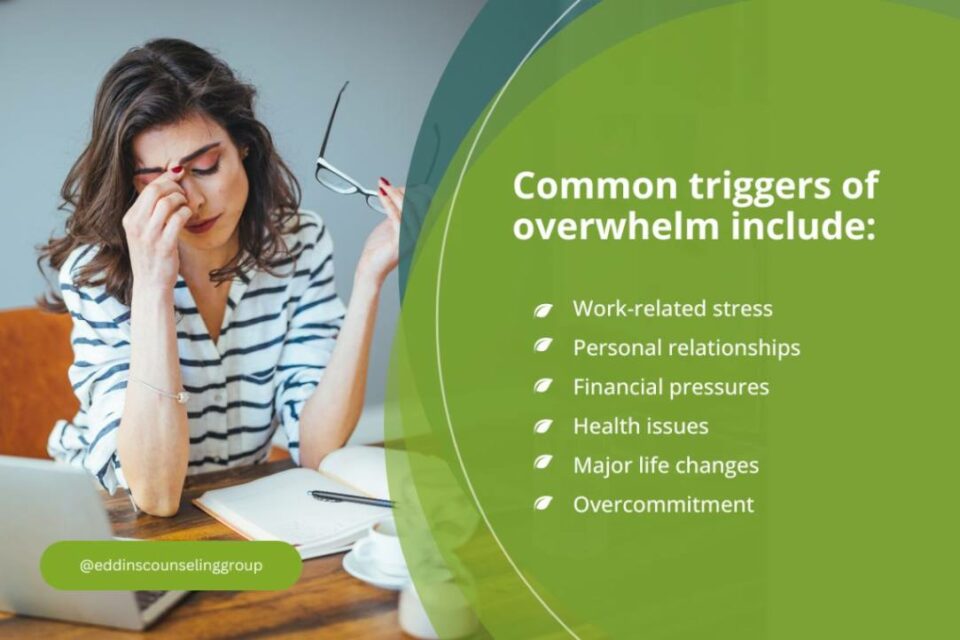
Common triggers of overwhelm include:
- Work-related stress: Tight deadlines, high workloads, and other workplace anxieties can contribute significantly to feelings of overwhelm.
- Personal relationships: Conflicts, lack of support, or high expectations from family and friends can be overwhelming.
- Financial pressures: Debt, unexpected expenses, and financial instability can trigger intense stress.
- Health issues: Chronic illnesses, sudden health problems, and the stress of managing medical conditions can be overwhelming.
- Major life changes: Events such as moving, changing jobs, or significant life transitions can disrupt your sense of stability and lead to overwhelm.
- Overcommitment: Taking on too many responsibilities or not setting boundaries can cause you to feel stretched too thin.
By pinpointing the specific triggers that affect you, it becomes possible to develop strategies to manage them. This might involve setting boundaries, seeking additional support, or prioritizing self-care to ensure you have the resilience to handle life’s demands. Recognizing and addressing your triggers is a powerful step towards breaking the cycle of overwhelm and maintaining your mental health.
This point is corroborated by Briana Sefcik, MS, LCSW, CSAT at The Last Resort, who notes, “Identifying your personal triggers is crucial for developing effective coping strategies. Once you know what typically overwhelms you, you can take steps to minimize exposure to these stressors or better prepare yourself to handle them.”
Immediate Coping Strategies
Considering the bigger picture and developing long-term strategies to defeat overwhelm is the ultimate goal. However, when feelings of being overwhelmed strike, having immediate strategies at your disposal can help you regain control.
These techniques are designed to calm your mind and body, allowing you to address the situation more effectively.
Breathing Exercises
Breathing exercises are a simple yet powerful way to reduce stress and anxiety.
- Deep breathing: Sit or lie down in a comfortable position. Inhale slowly through your nose, filling your lungs completely. Hold your breath for a count of four, then exhale slowly through your mouth. Repeat this process several times until you feel calmer.
- Box breathing: Inhale for four counts, hold for four counts, exhale for four counts, and hold the exhale for four counts. This technique can help regulate your breathing and calm your nervous system.
Grounding Techniques
Grounding techniques help you reconnect with the present moment, reducing the intensity of overwhelming emotions.
- 5-4-3-2-1 method: Identify five things you can see, four things you can touch, three things you can hear, two things you can smell, and one thing you can taste. This exercise engages your senses and helps shift your focus away from stress.

- Physical grounding: Hold onto a physical object, like a stress ball, or focus on feeling your feet on the ground. The tactile sensation can anchor you in the present moment and provide a sense of stability.
Taking Breaks
It is easy to forget just how important taking a step away from the source of our stress can be. Taking regular breaks can prevent burnout and help manage acute feelings of overwhelm.
- Short breaks: Step away from your task for five minutes to clear your mind. Use this time to stretch, hydrate, or simply breathe deeply.
- Longer breaks: Take a 15-30 minute walk outside to get fresh air and change your environment. This can provide a mental reset and reduce stress levels.
Long-term Management Techniques
Short-term coping strategies can be considered a band-aid that can help us through the worst of the immediate consequences of feeling overwhelmed. However, the effective management of the condition requires a long-term approach that incorporates strategies that promote ongoing mental health.
Dr. Edmond Hakimi, Medical Director at Wellbridge, emphasizes, “Developing long-term coping mechanisms is essential for sustaining mental well-being. It’s not just about immediate relief but creating a lifestyle that supports mental health continuously.”
Again, the strategies will vary depending on the individual and the circumstances, but common long-term techniques to help cope with feelings of being overwhelmed include:
Regular Exercise
Physical activity is a proven method to reduce stress and improve mood.
- Cardiovascular exercise: Activities such as walking, running, or cycling release endorphins, which are natural mood lifters. Aim for at least 30 minutes of moderate exercise most days of the week.
- Strength training: Incorporating resistance exercises can improve physical health and boost self-esteem. Try weight lifting, resistance bands, or body-weight exercises two to three times a week.
Mindfulness and Meditation
Practicing mindfulness and meditation can help you stay present and reduce anxiety.
- Mindfulness meditation: Spend 10-20 minutes each day focusing on your breath and observing your thoughts without judgment. Mindfulness exercises can help you develop a calmer, more centered mindset.
- Mindful activities: Engage in activities like yoga, tai chi, or even mindful walking. These practices combine physical movement with mindfulness, enhancing both mental and physical well-being.
Time Management and Prioritization
Effective time management can prevent overwhelm by ensuring you’re not overloaded with tasks.
- Prioritization: Make a list of tasks and prioritize them based on urgency and importance. Focus on completing high-priority items first.
- Time blocking: Allocate specific times of the day for different tasks. This can help structure your day and ensure you have dedicated time for both work and relaxation.
Incorporating these long-term management techniques into your daily routine can significantly reduce the frequency and intensity of feeling overwhelmed. As Dr. Hakimi suggests, it’s about creating a balanced lifestyle that supports ongoing mental health and resilience.
Seeking Professional Help
In the worst instances, the importance of professional help is an essential step towards recovery. Professional support can help furnish you with the right tools and guidance to cope with the intense and all-pervasive emotions that are always so challenging.
Various types of professionals can help, including:
- Therapists: Licensed therapists can help you explore the underlying causes of your overwhelm and develop tailored strategies to manage it. Cognitive-behavioral therapy (CBT) is particularly effective for reducing anxiety and improving coping skills.
- Counselors: Counselors can offer support and practical advice on managing stress, improving communication, and developing healthy coping mechanisms.
- Psychiatrists: If necessary, psychiatrists can assess whether medication might be beneficial in managing severe anxiety or depression that accompanies overwhelming feelings.

It’s important to seek professional help when:
- You feel overwhelmed for prolonged periods without relief.
- Your ability to function in daily life is significantly impaired.
- You experience severe symptoms of anxiety or depression.
Professional help can provide a structured approach to managing overwhelm, offering both immediate relief and long-term strategies for maintaining mental health.
Building a Support System
Feeling overwhelmed can be a lonely place. This is why having a strong support system is vital for managing feelings of overwhelm. A network of supportive individuals can offer emotional comfort, practical assistance, and a sense of belonging.
Key components of a support system include:
- Family and friends: Trusted family members and friends can provide a listening ear, encouragement, and advice during tough times.
- Support groups: Sometimes sharing such deep feelings with family and friends is difficult. Joining a group of individuals who face similar challenges can offer a sense of community and shared understanding that can help in these circumstances. These groups can be found in person or online.
- Mentors or coaches: Professionals who can offer guidance and support in specific areas of your life, such as career or personal development, can be invaluable.
It is all too easy when life overwhelms us to think that we alone must bear the burden. This is never the case, and a strong support system reminds us of this.
Creating a Personal Action Plan
Once you understand the detrimental effects of overwhelm and the strategies that can alleviate it, a good idea is to create a personal action plan.
Among the steps that can help to create an effective plan are:
- Identify triggers: List the common situations or factors that tend to overwhelm you. Understanding these can help you anticipate and prepare for them.
- Develop coping strategies: Include both immediate techniques (like deep breathing or taking breaks) and long-term methods (such as regular exercise and mindfulness practices) to manage stress.
- Set realistic goals: Break down larger tasks into smaller, manageable steps. This can make overwhelming projects feel more achievable and reduce stress.
Being overwhelmed can erode the psychological structures that support our mental stability and overall well-being. A personal action plan can allow you to take control of your life and create a structured approach to dealing with stress.
Final Thoughts on Overcoming Overwhelm
Let’s conclude by re-examining that stat from the introduction. If we take this to its logical conclusion, then at any given time three out of four of us are feeling overwhelmed to one degree or another. You are far from alone in your struggles.
From merely being a little more tired than normal right through to feeling paralyzed by the pressures of life, feeling overwhelmed will affect almost every one of us at some point or another. However, by understanding your triggers and employing both immediate and long-term strategies, you can effectively manage feelings of overwhelm and face life with confidence and enthusiasm again.
If you’re experiencing any of the signs outlined in this post, it may be time to seek counseling. Remember, seeking help is a sign of strength, and there is no shame in prioritizing your mental health needs. Our Houston therapists, Montrose therapists, or Sugar Land therapists look forward to working with you!
Feel free to visit additional resources:
1. Articles on specific topics on our blog.
2. RSVP for one of our free monthly webinars (or view past webinars)
3. Follow us on Facebook and Instagram for additional interviews and tips
4. Take another one of our self-test quizzes
5. Schedule a consult and find out how we can support you.
Why You Feel This Way
Get instant access to your free ebook.
Blog Categories
Join a Therapy Group
Events
List of events in Photo View
Adult DBT Skills Evening Group | Eddins Counseling
Virtual Event