
March 12, 2026
Webinar: When the Burnout is Real: Managing Mental Health and Well-being in the Workplace
Written by Guest Author
Posted in Emotional & Mental Health, Self Help / Personal Development, Webinars and with tags: burnout, mental health, worklife balance

You used to enjoy your work. You took pride in being dependable, capable, the one who could handle it all. But lately? You’re exhausted before the day even begins. You’re snapping at people you care about. You can’t focus. The things that once helped you unwind don’t feel enjoyable anymore.
And no matter how much you tell yourself to “just push through,” the burnout is real.
For so many professionals, workplace stress doesn’t stay at work. It follows you home. It shows up as irritability, brain fog, restless sleep, or constant tension in your body. This may look like high blood pressure, changes in appetite, frequent mood swings, or a growing sense of emotional detachment. When healthy mental health practices fall to the bottom of the to-do list, the cost isn’t just productivity—it’s your well-being.
But here’s the truth: burnout is not a personal failure. It’s a signal.
And it’s a signal you can respond to.
What If Work Didn’t Feel Like Survival Mode?
- Imagine having clear, healthy boundaries that protect your time and energy.
- Imagine knowing exactly how to reset your nervous system in the middle of a stressful workday.
- Imagine ending your day feeling accomplished—not depleted.
In When the Burnout Is Real: Managing Mental Health and Well-being in the Workplace, Tasha DeWalt helps overwhelmed professionals move from constant stress to sustainable wellness. This empowering session is designed specifically for adults who are struggling to establish, manage, and maintain healthy mental health practices in demanding work environments.
You’ll walk away with:
- Practical strategies for setting and maintaining boundaries
- Coping skills you can use immediately
- Simple, effective brain breaks and exercises to regulate stress at work
- Tools to create healthier daily routines that support mental, physical, and emotional well-being
This isn’t about adding more to your plate. It’s about learning how to protect your energy so you can show up as your best self—at work and at home.
Why This Matters Now
Unchecked burnout doesn’t just fade away. It intensifies. It affects your physical health, your relationships, your confidence, and your overall quality of life. Over time, pushing through can lead to serious consequences—both emotionally and physically.
But when you learn how to invest in sustainable workplace wellness, everything shifts. You regain clarity; you build resilience; you restore balance; you become more effective—not because you’re doing more, but because you’re finally doing it in a healthier way.
Meet Your Presenter
As an education professional, Tasha DeWalt knows firsthand how overwhelming it can be to juggle constant demands while supporting the academic and social-emotional well-being of others. In fast-paced, high-pressure environments, it’s easy to neglect your own needs.
As a counselor, she is passionate about equipping professionals with realistic, practical tools to combat burnout and strengthen overall well-being. Her approach is compassionate, grounded, and actionable—because she understands the chaos and knows what truly works.
If you’ve been telling yourself, “I just need to get through this week,” this webinar is your opportunity to do more than survive.
It’s time to reset.
>It’s time to reclaim your balance.
>It’s time to invest in your well-being.
Watch a replay of the presentation here.
Welcome to our Focus on Wellness, which is our free monthly webinar that covers a variety of mental health topics. Today’s topic is “When burnout is real—managing our mental health and well-being in the workplace”. We’re sure we have heard of this term before. If we haven’t, stay tuned—we’re going to get into it and define what burnout is.
This webinar is facilitated by Tasha DeWalt, an LPC associate here at Eddins Counseling Group, and also a school counselor in Cy-Fair, so we know burnout all too well.
Overview
- Defining burnout and identifying symptoms of burnout.
- Learning the different stages of burnout.
- Learning effective workplace boundaries and when/how to implement them.
- Learning strategies and coping skills to help manage burnout.
This is an overview of what we are going to be covering today: defining burnout, identifying symptoms of burnout, and learning the different stages of burnout. We also want to learn effective workplace boundaries and how to implement them, as well as strategies and coping skills to help manage burnout.
Main Topics: What To Expect
- Defining burnout and the effects of stress on the body.
- Identifying symptoms of burnout.
- Learning and implementing effective workplace boundaries.
- Learning strategies and coping skills to help manage burnout.
The main topics—what to expect—again include defining burnout, learning about the effects of stress on the body, identifying symptoms of burnout, learning to implement effective workplace boundaries, and learning strategies and coping skills to help manage burnout.
Defining Burnout and Impact on Mental Health
What is burnout? Burnout is a state of chronic physical, emotional, and mental exhaustion caused by unmanaged prolonged workplace stress.
It manifests as overwhelming fatigue, intense cynicism or detachment from work, and reduced performance. So if we see this gentleman at the table over here in this illustration, we are just throwing up the flag—help us, we are burnt out.
Burnout among “helping professions”, like healthcare and education, is particularly prominent because we are helping other people all day. There are a ton of people counting on us. As school counselors, every day we are helping students and staff manage their mental and emotional health. So if we are in a helping profession, we might experience burnout a little bit more often. It is also important to note that burnout is not just feeling tired.
We can come home from a long day at work, feel tired, and be able to get a good night’s rest, and we wake up feeling better the next day.
Burnout is emotional.
It’s like we can’t even get enough rest because we’re still feeling so emotionally drained. And this is caused by prolonged and intense stress. So we’re emotionally exhausted, we’re physically exhausted. Even when we try to lie down and do something for leisure or get some rest, we are still feeling that exhaustion.
It also creates a cycle of just working harder to fix the situation. If we do a little bit more, if we stay a little bit later, if we answer one more email, if we answer one more phone call, we are doing our part to fix the problem—but we’re just adding more stress onto what we already have on our plate.
Then we start to feel the withdrawal, the depression. We don’t even want to get up and go look at these people today in this building—we’re just over it, we quit. So we want to make sure that we definitely understand burnout so that we are able, again, to take care of ourselves, manage our stress, and implement some healthy coping skills and strategies.
Causes of Burnout
Here are some causes of burnout. These are not just limited to these causes, but here are just a few. So it’s again caused by chronic unmanaged stress. By unmanaged, we haven’t taken care of it—we’re just going along with the flow. We’re adding and adding and adding to our stress.
And it can also be from caretaking or lifestyle factors. So not only do we have all of these deadlines to meet at work, we’re being pulled in this direction, this direction. We have to answer this email, we’re in this meeting, we are on this phone call, but now we’ve got to go and pick up the kids. This kiddo has karate, this kid has to go to gymnastics. What’s for dinner? We need to clean up. We need to do the laundry that has been piled up for we don’t know how many days. Our parents need us to do something for them. We have a brother or sister who needs us to do something for them. We’ve got to get the kids to the birthday party.
The list just goes on and on and on and on. We’re probably feeling exhausted just hearing this right now.
Let’s relax and take a nice, deep breath. It stems from a long-term imbalance where the demand exceeds the resources.
Like, there are all these things that we need to do, but we are depleted. We have nothing else to give; we have no energy; we don’t even know if our shoes are on the right feet right now—we are just kind of like zombies. So we have an excessive workload, we have a lack of control within our work environment, and there’s not a lot of support.
Managers or superiors are just piling on more and more things without support, without pitching in, and then we might have some toxic co-workers that like to gossip or try to pull us into the drama, or don’t pull their weight, or they’re on our team, and they’re not doing what they need to do. So their energy is just draining us of our energy.
Burnout is not just “being tired”.
It is a state of deep depletion. So it’s often affecting us—we’ve pushed ourselves too hard for too long. We just keep pushing, pushing, and pushing. We’re trying to get it all done. Where is the light at the end of the tunnel? We don’t see it, which is even more daunting and sad. And how are we going to get out of this?
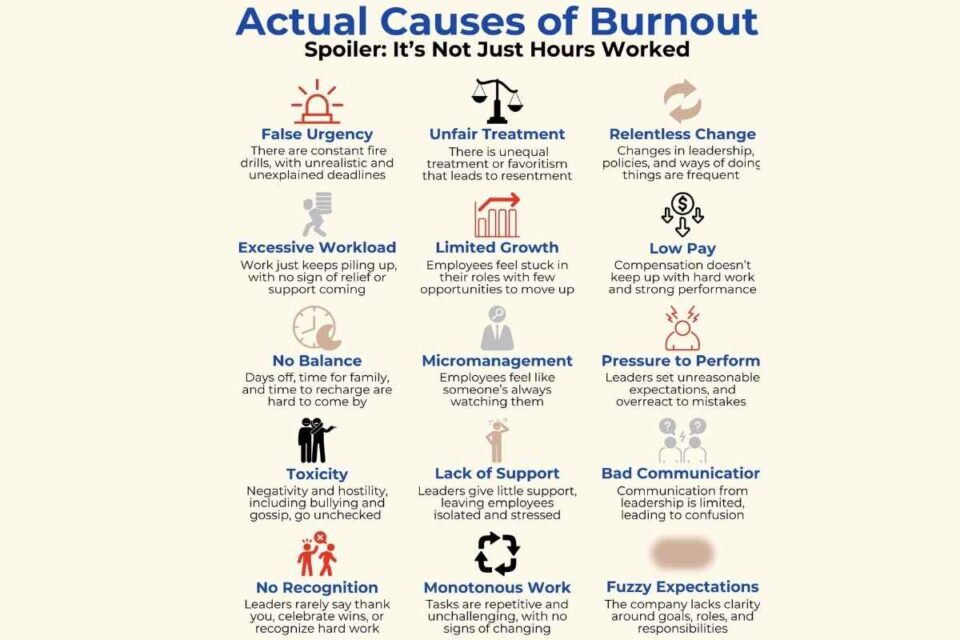
https://www.reddit.com/r/coolguides/comments/1g9nde0/a_cool_guide_to_causes_of_burnout/
False Urgency
Here are some causes of burnout, and it’s not just the hours worked, but false urgency, like, oh my goodness, this needs to be done right away. It’s an unrealistic and unexplained deadline. It just needs to be done. There’s no context, there’s no help, there’s no support—we’ve got to get it done. We need to have it done by 3 o’clock before we leave this office on Friday.
In our case, as we said, we’re school counselors, so we are in charge of the 5th to 6th transition—making sure that we get all of the kiddos’ electives and courses in. They want everything done before spring break, which we are on now, but it is okay. They are still going to get to 6th grade and have all the things that they need.
Unfair Treatment
Unfair treatment is another cause. So we might have a little bit of favoritism in our workplace, and so now we’re resentful. It doesn’t seem like that person gets as much piled onto them as we do, and so we are feeling treated very unfairly. It causes us to be resentful—we don’t like that.
Relentless Change
There’s always some type of change happening: changes in leadership, changes in policy. “Last week we did it this way, last year we did it this way, now it needs to be done this way, and it needs to be this color, and it needs to be this big…”, and it’s just a lot. So there’s always some type of change going on. We can’t keep up. It’s an endless cycle. It’s like we’re on a hamster wheel. Something is always changing.
Excessive Workload
One of the most common causes is an excessive workload. We can’t get done with one thing before something else is put on our desk to do. So it just keeps piling up, and there’s no sign of relief. There is no support that is coming, so we are literally drowning.
Limited Growth
Limited growth—we’re doing all of this, but what’s the benefit? There’s no promotion, there’s no increase in pay. So we’re doing all of this and essentially making somebody else’s life easier or making them more money, and there are not a lot of opportunities for us to move up within this role.
Low Pay
The pay—the economy is outrageous right now—so again, we’re doing all this, where’s the money? There are bills to be paid. We may not be in a financial position to walk away from this job, even though we are so burnt out, so that just enhances the burnout. The compensation does not match our performance and our hard work.
No Balance
There is no balance. We’re always at work. Somebody said something funny a while ago—it’s like we feel like “we’re visiting home, and we live at work”. And so if we’re feeling like that, we might be experiencing burnout. There’s no balance; we don’t have any time off. We’re stressed even thinking about putting in PTO because what are we coming back to? So that’s another cause of burnout.
Micro Management
And then we’re also being micromanaged, especially by people who we probably know how to do their job better than they do, but they are micromanaging us. They feel superior to us; they are always on our backs.
Pressure to Perform
Then we have pressure to perform. Our leaders are setting unreasonable expectations (even expectations that they can’t live up to), and if it’s not done in the way that they want it to be done, then they’re unhappy. There’s an overreaction. We’re not getting any praise—we just always have something else to do with no recognition.
Toxicity
Toxicity—so again, we have those coworkers who are always a mess. Maybe they have bullying behavior, mean girl behavior, the gossip—it goes unchecked. It doesn’t seem like there are any consequences. They’re not reprimanded. It’s essentially like we are in middle school or high school again.
Lack of Support
A lack of support—our superiors want us to do all of these things, but they’re not stepping in to help us. We’re on an island by ourselves, and that is adding to the burnout.
Bad Communication
Then there’s bad communication. We might be getting emails with no context. We go into our office, and there’s just something lying on our desk with no context. So, we are trying to ask our superiors or coworkers for help or an explanation, and they’re very slow in getting back to us—if they get back to us at all. So that’s another thing that we have to do—go figure out what it is that they want us to do.
No Recognition
No recognition—so again, we’re doing all of this work, we’re doing an amazing job. There are a lot of people who say, “We accidentally became important at work,” because now we have all of these things that we have to do, but we’re also not being recognized for the hard work that we’re doing. It’s almost just like, “hey, yeah, you’re here, this is your job, this is what you’re expected to do.” So there’s no bonus, there is no “good job,” no “we see how hard you’re working, thank you.” Thank you goes a very long way.
Monotonous Work
And then it’s just monotonous. We feel like we are just doing the same tasks—they’re repetitive. We can literally do it with our eyes closed. We’re not being challenged. And then there’s also no change because, again, we’re not growing in this role, and it doesn’t look like there is an opportunity for us to grow. So it’s just very monotonous.
Fuzzy Expectations
And then there can also be fuzzy expectations. There’s very little clarity in responsibilities and roles—like, are we the manager? Is someone else the manager? What is it that everybody is doing? Lots of chiefs, lots of confusion. So all of those are things that can contribute to burnout.
Symptoms of Burnout
So now let’s get into the symptoms, because we can have physical symptoms, emotional symptoms, and behavioral signs.
Another important thing to know about burnout is that it doesn’t always happen immediately. It’s a gradual process that builds with the stressors. The signs and symptoms can be very subtle, but the longer they go unaddressed, the worse they can become, which eventually causes a breakdown.
Physical Symptoms
- Chronic Fatigue- persistent tiredness, lack of energy
- Physical Ailments- frequent headaches, muscle pain
- Immune System Suppression- getting sick more often

Here are some physical symptoms. So chronic fatigue, like we’re persistently tired, no energy. And again, this tiredness is not just a long day at work—we come home, get a good night’s rest, and then wake up feeling refreshed. No, we are continually tired, exhausted physically and mentally.
Then we start to have physical ailments. So headaches that don’t seem to go away, muscle pain, our backs hurt, especially if we are in a sedentary position where we don’t get up and move around a lot. It could cause a lot of gastrointestinal issues, as our stomach is just always flipping around. And then immune system suppression. So we’re getting sick more often because we haven’t had an opportunity to rest our bodies and take care of ourselves, so our immune system is compromised, and we get sick more often.
Emotional/Mental Symptoms
- Cynicism/Detachment- feeling numb, negative, detached from work
- Helplessness- feeling trapped, defeated
- Cognitive Issues- difficulty concentrating, forgetfulness
Emotionally, we start to feel cynical and detached, so we’re feeling numb. We’re just showing up. It’s like we’re in the building, but we are not there. We’re just feeling negative. Other people’s energy is rubbing off on us. We’re detached from work; we’re detached from our colleagues; we are essentially just bodies in the building.
And then we start to feel helpless. So we’re feeling trapped, we’re feeling defeated. We’ve got to get off this hamster wheel. The same thing is happening every day, and there is no change, and it doesn’t feel like there is going to be a change. So now we’re just feeling really helpless.
Then we start to have cognitive issues. So, just a lot of difficulty concentrating. We’re forgetting things. We leave our office to do something and then get there and can’t remember what we left to do. So we start to have that brain fog.
Behavioral Signs
- Withdrawal- isolating oneself from colleagues and responsibilities
- Reduced Performance- decreased productivity and inability to meet demands
- Escapism- using food, drugs, or alcohol to cope
And then some behavioral signs. We are withdrawing. We go home and maybe just want to go to our room and close the door just to have 5 minutes of peace. So we haven’t spoken to our spouse; we haven’t spoken to the kids; we haven’t petted the dog or the cat; we just want to be by ourselves.
So we are isolating from our colleagues at work. We may be isolating from our family. And then we are isolating ourselves from our responsibilities. We haven’t done the laundry; we haven’t cooked; we haven’t done anything that we actually need to do because we are so burnt out at work.
Reduced performance—so we have decreased productivity. We might just be sitting at our desk looking at a screen. We were supposed to have typed this email 10 minutes ago, and we’re still on the first word because we have just checked out. And then just the inability to meet demands. There are too many things going on. We feel like an octopus—we have 8 hands, and people are pulling us in 100 different directions.
And then escapism. So we are using food, drugs, or alcohol to cope, which is adding to the unhealthy things that we are doing to our bodies on top of the stress. Eventually, just feeling out of shape, feeling really heavy—that is going to induce that lack of energy.
If we are feeling any of these things, just stop and take a moment and think about in what areas we are feeling symptoms of burnout.
And did we actually realize that it was burnout, or were we just thinking we were tired, or not in shape, or just not eating well? These are actually common symptoms of burnout.
Take a moment to think about everything we’ve talked about so far—causes of burnout, symptoms of burnout, how long we’ve been feeling that way, and whether we actually knew that it was burnout.
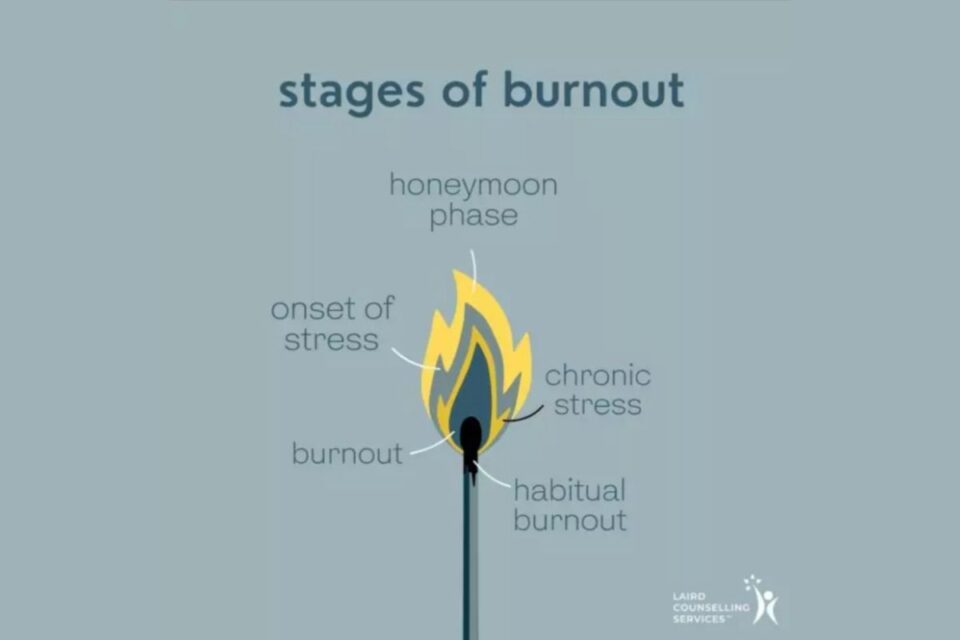
5 Stages of Burnout
https://www.lairdcounsellingservices.ca/stages-of-burnout/
There are 5 stages of burnout.
- Stage 1: The Honeymoon Phase– Marked by high energy, optimism, creativity and motivation, often when starting a new project or job. You may take on too much responsibility.
- Stage 2: Onset of Stress– Initial enthusiasm fades, and stress sets in. Symptoms include irritability, anxiety, poor sleep, headaches, and trouble focusing.
- Stage 3: Chronic Stress– Stress becomes persistent. Feelings of anger, apathy, and resentment arise. Productivity drops, and you may neglect self-care.
- Stage 4: Burnout– You hit a wall. Symptoms become critical, including emotional detachment, intense pessimism, social withdrawal, and physical ailments like chronic headaches.
- Stage 5: Habitual Burnout– Burnout becomes ingrained. Chronic mental and physical fatigue, depression, or severe emotional numbness may set in.
Stage 1: The Honeymoon Phase
First, the honeymoon phase. So we just got this job—we have high energy, we’re really excited, we’re creative, we’re motivated. We have a new project, or we’re on a new team. So we’re like, yes, give us all the things. By now, we’ve taken on so much responsibility because we’re just really optimistic, high-energy, and focused. This is a new job—we want to make a good impression. So now we have all the things on our plate. And one thing we’ve learned is that if we don’t fill up our calendar, somebody else will—but also boundaries are really important.
Stage 2: Onset of Stress
Then we have stage 2, the onset of stress. Now we’ve been here for a few weeks or months, and it’s like, okay, we’re not as enthusiastic as we were when we first started. That has faded, and now we’re starting to feel stressed because we have obligated ourselves to so many different projects and people. So now we’re starting to feel irritable. We’re anxious about meeting deadlines and being able to perform.
Now we are sleeping poorly. It’s not restful sleep because we may be up thinking about what we need to do at work. We’re having headaches, trouble focusing, gastrointestinal issues, aches and pains—we’re starting to feel that stress everywhere.
Stage 3: Chronic Stress
Then, stage 3, chronic stress. Now the stress is persistent. It feels like we are always stressed. Nothing we do makes us feel rested or peaceful. We’re starting to feel angry, apathetic, and resentful. Our productivity has lessened because we’re overwhelmed with everything we’ve committed to, so we’ve just checked out. Nothing is making us happy because everything is tied to work.
Stage 4: Burnout
Stage 4 is burnout. We’ve hit a wall. Those symptoms are critical now—we might start to feel heart palpitations. Our blood pressure rises. We’re not putting good things into our bodies, so we may have to watch our cholesterol. We’re not exercising. Now we feel emotionally detached from the people we love because we are so burnt out at work. The things that used to make us happy are no longer enjoyable. We don’t want to go out with friends. We’ve stopped working out. We’ve stopped doing things that once brought us joy.
Stage 5: Habitual Burnout
Then, stage 5 is habitual burnout. It becomes ingrained. It’s like a routine—we’ve assigned ourselves to feel this way, like this is what we have to deal with to be successful, which is not the case. Now we have chronic mental and physical fatigue. We are always tired, always exhausted. It may turn into depression or severe emotional numbness.
So those are the 5 stages of burnout. Again, think about what stage we’re in, or if we’ve gone through all the stages. We definitely don’t want to get to stage 5. We want to start paying attention at stage 2 and understand what is causing the stress and burnout, and start implementing boundaries before we get to stages 3, 4, or 5.
SOS: Recognizing Your Body’s Stress Symptoms
Please play this video: SOS: Recognizing Your Body’s Stress Symptoms.
“You think we’re just tired. Maybe we chalk it up to a bad week. But what if our body is actually waving a red flag we’ve been ignoring? Here’s a hard truth most people don’t talk about: burnout doesn’t always show up as emotional breakdowns or dramatic outbursts. Sometimes it whispers through body aches, chronic fatigue, mysterious digestive issues, or even brain fog that turns our memory into Swiss cheese. And yet, most of us shrug off these signs like they’re no big deal. We say, “We’ll catch up on sleep this weekend,” or “We just need to push through this project.” Sound familiar? That’s not stress anymore. That’s burnout in stealth mode.
The physical symptoms of burnout—yes, we’re talking real somatic symptoms—can mimic other health issues, leaving us chasing the wrong solutions while the real problem quietly worsens.
Understanding burnout psychology is our first act of self-defense.
If we’ve ever wondered, “Is it burnout or stress?” we’re in the right place. This is your wake-up call.
We’re diving deep into the physical signs of burnout that our bodies have been using to get our attention—signs we’ve likely brushed off. But once we see them, we can’t unsee them. And more importantly, we can start changing everything.
Chronic fatigue that doesn’t go away, even after rest. We sleep 8 hours, maybe even take a nap during the day, but still feel like we’ve been hit by a truck. That’s not laziness; it’s our body’s burnout alarm blaring in silence. Chronic fatigue isn’t just being tired—it’s feeling drained down to our bones, no matter how much we rest. People often confuse it with stress, but this is deeper. It’s our body literally shutting down to protect us.
And here’s the kicker: we might still be performing at work, keeping up appearances, while inside, your system is crawling.
Take Emma, a freelance designer who started skipping workouts because she “felt off.” Her energy was gone, her coffee intake tripled, her sleep schedule went out the window, and still, she couldn’t recharge. Sound familiar?
That’s one of the physical signs of burnout—unexplained fatigue that sleep doesn’t fix. It’s burnout fatigue, not just sleep debt. The body keeps the score, and it’s telling us something’s wrong.
Burnout and stress may look alike, but they wear different masks. Stress is the sprint. Burnout is the marathon our body didn’t sign up for. If we feel mentally exhausted and physically wiped out before the day even begins, that’s not normal—no matter how many people say, “We’re all tired.”
This is where burnout recovery has to start—by recognizing the body’s stress symptoms before they evolve into long-term health issues.
Strange aches, pains, and tension that don’t make sense. Have we ever woken up feeling like we ran a marathon in our sleep? Tight shoulders, a stiff neck, back pain—even though we didn’t do anything physically demanding? That’s not just getting older. These body aches from stress are another sneaky sign of burnout.
The mind-body connection is real.
When mental exhaustion builds up, the tension doesn’t stay in our head—it settles in our muscles. Our body becomes a storage unit for every ignored deadline, repressed frustration, and unshed emotion.
Let’s talk about Mark, a marketing exec who lived on painkillers for random headaches and jaw tension. His doctors couldn’t find anything structurally wrong, but when he finally slowed down, the symptoms eased.
Burnout body symptoms don’t show up on X-rays, but they scream through somatic signals. These aren’t isolated aches. They’re physical manifestations of emotional burnout, and they can hit even when you feel fine mentally. Stress burnout builds up silently until your nervous system says enough.
That knot in our stomach could be anxiety disguised as digestive trouble. That tight chest might not be heartburn—it could be our body bracing against nonstop pressure. Burnout and digestion are deeply linked, and ignoring these clues only gives the problem more power.
Brain fog, immune crashes, and the hidden burnout body loop. We’re staring at our screen, rereading the same sentence for the fifth time. We walk into a room and forget why. It’s not a memory issue—it’s brain fog from burnout. When our brain is constantly in overdrive, it stops functioning at full capacity. Our nervous system is asking for a timeout.
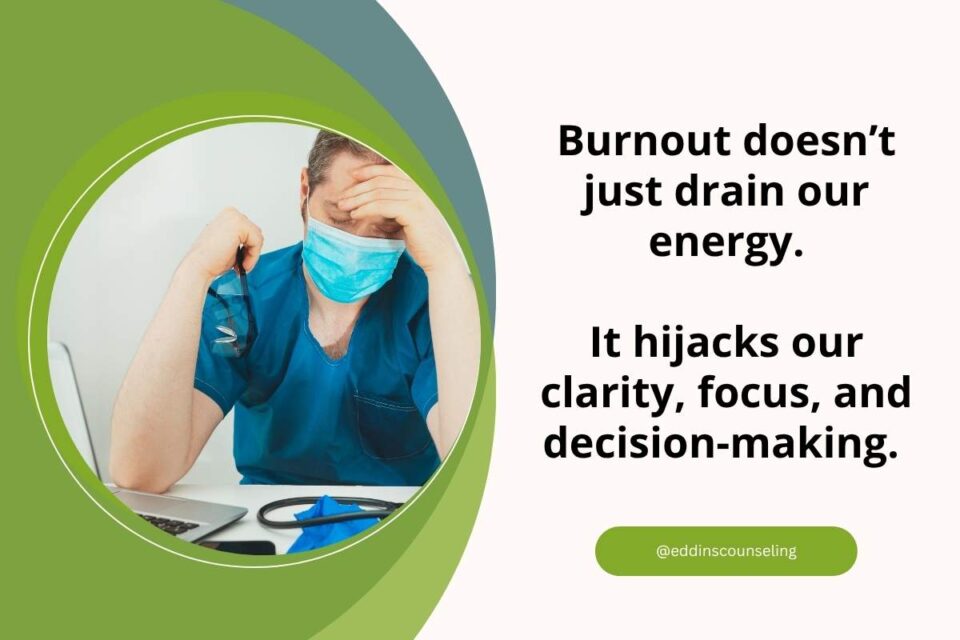
Burnout doesn’t just drain our energy—it hijacks our clarity, focus, and decision-making.
But here’s the plot twist: burnout doesn’t stay in your head. Ever notice how you catch every cold, flu, or bug when you’re worn down? That’s not bad luck; it’s your immune system crashing under chronic stress. Burnout and the immune system are best frenemies.
When stress becomes chronic, our immune defenses weaken. We become more prone to inflammation, gut imbalances, and random health issues. It’s not all in our heads, and it’s not just emotional. These are physical signs of burnout that our body has been trying to warn us about.
Burnout recovery starts by listening, not pushing.
The body keeps score, and it plays the long game. Want to reverse burnout? Start by identifying these burnout warning signs and giving your body a break from survival mode. Because when your biology is under siege, it’s not about willpower. It’s about wiring.
So how many of these signs have we been brushing off? That constant fatigue, the random aches, the brain fog—none of it is “just life.” It’s our body sounding the alarm. Loudly. And if you’ve been waiting for some dramatic crash to “prove you’re burnt out,” don’t.
Burnout rarely explodes all at once. It creeps in quietly, disguised as ordinary life.
But now we know what to look for, and that awareness alone puts you ahead of 90% of people who are still pushing through the pain.
The real question is: what are we going to do about it? Will we listen to our body before it forces us to, or will we let it keep whispering until it starts to scream? Think about it. You have the tools now to recognize the burnout physical symptoms that most people never connect. You know how burnout and stress differ. You’ve seen how the mind-body connection plays out in real life. The next move is yours. And hey, if this hit home even just a little, maybe this channel’s the space you didn’t know you needed.”
If we have been experiencing any of these symptoms, we need to start taking control of that burnout. We need to listen to our bodies. Stress is often called the silent killer for a reason, so we can’t just brush it off. We need to take care of ourselves. Use those PTO days. Go to our doctor’s appointments. Take care of ourselves, because if something were to happen to us, we are replaceable—but our health is not.
What Are Workplace Boundaries?
Workplace boundaries are essential, non-negotiable rules we set to protect our time, energy, and mental health, ensuring a sustainable, respectful, and productive professional environment.
Workplace boundaries include but are not limited to:
- Time- defining working hours, avoiding after-hours emails, taking a lunch break
- Workload- saying “no” to extra tasks when at capacity and prioritizing assigned duties
- Setting preferences for contact methods (e.g., no calls after 5 pm) and avoiding office gossip
- Physical/Privacy-respecting personal workspace and keeping private life separate from professional life
- Emotional- managing your own stress without taking on the burdens of colleagues
These boundaries could look like a few things.
We first need to make sure that we are clearly communicating these boundaries and making sure that we’re implementing them consistently.
Some workplace boundaries include, but are not limited to, our time. So, defining our work hours. “No, we cannot come in an hour early. No, we cannot stay an hour later.” Avoiding after-work emails, right? And so, depending on what our policy is, we know that for ourselves as school counselors, it’s typically 24 to 48 hours, and we do that while we’re at work. And then also making sure that we’re respecting other people’s time.
Also, making sure that we take a lunch break. And it’s also going to be really helpful for us to meal prep. We found that that was something that was helpful for us, maybe on a Saturday or Sunday. We’re just getting those meals and snacks ready for the week so that we don’t even have to think about it. We’re just pulling it out of the fridge, and now we have something good to eat instead of going to that vending machine or going to Chick-fil-A. We know it’s really, really good. But making sure that we are putting something in our body—and it’s a lot of work up front, but it takes a little bit of the load off of us having to figure out what we’re going to do for lunch—and then also putting something healthy in our body.
Workload boundaries—saying no to extra tasks. Especially if that is not something that is in our job description or something that we know how to do, say no.
NO is a complete sentence.
Especially when we are already at capacity, and then also just making sure that we’re prioritizing what we already have on our plate to do, so the most critical are the ones that we can get to a little bit later.
Make sure that we’re setting our preference for contact methods. So no calls after 5 PM, we’re not accepting text messages. That’s it. We leave at this time. We may answer up to 30 minutes after we leave, but that’s it. And then also avoiding workplace gossip. It also just adds to that negative energy. We do not linger in the teacher’s lounge. We’ve been in education for 10 years. We go in, we may have to pass through, we may be warming up our lunch, and we are back to our office. It just creates a space of negativity.
Also, our physical/privacy boundaries—so respecting our personal workspace, leaving things at home at home, and leaving things at work at work.
Making sure that we’re separating our personal from our private life, our professional life. We typically do not have our coworkers as friends on social media. We’re not going and hanging out like we’re friends. We’re creating that boundary so that we have something for ourselves. We don’t want to cross that line because it gets muddy very quickly.
And then our emotional boundaries. Managing our own stress without taking on the burdens of others. We know some of us have been in a position where we feel bad, and we want to help them out, but at the same time, we have just as much, if not more, that we need to do. So we unfortunately cannot help in that moment.
And being able to communicate that without feeling bad—a lot of times we don’t set boundaries because we feel bad. “Oh, this person is going to be angry at us, this person is going to feel a way”, and that’s okay. They will be absolutely okay. Our boundaries are for ourselves. We’re letting people know what is okay and what is not okay for us. So again, the goal is that we want to minimize the symptoms of stress from burnout.
Our colleagues will be fine. We need to make sure that we are taking care of ourselves, and that’s where those boundaries are going to be very important.
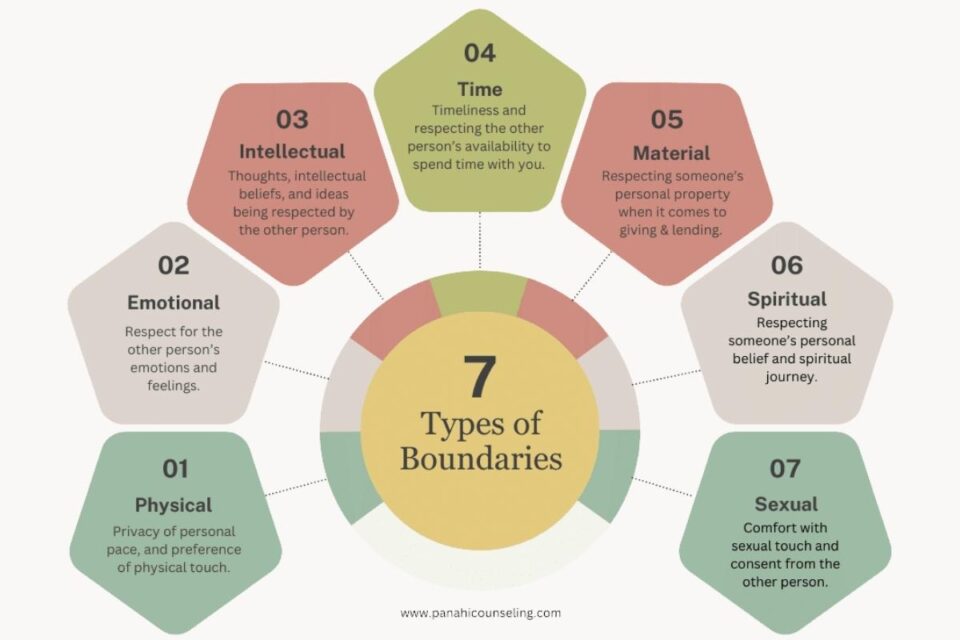
Types of Boundaries
https://panahicounseling.com/blogs/healthy-boundaries-2/
Here are just a few different types of boundaries.
Physical boundaries—so our personal space, how we would like people to enter our office or our cubicle or whatever type of working environment we have, how we place our things, and just kind of the aesthetic of it as well- are sometimes helpful in boosting our mood.
Emotional boundaries—so having people make sure that they are respecting our feelings and we’re respecting the feelings of others.
Intellectual boundaries—so our thoughts, our beliefs, our ideas. We know that a lot of times in workspaces, people might like to talk about politics or religion or what have you. We are absolutely okay to say that’s not something that we are willing to talk about or comfortable talking about in this space.
Time boundaries are very important. We have a deadline we need to meet. If someone is a person that we are depending on to also help us reach this deadline, communicating very clearly that time is a big boundary for us. And then also making sure that you’re respecting other people’s time.
Materials. So again, our personal property, how we want our things set up in our office. We know that some individuals might even have their own little personal fridge in their office because they don’t want to share space in the big lounge refrigerator, and that is okay as well.
Spiritual boundaries—so again, our religion, all of those things—they can absolutely be off limits.
Sexual boundaries, so any type of conversations or jokes or touching, making sure that we are clearly communicating those boundaries with others.
https://ifunny.co/picture/QtE4sOpe9
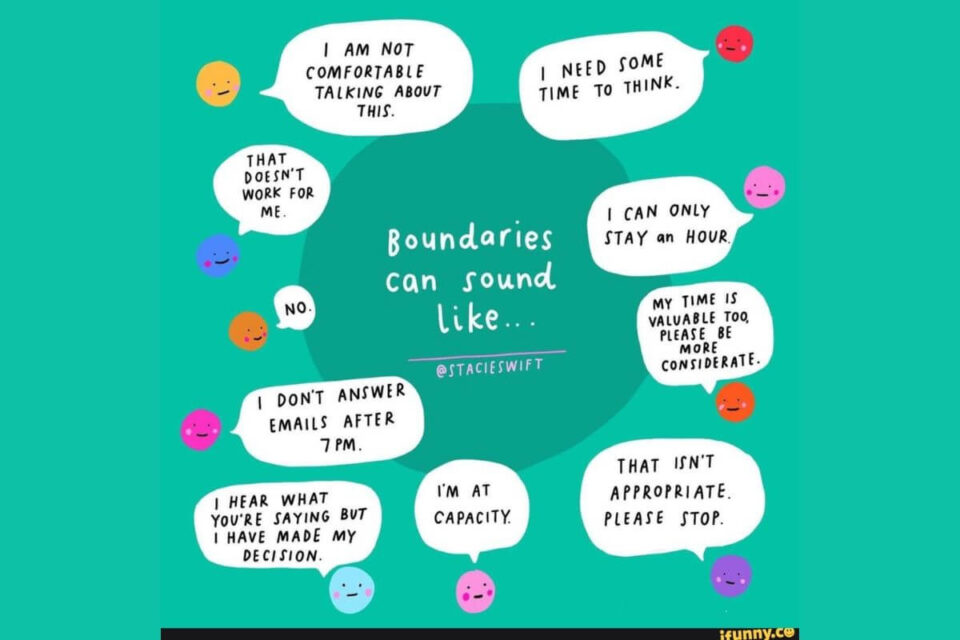
This is what boundaries sound like:
- “I’m not comfortable talking about this.” Period.
Notice how these statements end with a period—we don’t have to over-explain. We can simply say what it is and move on.“That doesn’t work for us.” - “No.” Remember, no is a complete sentence. The more we practice, the easier it becomes.
- “We don’t answer emails after 7.”
- “We hear what you’re saying, but we haven’t made a decision.”
- “We have made our decision.”
- “We’re sorry, we’re at capacity.”
- “That is inappropriate. Please stop.”
- “Our time is valuable too. Please be more considerate.”
- “We can only stay an hour.”
- “We need some time to think.”
So think about kind of where our work boundaries are, and this is not exclusive to work, right? Our personal boundaries outside of work as well. Do we find ourselves struggling with boundaries? Is that something that we would like to work on? So think about that. Where are we most firm in our boundaries? Where could our boundaries use a little bit more work?
Are Your Boundaries In Tact at Work?
Take the quiz to see what your boundary-setting style is at work! Click the link!
What’s Your Boundary Setting Style at Work?
10 Ways to Reduce Stress At Work
These are just 10 quick, simple things that we can do. One of our favorites is to just get up and go outside for a little bit in the courtyard, especially if it’s a nice day. That sunshine and fresh air is a mood booster.
So if you are in a job where you are doing a lot of sitting, challenge yourself to get up every hour and walk. And if we kind of track our steps or our movement on our watch, that’s a good way to challenge ourselves. If we did 5,000 steps today, maybe we can get 10,000 tomorrow. So moving our body.
Also breathing. Absolutely, just taking a nice deep breath. We’re making sure that we are sitting up straight and that our shoulders are square. We don’t want to hunch, and we are breathing in through our nose, we’re holding it, and then we are pushing it out. And that’s something that we also teach the kiddos at our school as well.
Again, making sure that we’re packing some healthy snacks so we’re not going to the vending machine and having chips and lots of candy and sweet things, because then we start to feel that crash not long after we eat them.
Making sure that we are hydrated. If we take vitamins, making sure that we have our supplements—of course, we’ve spoken with our doctor about the appropriate supplements for ourselves.
If your job has any type of classes that they offer or activities, take advantage of them, and then make sure that we’re doing something for ourselves outside of the office. But these are just some things that we can do while we are at work to kind of relieve that stress and boost our mood. And again, breathe!
About the Facilitator
This is just a little bit of information about Tasha. 10 years as an educator, so she taught kindergarten, was a school counselor, and then she was a special education coordinator, and that was one of the hardest years of her life because that was not a role that she was expecting to be in.
She is now back to being a school counselor, and is currently an LPC associate with Eddins Counseling & Therapy Group since her internship here back in 2024. So she absolutely enjoys working for Eddins.
If you would like to contact or book a consultation: latasha@eddinscounseling.com.
Please take care of ourselves. So let’s go in tomorrow (or Monday, if we’re a person that likes to start at the beginning of the week) and implement at least one or two things that we can do to change that burnout, because we know we have to work, but also our work doesn’t have to be so taxing that we are feeling the physical toll on our bodies.
Thank you all for joining. We hope we have a great rest of our evening and a great weekend.
Let’s use those links and monitor ourselves and implement those boundaries so that we have a healthy—curate a healthy work environment for ourselves. It may not be for everybody else, but please curate the work environment for ourselves.
Feel free to visit additional resources:
1. Articles on specific topics on our blog.
2. RSVP for one of our free monthly webinars (or view past webinars)
3. Follow us on Facebook and Instagram for additional interviews and tips
4. Take another one of our self-test quizzes
5. Schedule a consult and find out how we can support you.
Feeling drained, overwhelmed, or constantly “on” at work? Burnout is real, and managing your mental health and well-being at work is essential—not optional. By learning to set boundaries, prioritize self-care, and build supportive routines, you can protect your energy, reduce stress, and maintain focus and satisfaction on the job.
If you’re ready to explore strategies for managing workplace stress and preventing burnout, our therapists are here to help. To begin, give us a call at 832-559-2622 or schedule an appointment online. We also offer online therapy for added convenience and flexibility.
Why You Feel This Way
Get instant access to your free ebook.
Blog Categories
Join a Therapy Group
Events
List of events in Photo View
Adult DBT Skills Evening Group | Eddins Counseling
Virtual Event