

September 16, 2024
Healing Trauma Through Movement
Written by Guest Author
Posted in Trauma, Grief & Loss and with tags: PTSD/Trauma, emotional trauma, heal from trauma, trauma

Stress is one of the main things a mind-body connection helps with. Gastrointestinal disorders, sleep problems, high blood pressure, and chronic pain are a few conditions that can be worsened by high levels of untreated stress. When our brain perceives a threat, our bodies experience a stream of different physiological processes.
Our sympathetic nervous system then shifts into what is known as “fight, flight, freeze, or fawn”. This tries to prepare to fight off the danger, flee for safety, “play dead”, or try to please to avoid any conflict. Our adrenal glands then release the stress hormones, adrenaline, and cortisol into the body. When this happens, the heart races, and the breathing rate increases giving a short-term energy boost.
Repeated activation of our emergency response system can have a big and serious impact on our bodies. Our immune system is suppressed, and inflammation occurs throughout the body, which can cause depressed mood and fatigue. Negative thinking patterns and a negative inner voice can make it more difficult to deal with our health problems. That is where mind-body therapies come in to help.
The Importance of Mind-Body Therapies
Mind-body therapies are healing techniques that promote relaxation and encourage mindfulness. Mindfulness is simply living in the present. You are more intentional, more aware, and more awake to each moment. You are also more fully engaged in what is happening in your surroundings. People can have more acceptance and without judgment.
We know that typically our mind and body are treated separately. People finally realize how important it is to treat the mind and body together. The mind-body connection is the link between a person’s thoughts, attitudes, behaviors, and physical health. Holistic medicine truly embodies the mind-body connection. Holistic medicine treats the whole person and not just symptoms.
How Trauma Affects the Body and Mind
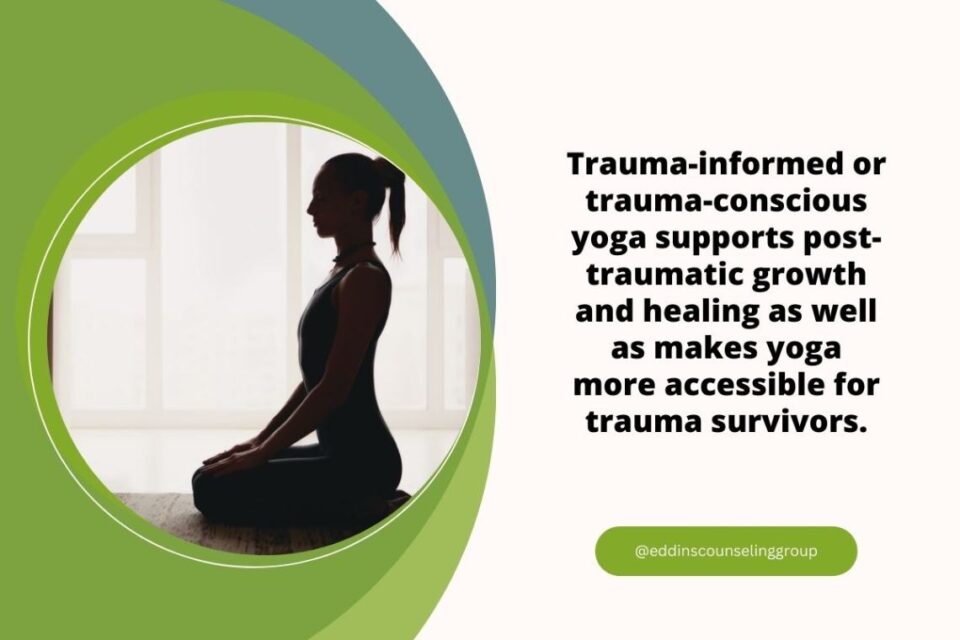
While yoga is used to help reduce stress and help with mindfulness and the mind-body connection, it can sometimes be triggering for people who have experienced trauma. Trauma-informed or trauma-conscious yoga supports post-traumatic growth and healing as well as makes yoga more accessible for trauma survivors. Trauma-conscious yoga teachers emphasize your experience within a yoga posture, rather than your performance. They are trained to be more conscious of trauma and how it shows up during yoga practice.
By now, we all know that trauma affects not only your mind but is also stored in your body. Having a mind-body practice such as yoga can help with the effects of trauma. Trauma Conscious Yoga helps with self-regulation by increasing body awareness and addressing nervous system dysregulation. All in all, it helps you reconnect with your body in a safe and controlled way. Trauma-conscious yoga isn’t just for those who have experienced trauma, it benefits everyone.
The Benefits of Trauma-Conscious Yoga
While many typical yoga classes encourage students to move through emotional discomfort, trauma-conscious yoga helps people pay attention to signs of dissociation and distress that come up. Teachers guide you to notice how you feel during the poses and establish a sense of grounding. This helps you connect to your mind and body in a way that feels secure.
Using inclusive and trauma-conscious language is also a big part of this yoga practice. Language is used to give choice and create a safe and supportive environment. Instructions are invitations rather than commands.
When looking for the right teacher, check their training credentials and read their bios. Find out whether they’ve received additional training that supports a more trauma focus.
If you want to work with me, I am certified in trauma-conscious yoga, have my 300-hour Yoga Teacher Training, and would love to support you. Let me know if you have any questions.
Vanessa Clairjeune, LMSW Therapist
Pronouns: she/her
Supervised by Vanessa Guidry, LCSW-S
About the Author:

Vanessa Clairjeune holds a Master’s in Social Work from the University of Houston and dual bachelor’s degrees in Forensic Psychology and Human Services and Community Justice from John Jay College of Criminal Justice in NYC. She integrates a somatic and mindfulness approach into her practice, complemented by techniques like DBT, Internal Family Systems, bibliotherapy, and trauma-conscious yoga, for which she holds a 300-hour certification.
Vanessa’s diverse experience spans substance abuse outpatient clinics, MD Anderson Cancer Center, and student outreach at the University of Houston. Her commitment to holistic well-being encompasses substance abuse, chronic illness, life transitions, LGBTQIA experiences, trauma, infertility, and maternal mental health, all while fostering a therapeutic environment where vulnerability becomes resilience and pain transforms into growth.
Feel free to visit additional resources:
1. Articles on specific topics on our blog.
2. RSVP for one of our free monthly webinars (or view past webinars)
3. Follow us on Facebook and Instagram for additional interviews and tips
4. Take another one of our self-test quizzes
5. Schedule a consult and find out how we can support you.