

December 13, 2024
Webinar: Healing Trauma through Somatic Therapy
Written by Guest Author
Posted in Trauma, Grief & Loss, Webinars and with tags: PTSD/Trauma, heal from trauma, mental health, self improvement, trauma

Are You Ready to Break Free from the Weight of Trauma?
For many women, trauma can feel like an invisible anchor, weighing down their body, mind, and spirit. If you’ve experienced the tension of carrying unresolved pain, feeling stuck in your body, and struggling to find relief, you’re not alone. Trauma, especially physical or emotional, can leave a lasting imprint — one that traditional therapies sometimes struggle to reach.
But there is hope.
Our upcoming webinar, “Healing Trauma Through Somatic Therapy,” is designed specifically for women like you: women who want to reconnect with their bodies, release pent-up tension, and find a path toward healing and wholeness. Led by the compassionate and highly skilled Vanessa Clairjeune, LMSW, this free online event offers a groundbreaking approach to trauma healing through the lens of somatic therapy.
Why This Webinar Is for You
Do any of these feelings resonate with you?
- You carry tension in your body and can’t seem to let it go.
- You often feel on edge, stuck, or disconnected from yourself.
- You’ve tried other forms of therapy, but the relief was temporary or incomplete.
If so, this webinar could be the turning point you’ve been searching for. Somatic therapy focuses on the powerful connection between your body and mind, helping you release trauma that’s been stored deep within your physical being.
What You’ll Gain
In this transformative session, Vanessa will guide you through:
- Understanding Trauma Storage: Learn how trauma lives in the body and its impact on your emotional and physical well-being.
- Somatic Healing Techniques: Experience practical tools to release tension and reconnect with your body.
- Building Emotional Resilience: Discover how to cultivate balance and a sense of safety within yourself.
- Your Healing Journey: Empower yourself with practices that foster long-term healing and peace.
Meet Your Guide: Vanessa Clairjeune, LMSW
Vanessa brings a wealth of knowledge and empathy to her work as a therapist. With a foundation in somatic and mindfulness-based approaches, she incorporates techniques like DBT, Internal Family Systems, trauma-conscious yoga, and attachment-based interventions to create a nurturing space for healing. Certified in trauma-conscious yoga and with a 300-hour Yoga Teacher Training, Vanessa’s expertise lies in helping women reconnect with their bodies and rediscover their inner strength.
Take the First Step Toward Healing
Imagine a life where you feel truly at home in your body. Where fear and tension no longer define your days. Where healing isn’t just a possibility — it’s your reality.
Watch a replay of the presentation here.
Focused on Wellness is a free wellness series that explores mental health, career, and wellness topics for the general public. Presented by various clinicians at Eddins Counseling & Therapy Group, the series features a unique topic on the second Thursday of each month from 7:00 to 8:00 PM. This session focuses on Healing Trauma through Somatic Therapy.
Vanessa Clairjeune holds a bachelor’s degree in forensic psychology and Human Services and Community Justice from John Jay College in New York City. She earned her master’s degree in Social Work from the University of Houston. Additionally, she is certified in trauma-conscious yoga and has completed a 300-hour yoga teacher training.
As a holistic, somatic, and spiritual therapist, she is passionate about working with adolescents and adults facing challenges related to substance use, depression, anxiety, life transitions, chronic illness and pain, cancer diagnosis, trauma, fertility journeys, and sexual health.
Vanessa Clairjeune integrates Internal Family Systems (IFS) therapy, Cognitive Behavioral Therapy (CBT), Dialectical Behavior Therapy (DBT), Eye Movement Desensitization and Reprocessing (EMDR), and yoga into her practice. Her goal is to support clients in healing from trauma, improving their relationships, and managing depression and anxiety.
Agenda
- Trauma Facts, Stats & the Effect on the Body
- Explore the Mind-Body Connection
- What is Somatic Therapy?
- Resources
- Q&A
This webinar will cover key trauma facts, relevant statistics, and the impact of trauma on the body. It will also explore the mind-body connection, introduce somatic therapy, and include book recommendations. The session will conclude with a Q&A segment.
The learning objectives of this webinar are to develop an understanding of trauma and its effects on the body, explain the connection between the mind and body in trauma healing, and discuss the benefits of somatic therapy for trauma survivors.
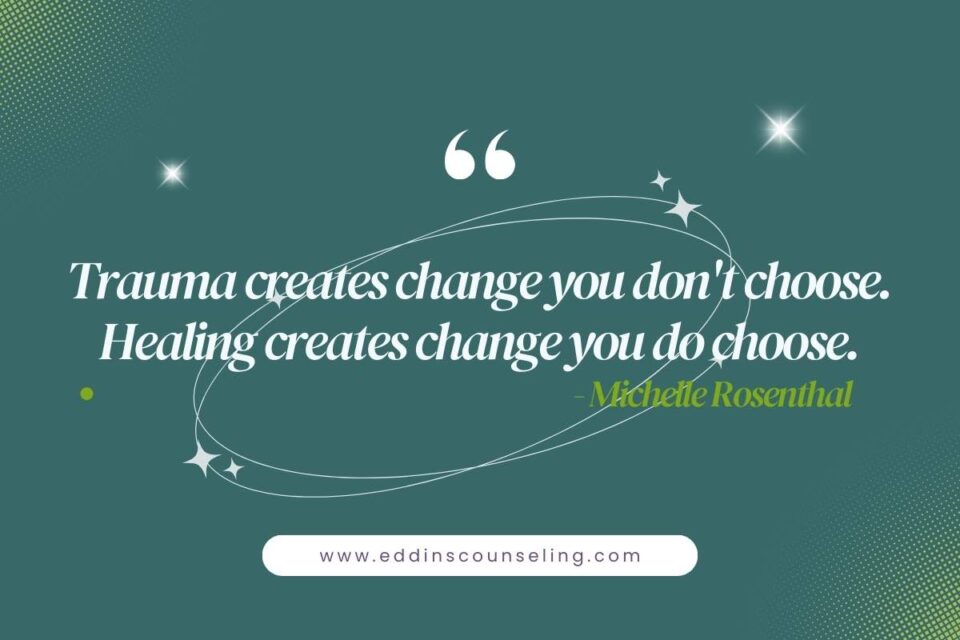
A quote that powerfully captures the essence of trauma healing states, “Trauma creates change you don’t choose, while healing creates change you do choose.” This sentiment reflects the core principles of somatic therapy and trauma recovery, emphasizing the empowerment that comes with intentional healing.
Progressive Muscle Relaxation
Let’s release any tension!
Let’s start with progressive muscle relaxation, a technique that involves systematically tensing and then relaxing different muscle groups in the body. This method helps reduce physical tension and promotes a state of deep relaxation.
Let’s begin by focusing on your breathing. Take a deep breath in through your nose and exhale slowly through your mouth. As you breathe out, allow your body to relax, letting go of any tension or stress. With each breath, feel yourself becoming calmer and more at ease.
Now, let’s start with your feet. Curl your toes downward, tightening the muscles in your feet, and hold. Now, release. Let your feet relax completely. Next, point your toes upward, flex your calves, and hold. Now, release and feel the tension melt away.
Squeeze your thighs together or press your legs down against the floor or chair. Hold. And relax. Feel your legs becoming heavy and loose. Tighten your stomach muscles by pulling your belly inward. Hold. Now, let go. Allow your belly to be soft and relaxed.
Take a deep breath in, expand your chest, and hold. Now, exhale, letting the tension fade. Make a tight fist with both hands. Hold it. Now, release, letting your hands relax completely. Bend your elbows and tense your biceps. Hold. Now, release and feel your arms go limp.
Now, raise your shoulders toward your ears as if you’re shrugging. Hold. Now, let them drop, releasing all tension. Gently tilt your head back, feeling the muscles in your neck tighten, and hold. Now, relax, letting your head return to a neutral position.
Finally, scrunch up your face—tighten your forehead, eyes, and jaw. Hold. Now, release. Let your face become smooth and calm.
Take a moment to scan your entire body. Notice any areas where tension might remain and imagine sending a wave of relaxation to that spot. With each breath, feel your body becoming heavier, softer, and completely at ease.
Take one final deep breath in through your nose… and exhale slowly. When you’re ready, gently wiggle your fingers and toes, bringing your awareness back to the room. If your eyes are closed, you can open them whenever you feel ready.
Post-Traumatic Stress Disorder (PTSD)
PTSD, or post-traumatic stress disorder, is a mental health condition that can develop after an individual experiences or witnesses a traumatic event. These events may include natural disasters, war, accidents, abuse, or any situation that provokes intense fear, helplessness, or horror.
This condition affects how the brain processes stress and memories associated with the trauma. While it is natural to feel fear or stress following a traumatic experience, PTSD occurs when these feelings persist for an extended period and begin to interfere with daily life.
PTSD can stem from various types of traumatic experiences. Direct trauma includes physical or sexual assault, combat, serious accidents, or natural disasters. Witnessing trauma involves observing violence, accidents, or harm to others. Indirect trauma can occur when an individual learns that a loved one has experienced trauma or through repeated exposure to distressing details, such as in the case of first responders.
Symptoms of PTSD
Some common symptoms of PTSD include intrusive thoughts, avoidance behaviors, negative changes in thinking or mood, and heightened arousal or reactivity.
Intrusive thoughts may involve flashbacks, nightmares, or distressing memories of the traumatic event, sometimes making an individual feel as though they are reliving the experience. Avoidance symptoms include deliberately staying away from reminders of the trauma, such as specific people, places, or situations, as well as avoiding discussions or thoughts related to the event.
Negative changes in thinking or mood can manifest as difficulty remembering the traumatic event, persistent negative beliefs about oneself, others, or the world, and feelings of guilt, shame, or blame. Individuals may also experience a loss of interest in previously enjoyable activities or feel detached from others.
Hyperarousal and reactivity symptoms include being easily startled, feeling on edge, difficulty sleeping or concentrating, irritability, anger, or aggressive behavior.
Complex-PTSD

Complex PTSD also exists, developing in response to prolonged, repeated trauma, often in situations where escape is difficult or impossible. While related to traditional PTSD, it includes additional symptoms that reflect the unique challenges of enduring sustained trauma.
Complex PTSD is typically associated with chronic abuse or neglect, including physical, emotional, or sexual abuse in childhood or adulthood, domestic violence, human trafficking or slavery—situations involving long-term exploitation or captivity—war or genocide, living under sustained threat or oppression, as well as prolonged medical trauma, such as repeated hospitalizations or medical procedures during formative years.
The key factor in complex PTSD is the prolonged duration of trauma, which disrupts an individual’s ability to develop a sense of safety or control. While it includes core PTSD symptoms such as intrusive memories, flashbacks or nightmares, avoidance of trauma reminders, hypervigilance, heightened startle response, and emotional numbness, additional symptoms are also present.
These include emotional dysregulation, characterized by difficulty managing emotions, intense anger, sadness or numbness, frequent outbursts, or feeling overwhelmed by minor stressors. Negative self-perceptions are also common, leading to chronic feelings of shame, guilt, or worthlessness, along with the belief of being damaged or fundamentally unworthy.
Furthermore, individuals may experience difficulty with relationships, struggle to trust others or form close connections, fear abandonment, or exhibit a strong need for control in relationships.
Complex PTSD also involves a distorted perception of the abuser, which can manifest as feelings of powerlessness and hopelessness, a preoccupation with the abuser, or even over-identification with or idolization of them.
Additionally, individuals may experience detachment from reality, including dissociation, a sense of disconnection from themselves or their surroundings, and amnesia for parts of the traumatic experience. Another key feature is persistent negative emotions, such as chronic despair, hopelessness, or an inability to feel joy.
Differences between PTSD and Complex PTSD
Here are the key differences between PTSD and complex PTSD.
PTSD typically results from a single traumatic event, whether a short-term or one-time experience. It is characterized by core symptoms such as flashbacks, avoidance, and overarousal, with its primary impact being acute distress. In contrast, complex PTSD develops from prolonged, repeated trauma over an extended period, involving long-term sustained trauma. Along with the core PTSD symptoms, it also includes difficulties with emotional regulation and relationship challenges, leading to pervasive effects on self-identity and worldview.
Trauma and the Body
Trauma can profoundly affect both physical and emotional health due to the way it is stored and processed by the body and brain. When a traumatic event occurs, the brain and body respond in a manner designed to protect the individual from immediate harm. However, if the trauma is not fully processed, these protective responses can become chronic, negatively impacting long-term well-being.
Trauma is a somatic reaction, often manifesting through physical symptoms such as nightmares, headaches, a racing heart, sweaty palms, shortness of breath, hypervigilance, chronic pain, and stomach aches, among many others.
When an individual experiences trauma, the brain—specifically the amygdala, which regulates the fight-or-flight response—signals the body to release stress hormones like adrenaline and cortisol. These hormones prepare the body to fight, flee, or freeze. However, if the trauma is extreme or prolonged, the body may not have the opportunity to complete the stress response, resulting in a persistent state of heightened readiness. This phenomenon is sometimes referred to as incomplete trauma processing or body memory.
The body can store trauma in several ways.
One is through muscle tension and posture, where muscles may remain tight or adopt a defensive stance or withdrawn position that was present during the traumatic experience. The nervous system can also remain in a state of hyperarousal or hypoarousal, leading to chronic stress, heightened alertness, or dissociation.
Additionally, trauma can impact the body on a cellular level, affecting how cells respond to stress and creating patterns of reactivity that are difficult to change without focused therapeutic intervention.
The Effects of Trauma
The effects of trauma can be observed across multiple areas, including physical symptoms, emotional responses, and nervous system dysregulation.
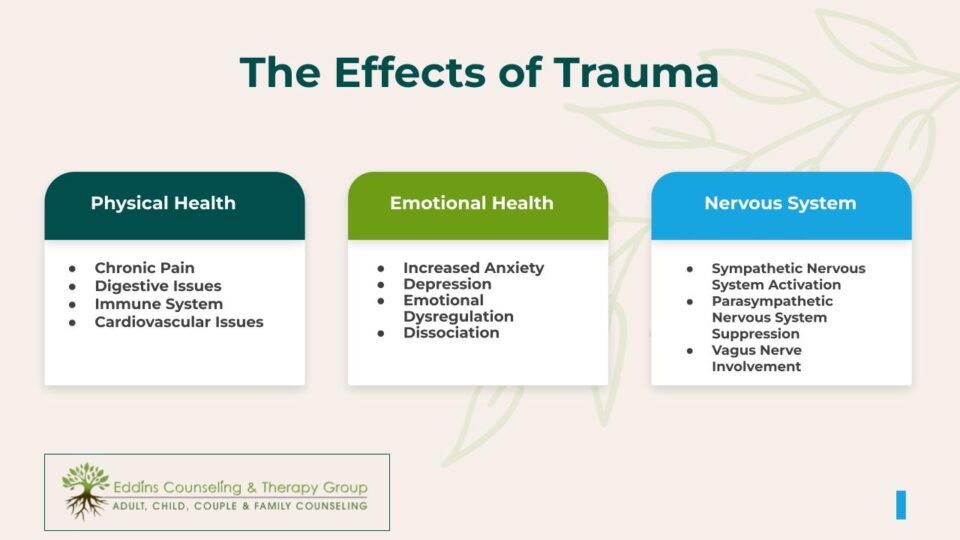
Unresolved trauma can have a significant impact on physical health. It can contribute to muscle tension, inflammation, and pain conditions such as fibromyalgia, migraines, and chronic neck or back pain. Persistent stress hormones can also affect the digestive system, leading to conditions like irritable bowel syndrome (IBS), acid reflux, or other gastrointestinal issues. Additionally, the prolonged activation of the stress response can suppress immune function, making individuals more vulnerable to illness and infections. Elevated levels of cortisol and adrenaline can increase heart rate and blood pressure, potentially leading to long-term cardiovascular issues such as hypertension and heart disease.
Trauma also affects emotional health. Chronic hyperarousal can leave individuals feeling constantly on edge or overly alert, increasing the risk of anxiety and panic disorders. A state of hypoarousal can result in feelings of numbness, dissociation, and depression, as the nervous system shuts down as a protective response to perceived threats.
Trauma can also disrupt the brain’s ability to regulate emotions, leading to sudden mood swings, intense anger, or deep sadness without a clear trigger. Some individuals may disconnect from their bodies or emotions as a coping mechanism known as dissociation, which can interfere with relationships and a sense of identity.
Trauma also significantly affects the nervous system. The sympathetic nervous system, which is responsible for the fight-or-flight response, plays a key role in how the body reacts to stress and danger.
Trauma can keep the sympathetic nervous system in a heightened state, leading to chronic stress responses even in safe situations. Meanwhile, the parasympathetic nervous system, responsible for rest and digestion, often becomes overridden during trauma, making relaxation and recovery difficult. For some individuals, trauma triggers a freeze response, resulting in feelings of numbness, detachment, or immobilization.
The vagus nerve also plays a crucial role in the body’s response to trauma. As it connects the brain to various organs—including the heart, lungs, and digestive tract—it helps regulate essential bodily functions. Trauma can disrupt vagal tone, reducing stress resilience and increasing the likelihood of anxiety and physical symptoms.
Trauma Statistics
Here are just some trauma statistics.
- 70% of adults worldwide experience at least one traumatic event in their lifetime, with higher prevalence rates in certain regions and demographics due to factors like socioeconomic status, community violence, and natural disasters.
- A study in the US found that 6 out of 10 men and 5 out of 10 women experience more than one traumatic event. About 61% of adults report having at least one adverse childhood experience such as abuse, neglect, or household dysfunction.
- 6% of Americans will experience PTSD at some point in their lives, with women twice as likely to be affected as men. This gender is often attributed to the types of trauma experienced and social factors affecting women.
- Worldwide, around 3.9% of the population will experience PTSD, with prevalence higher in areas with significant conflict or natural disasters.
So as you can see from these statistics, trauma is pretty much normal. It’s what a lot of people are experiencing in today’s society.
The Mind-Body Connection
The mind-body connection refers to the relationship between our thoughts, emotions, and physical health. It highlights how our mental and emotional states can influence our body’s physical condition and vice versa.
Research has shown that mental health can affect physical health outcomes, and similarly, the state of our physical health can impact mental well-being. Just as thoughts and emotions can affect the body, physical health can also influence emotions and mental states. For example, physical conditions like chronic pain, hormonal imbalances, and even diet can affect mood and emotional states. Exercise, for instance, boosts endorphins, which can enhance mood and alleviate symptoms of depression and anxiety.
Healing from trauma requires emotional processing, and the mind-body connection plays a key role in this. By paying attention to physical sensations tied to emotions—such as tightness in the chest or shoulders when feeling anxious—individuals can become more attuned to their feelings, making emotional healing possible.
This awareness offers a pathway for releasing emotions without the need to recall specific traumatic memories, which is especially helpful when memories are fragmented or repressed. By tuning into bodily sensations and grounding oneself in the present moment, individuals can gently process physical and emotional reactions tied to trauma, allowing them to address unresolved experiences without feeling overwhelmed. Nurturing this connection can improve resilience, reduce stress, and enhance overall well-being.
The mind-body connection is central to trauma healing because trauma affects not just mental and emotional states, but also triggers physical responses that can persist long after the traumatic event.
Trauma healing approaches that incorporate both the mind and body aim to process and release trauma stored in the body, reduce chronic stress responses, and improve emotional regulation. These approaches emphasize the importance of a holistic method that addresses both the physical and psychological effects of trauma.
By using therapies that combine mindfulness, movement, breath, and bodily awareness, individuals can process trauma on a deeper level, restore balance to their nervous system, and rebuild a sense of safety and control over both the body and mind.
What is Somatic Therapy?
Somatic therapy, where “soma” refers to the body, is one such approach. It focuses on the connection between the mind and body to address trauma and emotional challenges, helping individuals become more aware of their physical sensations and how these relate to their emotional states.
Somatic therapy is all about the mind-body connection. Somatic therapy involves becoming aware of when our bodies are telling us that we’re stressed or triggered. This happens through muscle tension, stomach aches, headaches, shallow breathing, throat tightness, or numbness.
Somatic therapy also involves learning how to calm or discharge stress, tension, and trauma through your nervous system. These techniques can include breathing exercises, dance, mindfulness, and other body movement techniques.
A somatic therapist helps people release damaging pent-up emotions in their bodies by using various mind-body techniques. The goal is to help an individual notice physical sensations, stemming from their mental health issues and use that awareness to work through painful feelings and emotions. Somatic therapies aim to gently restore balance to the nervous system by helping individuals safely process and release the stored trauma.
By learning to reconnect with bodily sensations and emotions in a safe and controlled way, trauma survivors can gradually build resilience, emotional regulation, and a greater sense of safety within their bodies.
Benefits of Somatic Therapy
Somatic therapy offers numerous benefits, including:
- Reduced physical and psychological discomfort
- Decreased strain and pain
- Decreased stress
- Reduced irritability
- Improved concentration
- Improved confidence
- Increased hope
- Increased resiliency
- Heightened physical well-being
- Improved relationships
- Better sleep quality
Types of Somatic Therapy:
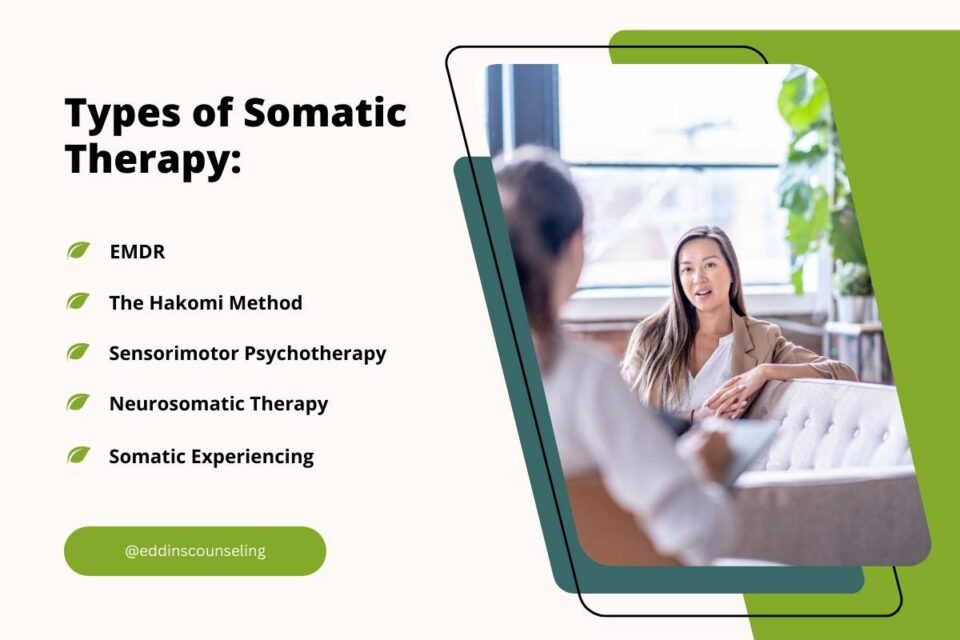
- EMDR (Eye Movement Desensitization and Reprocessing):
EMDR is gaining popularity for trauma healing. It uses bilateral movements while recalling traumatic experiences to create new brain connections. These new connections help desensitize difficult emotions, allowing individuals to reprocess memories by focusing on both the memories and body sensations. Over time, this helps decrease distress and leads to mind-body integration of the traumatic experience. - The Hakomi Method:
There’s also the Hakomi method, which combines mindfulness and somatic therapy. Mindfulness therapies are about being present in the moment without judgment. This includes examining mannerisms and habits such as twirling the hair, biting the lip, facial expressions, or posture. They’re all clues about our unconscious beliefs about ourselves. - Sensorimotor Psychotherapy:
This approach integrates attachment theory, neuroscience, and somatic therapy. It unfolds in three phases:- Phase 1: Establishing safety and stabilization
- Phase 2: Exploring and processing trauma in manageable pieces to empower healing
- Phase 3: Integrating this new sense of self into daily life
- Neurosomatic Therapy:
Focusing on physical releases and massage work, neurosomatic therapy addresses posture imbalances and includes other physical exercises designed to improve body alignment and emotional balance. - Somatic Experiencing:
The goal of Somatic Experiencing is to modify the trauma-related stress response through bottom-up processing—focusing on what the body and senses are telling us. This method helps process trauma by integrating bodily sensations into healing.
Somatic Interventions
- Mindful Breathing: Grounding and Centering:
These techniques help individuals focus on their breath, bringing awareness to their body and surroundings. They help create a sense of presence and grounding, promoting emotional and physical balance. - Body Scanning:
Body scanning involves paying attention to the sensations in different parts of the body as you mentally scan from head to toe. This practice helps individuals identify areas of tension, discomfort, or emotional charge and fosters a deeper connection with the body. - Guided Imagery and Visualization:
Guided imagery uses mental visualization of positive, relaxing scenarios to promote well-being. By engaging all senses in the imagination, individuals can calm their nervous system and create a positive mental state. - Movement (Yoga, Tai Chi, Dance):
Physical movement through practices such as yoga, tai chi, or dance helps release stored tension, improves body awareness, and promotes relaxation. Movement can also be used as an emotional release. - Intuitive Eating:
Intuitive eating is about trusting your body’s natural hunger cues and choosing foods that feel good without judgment or influence from diet culture. This intervention encourages a healthier, more balanced relationship with food. - Pendulation:
Pendulation involves alternating between focusing on distressing content and non-stress-related, soothing experiences. This process allows individuals to gradually process challenging emotions without becoming overwhelmed. - Titration:
Titration is the practice of experiencing small amounts of distress at a time. This method helps release and discharge stored tension in the body, providing a safe way to process and release trauma without becoming flooded with overwhelming emotions. - Resourcing:
Resourcing involves identifying internal and external resources that can support an individual’s healing process. These can be coping strategies, memories of past successes, physical places, or people who offer safety and support. Sometimes this is a practice of coming up with a secure place which can be real or imaginary to give a feeling of peace, ease, and calm. - Sequencing:
Sequencing is a process in which the tension stored in the body begins to release, often initiated by a specific movement. This release typically begins in one part of the body and moves through other areas in a progressive way. For example, tension in the belly may gradually move upward toward the chest, where it might manifest as tightness, before shifting to the arms and eventually dissipating. Sequencing helps the body process and release stored tension, restoring a sense of balance. - Self-Soothing:
Self-soothing techniques, such as the butterfly hug or gently caressing oneself, are emotional regulation strategies used to regain equilibrium after an upsetting or distressing experience.
These techniques are designed to help individuals comfort themselves and reduce the emotional charge associated with a traumatic memory or stressful event, allowing them to calm their nervous system and restore a sense of emotional safety and balance.
Trauma Conscious Yoga

Trauma-conscious yoga is an approach that recognizes that trauma is not only physical but also deeply embedded in the brain. The memory and emotional centers of the brain, such as the hippocampus and amygdala, activate the body whenever a situation reminds someone of a traumatic event or events. This connection between the body and brain plays a crucial role in how trauma is experienced and how it can be processed.
Trauma-conscious yoga focuses less on the execution of poses and more on the experience of being within the body during those poses. The goal is to find grounding, helping individuals connect their mind and body in a secure and present way.
This method encourages people to stay present with their feelings, resisting the urge to dissociate from their bodies—a common trauma response. Additionally, it aids in regulating the nervous system, particularly the fight or flight response.
Trauma-conscious yoga often involves poses that target areas where trauma may be stored, such as the hips and chest. By gently releasing tension in these areas, it helps build emotional resilience and restores a sense of safety.
The benefits of trauma-conscious yoga include:
- Greater sense of safety and strength
- Enhanced ability to express oneself in therapy
- Strengthened inner resources
- Increased self-compassion
- Learning to ask for help
- Building trust in oneself and others
- Improved awareness of needs and resilience
- Feeling seen and valued
- Increased confidence and courage
Reading Recommendations
Here are some good book recommendations for trauma healing:
- “Somatic Internal Family Systems Therapy: Awareness, Breath, Resonance, Movement and Touch in Practice” by Susan McConnell
- “Walking the Tiger: Healing Trauma” by Peter A. Levine
- “My Grandmother’s Hands: Racialized Trauma and the Mending of Our Bodies and Hearts” by Resmaa Menakem
- “Diverse Bodies, Diverse Practices: Toward an Inclusive Somatics” by Don Hanlon Johnson
- “Somatic Psychotherapy Toolbox: 125 Worksheets and Exercises to Treat Trauma & Stress” by Manuela Mischke-Reeds
- “The Embodied Path: Telling the Story of Your Body for Healing and Wholeness” by Ellie Roscher
Breathwork
Let’s now move into some breathwork exercises to help balance the sympathetic and parasympathetic systems in the body, which are crucial for maintaining optimal health. Deep breathing exercises, meditation, and relaxation techniques are all helpful in activating the parasympathetic nervous system, promoting a state of calm and well-being.
First, we’ll practice box breathing. Inhale through your nose for a count of four. Hold your breath for another count of four. Exhale through your nose for a count of four. Then, hold your breath again for a count of four. Let’s practice together: breathe in through your nose, hold, exhale, and hold again.
Next, we’ll move to the 4-7-8 method. Inhale through your nose for a count of four. Hold your breath for a count of seven. Exhale through your nose for a count of eight. Let’s practice: inhale, hold, exhale.
Finally, we’ll do pursed lips breathing. Inhale through your nose for two seconds, keeping your mouth closed. Purse your lips as if you’re about to blow air, and then breathe out through your lips for a count of four. Breathe in through your nose for two, purse your lips, and breathe out for four.
Can You See Somatic Therapy Helping To Heal Your Trauma or Your Client’s Trauma?
What are some additional grounding techniques you like to use to open and close sessions?
Some additional grounding techniques commonly used to open and close sessions include:
- 5-4-3-2-1 Grounding Technique: This involves guiding clients to focus on their surroundings by identifying:
- 5 things they can see
- 4 things they can touch
- 3 things they can hear
- 2 things they can smell
- 1 thing they can taste
- Body Scanning: Having clients tune into their body by mentally scanning from head to toe, noticing any areas of tension or discomfort, and releasing them. This technique helps clients become more aware of their bodies and present in the moment.
- Guided Imagery: Using visualization to help clients relax or feel empowered. This could involve imagining a peaceful place, a safe environment, or focusing on a positive goal.
- Gratitude Reflection: Closing sessions by having clients reflect on a few things they are grateful for, which can help shift the focus to positive aspects of their lives.
- Breathwork: Ending with deep breathing exercises to calm the nervous system and help clients leave the session feeling grounded and balanced.
- Affirmations or Mantras: Using empowering affirmations or personalized mantras to build confidence and positivity as clients close the session.
- Journal Prompts: Providing clients with reflective prompts to help them continue their work outside of the session. These prompts might focus on their feelings, experiences, or insights gained during the session.
These techniques can help clients feel more connected to themselves, grounded, and centered both during and after their sessions.
Did you incorporate somatic yoga before counseling sessions, or is it something you use during the sessions themselves?
With trauma-conscious yoga, it is something that is led during the session with the client. The process typically begins with some discussion or processing, followed by about 15 to 20 minutes, sometimes up to 30 minutes, of yoga. Some clients specifically work with this method.
What are the effectiveness statistics for somatic therapy?
While there aren’t exact statistics for all somatic therapy outcomes, one study showed that 40% of individuals who engaged in somatic therapy reported improvements in managing their PTSD and even complex PTSD. Some studies have also highlighted that the benefits of somatic therapy continue over time, showing lasting effects. Techniques like grounding, titration, and pendulation contribute to emotional regulation and processing, which are key factors in achieving long-term improvements.
Do these techniques help with someone having extreme anxiety?
Yes, these techniques are definitely helpful for anxiety. The movement, grounding, and centering practices are particularly effective in reducing anxiety by helping individuals reconnect with their bodies, regulate their emotions, and create a sense of calm.
How does the body/brain scan work?
In body scanning, the process involves systematically focusing on different parts of the body from head to toe. The therapist typically guides the client, directing their attention to specific areas to check for any sensations. This technique helps individuals identify areas of tension, warmth, or other physical sensations, bringing awareness to their body’s responses.
Research has shown that somatic therapy, including body scanning, can be effective on its own. However, it also complements other forms of therapy, such as talk therapy, enhancing the overall therapeutic experience. By integrating somatic therapy with other interventions, clients can address both the physical and emotional aspects of their experiences in a more holistic manner.
If you have any further questions or would like to discuss somatic therapy more, feel free to reach out via email. Somatic therapy is something the speaker is passionate about, and they are always happy to talk about it. Thank you for joining tonight’s session. If you have any other questions or would like to schedule a free consultation, don’t hesitate to call or text. Thanks again for joining, and we hope the information was helpful!
Feel free to visit additional resources:
1. Articles on specific topics on our blog.
2. RSVP for one of our free monthly webinars (or view past webinars)
3. Follow us on Facebook and Instagram for additional interviews and tips
4. Take another one of our self-test quizzes
5. Schedule a consult and find out how we can support you.
Whether managing symptoms of chronic stress or working on the root causes of your stress, you can begin to feel greater ease and calm in your life.
Contact our therapists to find out more about how we can help you overcome and heal from trauma. To get started now give us a call to schedule an appointment at 832-559-2622 or schedule an appointment online. We also offer online therapy for convenience and flexibility