

March 18, 2026
Finding Calm After Cravings: Strategies for Managing Urges in Early Recovery
Written by Guest Author
Posted in Self Help / Personal Development, Substance Abuse and with tags: addiction, addiction support, self improvement, substance use

Stopping substance use often triggers strong cravings. The brain still expects the chemical reward it received before. Dopamine activity shifts during early recovery, which raises discomfort and desire for relief. Habit loops also remain active. Daily routines once linked to substance use can spark urges. Emotional stress intensifies these feelings. Anxiety, anger, or boredom can push thoughts toward past coping habits. Reminders from your surroundings add pressure as well. Certain places, people, or smells can spark memories tied to substance use. Managing urges in early recovery starts with understanding these patterns. Awareness helps reduce confusion and fear during challenging moments. Cravings act as temporary signals from the brain. They pass with time and calm responses. Steady coping actions support recovery and strengthen control over urges.
The Science Behind Cravings and Emotional Regulation
Brain chemistry shifts after substance use stops. Dopamine levels change, which affects mood and motivation. The brain still expects the reward linked to past substance use. This expectation creates strong urges during early recovery. Emotional regulation also becomes harder during this stage. Stress, boredom, or frustration can raise tension and increase the urge to use again. The brain reacts to discomfort and searches for quick relief. In contrast, recovery focuses on building healthier ways to handle stress. People can train their minds to respond with patience and awareness. Short pauses, breathing exercises, and calm thinking reduce emotional intensity. Repeated practice strengthens new mental patterns over time. Cravings lose power as the brain adjusts to healthier routines. Gradual improvement builds confidence and supports long-term progress in recovery.
Recognizing Early Warning Signs of an Urge

Cravings rarely appear without warning signs. The body often reacts before the mind understands the trigger. Similarly, physical tension, restlessness, or rapid thoughts may signal an approaching urge. Emotional shifts also act as early signals. Anger, loneliness, or boredom can push attention toward old habits. Environmental reminders create another challenge. Certain locations, sounds, or social settings may spark memories tied to substance use. On the other hand, awareness gives people time to respond with calm actions. A brief pause can break the automatic reaction to a trigger. Writing thoughts in a journal or stepping outside for fresh air helps shift focus. Support from a trusted friend can also steady emotions during tense moments. Over time, this awareness builds confidence and strengthens self-control during difficult situations.
Lifestyle Tools That Help When Cravings Appear
Daily habits can steady the mind and help with managing urges in early recovery. Breathwork and grounding exercises slow racing thoughts and settle the body. Simple movement works well during these moments. A short walk, light stretching, or a gym workout shifts focus away from urges. These actions also release endorphins that improve mood and reduce tension. Many people notice how exercise and physical activity help combat cravings and help regain control and reduce urges during stressful moments. Physical movement interrupts the craving cycle and replaces old habits with healthier responses. Nutrition and hydration support stable energy during recovery. Regular meals prevent sharp mood swings that may trigger urges. Creative hobbies, such as drawing or writing, redirect attention in a positive way. Consistent sleep routines also reduce stress and support steady emotional balance each day.
Building a Support System That Makes Managing Urges in Early Recovery Easier
Recovery becomes easier with supportive people nearby. Honest conversations reduce isolation during difficult moments. Research shows that adding recovery support services and peer support to standard treatment can improve engagement, satisfaction, and sometimes reduce relapse risk compared with treatment alone. Friends, family members, or counselors can offer guidance and encouragement. Support groups also provide a safe place to share experiences. Listening to others helps people realize they face similar struggles. Shared stories can inspire hope and determination. Regular check-ins create accountability during early recovery. A simple message or phone call can interrupt negative thoughts. People also gain strength through group activities and healthy routines together. These connections promote trust and emotional stability. Encouraging words from others often restore confidence during stressful days. Over time, strong support networks help people maintain focus on recovery goals.
Healthy Distractions That Redirect the Mind
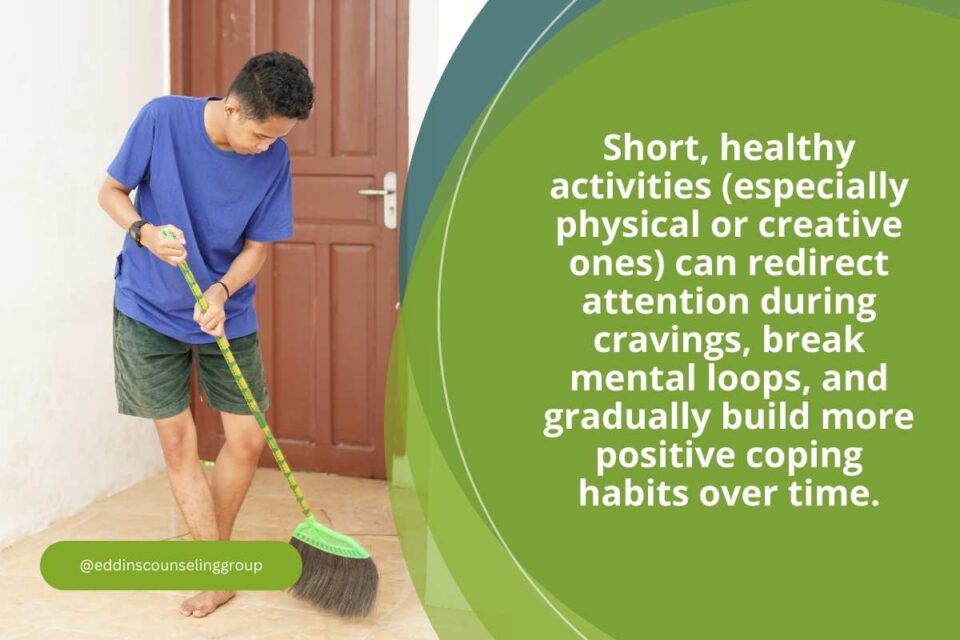
The mind often focuses on cravings during idle moments. Hence, short activities can redirect attention and lower mental pressure. Reading a few pages of a book can shift focus toward new ideas. Puzzles or creative tasks also keep the brain active. Then again, physical tasks often work faster during intense urges. Cleaning a room, organizing a desk, or cooking a meal creates movement and structure. These actions break the mental loop that feeds cravings. People also gain a small sense of accomplishment after completing simple tasks. This positive feeling can lift mood and reduce tension. Over time, healthy distractions form new coping habits. The brain learns to search for productive activities instead of harmful behaviors. Consistent practice strengthens this response and supports steady progress in recovery.
Reframing Thoughts During Difficult Moments
Thought patterns strongly influence emotional reactions. Nevertheless, people can train their minds to respond in healthier ways. Negative thoughts often appear during stressful situations. Someone may think failure will happen or that cravings will never end. These beliefs increase anxiety and pressure. Above all, calm reflection can challenge these thoughts. Writing them down helps people examine their accuracy. Replacing harsh self-talk with balanced statements improves emotional stability. For example, a person can acknowledge the urge while choosing a healthier response. This shift builds confidence and self-respect over time. Mental flexibility also grows with repeated practice. Each positive thought pattern supports stronger emotional regulation. Gradual improvement encourages patience and persistence. Healthier thinking habits help people face difficult moments with greater clarity and control.
Moving Forward With Calm and Confidence
Managing urges in early recovery requires patience, awareness, and steady habits. Cravings rise and fall, yet healthy responses build strength over time. Support, movement, and mindful thinking guide daily progress. Each managed urge strengthens confidence. Consistent effort helps people stay focused, regain balance, and maintain recovery with greater control.
Feel free to visit additional resources:
1. Articles on specific topics on our blog.
2. RSVP for one of our free monthly webinars (or view past webinars)
3. Follow us on Facebook and Instagram for additional interviews and tips
4. Take another one of our self-test quizzes
5. Schedule a consult and find out how we can support you.
Managing urges in early recovery can feel overwhelming, but understanding how cravings work makes them easier to handle. When substance use stops, the brain still expects the reward it once received, leading to shifts in dopamine that affect mood and motivation. At the same time, old habit loops remain active, and everyday triggers—like stress, certain environments, or even boredom—can quickly bring urges to the surface. Without steady coping strategies, these moments can feel intense and difficult to manage. Over time, this can create frustration or self-doubt, making recovery feel harder than it needs to be. That’s why learning to respond to cravings with awareness and calm action is so important—it helps reduce their intensity and builds a stronger sense of control.
At Eddins Counseling & Therapy Group, we understand that managing urges in early recovery isn’t about eliminating cravings completely—it’s about learning how to respond to them in healthier ways. Our therapists support clients in building practical tools that fit into daily life, including grounding techniques, movement, emotional regulation skills, and supportive routines. We also help clients recognize early warning signs, reframe unhelpful thought patterns, and strengthen their support systems. With consistent practice and compassionate guidance, these strategies become more natural over time. Recovery becomes less about resisting urges and more about responding with confidence, helping you maintain stability and move forward with greater clarity and resilience.
We offer in-person and online sessions to fit your needs. Call us today at 832-559-2622 or book online to start building the skills and support you need to protect your progress and your well-being.