
September 12, 2024
Webinar: Finding Zen: 5 Mindfulness Tips to Manage Stress, Improve Focus, and Enhance Well-Being
Written by Guest Author
Posted in Emotional & Mental Health, Webinars and with tags: mental health, mindfulness, self improvement, stressed

Are you feeling the weight of the world on your shoulders? Does the hustle and bustle of life sometimes leave you drained, stressed, and yearning for a moment of calm? You’re not alone. Life can be exhilarating, but it can also take a toll on our well-being.
The Struggle Is Real
Professionals are no strangers to stress. The relentless work hours, the traffic jams that test our patience, and the never-ending to-do lists—it’s enough to make anyone feel like they’re drowning. And let’s face it, stress doesn’t just stay at the office door. It seeps into our relationships, our sleep, and our overall quality of life.
The Cost of Neglecting Our Well-Being
Unchecked stress exacts a personal toll. It chips away at our physical and mental health, leading to increased healthcare expenses, strained relationships, and decreased productivity. Ever notice how stress can turn a minor disagreement into a major blowout? Or how it affects our sleep, leaving us groggy and irritable?
Imagine a Different Path
What if there were practical tools to help you navigate the chaos? What if you could find moments of calm amidst the Houston hustle? Well, you’re in luck! In our Zen webinar, we’ll explore mindfulness techniques designed specifically for busy, overworked professionals like you.
What You’ll Discover:
Grounding Techniques: Learn how to anchor yourself in the present moment, even when life feels like a whirlwind.
Meditation Practices: Unplug from the chaos and tap into your inner peace.
Gratitude Rituals: Cultivate appreciation for the small joys that surround you.
Meet Your Guide: Elizabeth McCullough
Elizabeth, an MBA and MLA graduate, knows the struggle firsthand. She’s been in the corporate trenches, juggling high-profile careers and family responsibilities. But it was during her battle with chronic migraines that she discovered the transformative power of mindfulness. Now, as a therapist, Elizabeth is passionate about sharing these techniques with others.
Watch a replay of the presentation here.
If you found this presentation helpful and would like further support, Elizabeth is accepting new clients. You can call (832) 559-2622 or schedule an appointment online.
This webinar is being facilitated by Elizabeth McCullough and it is on the topic of Finding Zen: 5 Mindfulness Tips to Manage Stress, Improve Focus, and Enhance Well-Being. This is part of the Focus on Wellness webinar series that Eddins Counseling Group offers monthly.
Has stress ever overwhelmed you? It likely has, which is why you’re here. This is why the focus is on providing a path to finding Zen. Here are five mindfulness tips that can help manage stress, improve focus, and enhance overall well-being.
Roadmap
- Introduction
- What is mindfulness?
- What is it good for?
- Setting intentions
- Breathwork
- Meditation
- Gratitude
- Grounding
4-7-8 Breathing Technique
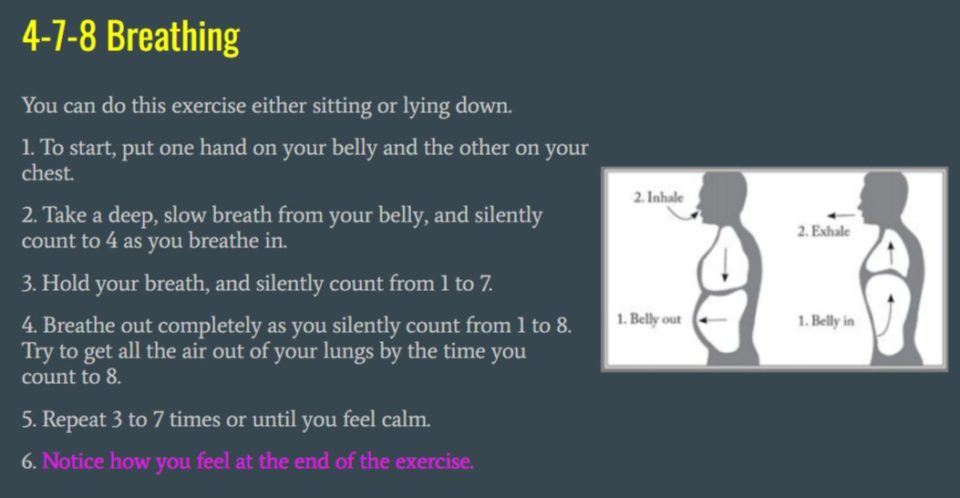
Before diving in, the speaker would like to start with a breathing exercise since this is all about mindfulness. They invite everyone to find a comfortable position. The group will practice 4, 7, and 8 breathing, which they will learn more about during the presentation. It’s a wonderful way to set intentions for the evening.
Here’s how it works: participants will inhale through their noses for a count of four, hold that breath for a count of seven, and then exhale for a count of eight. The speaker will count off for the first one, and then the group will do it three times together.
They would hold that breath for one, two, three, and then for a count of four, five, six, seven, and exhale for a count of one, two, three, four, five, six, seven, eight. If this is your first time doing it, it’s okay if you don’t match the count exactly; the key is to ensure that your exhale is at least twice as long as your inhale.
Let’s do this together for three counts: inhale… exhale… inhale… The speaker appreciates deep breathing exercises because they help with focus, set intentions, and promote relaxation.
The speaker at this webinar is Elizabeth, the host for the evening, who has been with Eddins Counseling since January. Elizabeth recently completed a Master’s in Clinical Mental Health and also holds a Master’s in Business and Supply Chain Management and a Master of Global Arts.
Elizabeth spent the first half of her career climbing the corporate ladder, working at the Walt Disney Company in Burbank, California, and Lockheed Martin in Palmdale and Fort Worth. She also held positions at several other companies in Houston and spent some time in the education sector.
This diverse experience gives her a deep understanding of juggling professional responsibilities and personal obligations. It was her struggles that led her to mindfulness; she suffers from migraines that became so severe her neurologist sent her to the Cleveland Clinic for a three-week headache program, where she was introduced to mindfulness practices.
The Origin Story of Mindfulness?
- Dr. Jon Kabat-Zinn focused on clinical applications.
- Created mindfulness-based stress reduction (MBSR)
- Integrated Western science with Buddhist practices
- Used for all ages in any setting
- parents
- kids
- cancer patients
- corporate settings
- prisons
Just when you feel you have no time to relax, know this is the moment you most need to relax.- Matt Haig
This quote serves as a reminder to prioritize self-care and relaxation.
How many have felt overwhelmed by stress or struggled to focus? How many have heard of mindfulness?
Mindfulness is one of those things that we hear a lot about. It’s a buzzword. We have a lot of ideas about it, but not all of us really understand what it is. This Time magazine cover is from 2014, and it’s there just to give us an idea of how long mindfulness has been in the popular consciousness.
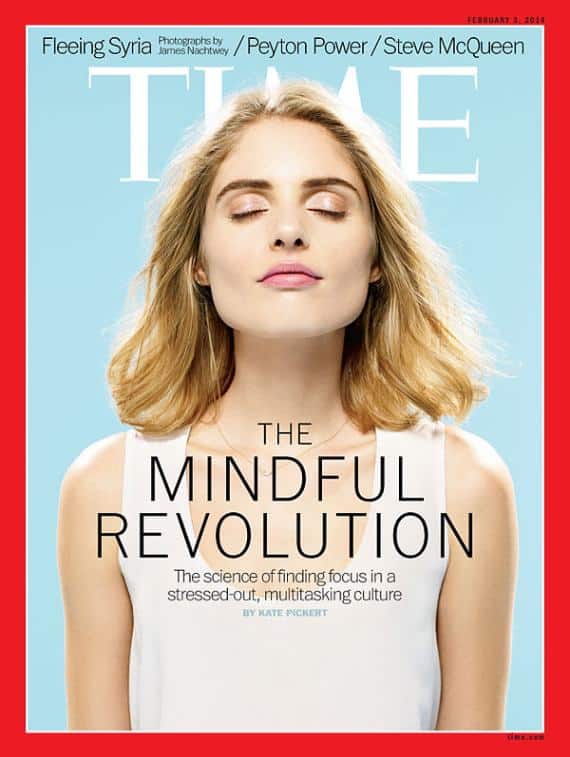
But it’s actually a lot older than that. It’s rooted in ancient Eastern philosophies like Hinduism and Buddhism. It was popularized in the United States in the 1950s and the 1960s by the Beatniks. Then it reached even greater heights in the ’70s with the hippies. That’s where our story is going to start.
Dr. Jon Kabat Zen is famous for creating mindfulness-based stress reduction. It integrated Western science with the Buddhist practices. That’s what the basis of what we learned at the Cleveland Clinic comes from. But it’s really all about how we can use mindfulness to control pain, reduce symptoms, and things like that.
In 1979, he opened his first clinic and published research that allowed us to use these Buddhist philosophies or practices in medicine. We’ve also found that this has been helpful, not just with medical issues, but in everyday life. Then it helps with things in corporate settings and to as diverse a population as prisons. It’s good for parents, it’s good for kids. So it’s good for all of us.
What is Mindfulness?
- Mindfulness arises through paying attention, on purpose, in the present moment, and nonjudgmentally.
- Mindfulness includes your thoughts, feelings, and physical self
- Mindfulness is only concerned with the current moment.
- Asks that we let go of past experiences and future expectations
So we have an idea of where it came from, and how it arose in popularity, but we still don’t really have an understanding of what it is. Mindfulness is really just the practice of being present in the moment. It happens when we pay attention right now and non-judgmentally. The non-judgmental part is the part that trips a lot of us.
A lot of times we judge our current experiences based on things that happened in the past or things that we want to happen in the future. Mindfulness asks us to let go of that and to just really be present and concerned with this current.
It is also important to recognize that mindfulness is not just in our minds. It’s a totally holistic experience. It’s our thoughts and our feelings, but it’s also our body.
When Can Mindfulness Be Useful?

We found through brain scans and MRIs, that mindfulness reduces activity in portions of the brain. It’s those portions of the brain that we can turn down. It allows us to not stress as much. That allows us to focus. It provides clarity, and it even lessens our response.
Some of the ways that it’s helpful in daily life are that it helps increase our self-awareness, which helps with confidence, decision-making, communication, and even relationships. It does that by helping us to slow down in our fast-paced world. People are constantly throwing things at us and expectations.
This is something that helps us to slow down and say: “Okay, these are the things that I really have to do, and then these are things that I don’t have to.” It also allows us to increase our capacity for pleasure because it helps us focus on the things that we are thankful for in our lives. It’s useful for dealing with mental health conditions.
There are several different practices that use mindfulness as a core for treating things like depression or anxiety, even borderline personality disorder. Mindfulness-based cognitive therapy was developed to treat depression. Dialectical behavioral therapy also uses mindfulness as its core. With DBT, what we find is that the meditation portion pushes us to use our wise mind, which helps us with emotional regulation and distress tolerance.
Then finally, as we talked about before, it helps with chronic pain. As evidenced by migraines, it’s been used with cancer patients, it’s been used with back pain, and any kind of thing that can be managed by being more mindful of our mood, and our attention.
It takes courage to say yes to rest and play, in a culture where exhaustion is seen as a status symbol. – Brene Brown
That reminds us that we have to make our own decisions about what’s going to be important to us.
Elizabeth recalls her time working in a corporate office, where it seemed like everyone was competing over how little sleep they got or how many projects they had on their plate. However, she emphasizes that the truly important things—the ones that deserve our focus—are where we find our rest and happiness.
Tip 1: Setting Intentions
Where our attention goes, our energy flows
- Do you find that you’re always busy but don’t feel like you’re making progress?
- Do you have goals that are not being met because you are not working towards them?
- Do your goals change frequently?
- Do you feel that you are just being pushed along in life with no fulfillment or meaning?
All we find is where our attention goes, our energy flows. You’ll see that there are some questions here. These are all about being pushed along and not really having any direction. That’s where being intentional comes in. Once we decide that we’re going to sit and look and see what’s really important to us, then we find that we’re less overwhelmed because we can focus on the things that are actually really important and the things that we actually have to accomplish.
It’s important for us to remember that we don’t control the world around us. We can’t control other people, we can’t control the weather, we can’t control any of those things, but we can control what we focus on and the actions that we take. Intention setting can be something as simple as starting your day off by writing a list of the things that you want to do and identifying your top goals. Or you can make it into a whole practice. You can light a candle, and do a meditation. It can be an entire process that’s around setting your intentions.
One of the helpful experiences Elizabeth recalls from her time working at an elementary school was the daily announcement made by one of the school counselors. The counselor would remind everyone that they were responsible for deciding what kind of day they wanted to have. So we set that intention.
You can’t stop the waves, but you can learn to surf. – Dr. Jon Kabat-Zinn
Again, that reminds us that we don’t have control over everything, but we can control the things that are in our control.
Tip 2: Breathwork
The power of breathwork
- Practice of controlling one’s breath
- Slow, deep breathing signals your brain to calm down and allows you to relax
- Improves muscle function, increases oxygen in the blood, reduces blood pressure, and reduces heart rate
That takes us to our second tip, which is to breathe. Obviously, we did some of this at the very beginning. Here, what we’re really talking about is the power of breathwork, also known as pranayama in yoga. It’s really just a practice of controlling one’s breath. They’ve done a lot of research, and they found that slow deep breathing signals your brain to calm down and allows you to relax.
Many people discount the benefits of breathwork because it seems easy. We breathe all the time, but it’s not really the same as what we’re doing in breathwork. Breathing can turn into a practice where we are more regulatory about our breathing and the types of breathing that we do. Some of the benefits of it are that it increases the oxygen in our blood, reduces our blood pressure, and reduces our heart rate.
Four Types of Breathing
- Box breathing (square breathing)
- 4-7-8 breathing
- Belly (diaphragmatic) breathing
- Alternate nostril breathing
We all know how to breathe it to survive, but breathwork is really about breathing to thrive. That’s really what it is. It’s what’s going to make our lives better. Here we talk about some of the different types of breathwork. We said we did 4-7-8 breathing at the beginning.
Box breathing is another popular method, also known as square breathing, because all of the components are the same. With box breathing (square breathing), you would breathe in, you would do inhale for a count of four, you would hold it for a count of four, exhale for a count of four, and then hold it for a count of four before you start so it makes a little square.
Belly or diaphragmatic breathing is named because it’s focused on our diaphragm, which we use for all of our breathing. That’s a misnomer that we don’t use our diaphragm for all of our breathing. But this one has a special impact on our diaphragm. This is actually one of the ones that are used most in medical practices. When we go to our neurologist, they give us a handout to make sure that we know how to do belly breathing. They tell us that that’s the first stop when we have an acute session.
Then there’s alternate nostril breathing. Named because that’s exactly what it is. You would actually hold one side of your nose, you’re going to breathe in through your nostril, and then out. Then, you need to switch and do it over. It’s another one that’s also been shown to increase relaxation.
When you reframe ‘why is this happening to me?’ to ‘what is this trying to teach me?’ everything shifts. – Unknown Author
Once again, it’s all about the way we approach it.
Tip 3: Meditate
Focused attention and awareness
- Meditation is the use of a technique to focus the mind. One focuses their attention and awareness to achieve mental, emotional, and physical calm.
- Mindfulness meditation can reduce stress, anxiety, and depression, while increasing well-being, focus, and emotional regulation.
- Research suggests that meditation promotes psychological effects similar to those of sleep in its early stages.
A lot of people confuse meditation and mindfulness. Meditation is a part of mindfulness, but it’s not the entire thing. So mindfulness is a much larger umbrella. Meditation is actually just focused attention and awareness. You’re refocusing your mind to achieve mental, emotional, and physical calm.
Mindfulness meditation has been shown to reduce stress, and anxiety, improve depression symptoms, as well as helping us to focus and with emotional regulation. They’ve done research that shows that meditation promotes the same psychological effects as the early stages of sleep. That’s something that we know none of us get enough of. Just a little bit of meditation can help us regain some of that loss.
Meditation Reminders & Tips
- While you can meditate anywhere, it is best to find a quiet place to sit or lie down comfortably
- Close your eyes or soften and lower your gaze. Focus on your breath, inhaling and exhaling slowly
- You don’t have to be completely still or empty your mind
- Meditation doesn’t have to take a long time, you can see improvements in daily function with just a few minutes of meditation a day
- Progressive muscle relaxation, guided visualization, and body scans are forms of meditation
- People who experience neurodivergence may have a harder time with meditation but regular practice helps
Some important reminders when we’re thinking about meditation, you can meditate anywhere. If you have to, you can meditate at your desk, you can meditate in your car. But it is best to find a quiet place so that you can sit and be comfortable. You can sit or lie down. You want to make sure that you close your eyes or soften and lower your gaze. In some places, we’re not comfortable closing our eyes. It may feel too vulnerable. In that case, you can really just lower your gaze. The point is that you don’t want to be fixated. You want to focus on your breath, inhaling and exhaling slowly.
Another myth is that you have to be completely still and that your mind has to be completely empty. That’s almost impossible for most of us. Those things aren’t necessary. When a thought comes to us when we’re meditating, we want to take note of it and come back to it later.
Meditation doesn’t have to take a long time. You can see improvements in daily function in just a few minutes. Some examples of meditation are progressive muscle relaxation, guided visualizations, and body scans.
It’s important to note that people who are neurodivergent may have a hard time with meditation, but regular practice can help them look.
Introduction to Gratitude Meditation
At this point, Elizabeth introduces a gratitude meditation. While she typically leads body scans, she decides to do something a little different today, believing it will transition nicely into the next tip. She invites everyone to get into a comfortable position, close their eyes or soften their gaze, and take a deep breath in, followed by a long, slow exhale. Then, she guides the group to take another deep breath in, and again, a long, slow exhale.
Acknowledging Present Feelings
Elizabeth guides the group to begin the gratitude meditation by focusing on something they’re experiencing at that very moment. Whether it’s thinking about how this information might help, or worrying about tomorrow’s to-do list, she encourages them to simply acknowledge what they’re feeling.
Cultivating Appreciation and Gratitude
She then invites them to let appreciation and gratitude arise for that specific thing, whatever it may be—whether it’s Eddins Counseling offering these sessions, the ability to provide lunch for their kids tomorrow, or having a job that requires presentations. She asks the group to appreciate the experience and express gratitude for what it brings to them.
Reflecting on Support from Others
Next, she asks them to think of someone they don’t know well but who supported their experience in some way today. It could be a bus driver, the person who stocked fruit at the grocery store, or the author of a book they’re reading. Elizabeth encourages everyone to reflect on how they’ve benefited from that person’s work and to consider how their lives might have been different if those individuals hadn’t done what they needed to do.
Gratitude for Tools and Resources
Elizabeth encourages the group to allow themselves to feel appreciation and gratitude. She then invites them to think about the tools that support their work and life, such as the technology enabling the Zoom call, the people who built their computer or phone, and those who constructed the building providing their shelter. She asks them to consider all the effort that went into creating these things and to feel gratitude for having access to these tools.
Appreciating Loved Ones
For the final part of the meditation, Elizabeth asks everyone to bring to mind someone they care about. She invites them to picture this person, reflect on what they mean to them, what they appreciate about who they are, and the experiences they’ve shared together. She encourages the group to hold these experiences close to their hearts and stay with the feeling of appreciation for that person. As they breathe in and out, she guides them to let the gratitude flow from their heads all the way down to their toes, filling their entire body with each breath.
Returning to the Present Moment
Elizabeth continues guiding the meditation, saying, “Breathe in and breathe out, recognizing that you are fully alive and present in this moment.” She then gently asks everyone to open their eyes and return their awareness to the presentation. She encourages the group to reflect on how they feel and consider whether the gratitude exercise has helped improve their mood or appreciation for a person or thing. It may have even brought awareness to something they hadn’t considered before.
How we pay attention to the present moment largely determines the character of our experience, and therefore, the quality of our lives.- Sam Harris
Going back to our definition of mindfulness, we have to let go of the judgment. We have to experience each moment for what it is.
Tip 4: Be Grateful
That leads us back to being grateful. Practicing mindfulness increases our awareness and appreciation of the present moment, which leads us to gratitude, which has been shown to improve our outlook on life and our overall life contentment.
Gratitude Journaling: The Secret to Happiness
- Gratitude journaling has been shown to improve mood, enhance one’s sense of wellbeing, improve memory, process emotions, release anger or regret, spark creativity, boost self-confidence, and solve problems more efficiently by helping you form connections between thoughts, feelings, and behavior (a key to CBT).
- Taps into both the right side of your brain (regarded as creative and emotional) and the left side (known for logic and rationality). Journaling has been used as an effective treatment for trauma and PTSD.
- Five minutes spent on gratitude daily can increase happiness by 25%. (Yale University course)
The most powerful thing that we’ve seen for gratefulness is gratitude journaling. It’s actually been labeled as the secret to happiness. There was a Yale University study that compiled a lot of research about happiness in the US (and some other Western countries). They found that five minutes spent on gratitude can increase your happiness by 25%. Just five for a 25% increase. That’s a huge percentage.
Gratitude journaling has been shown to improve mood, enhance your sense of well-being, improve your memory, help you process emotions, spark creativity, to boost your self-confidence. As a reference to cognitive behavioral therapy, it helps you form connections between your thoughts, your feelings, and your behavior. It also taps into both the right side of your brain, which is the creative side, and the logical left side of your brain.
We always tell our clients when they’re doing gratitude journaling, to actually write it down by hand. It’s not necessarily something that you have to go back and refer to, but writing it by hand, actually affects how well your brain receives the changes that you’re going to get from the teacher.
Be where you are, not where you think you should be. – Unknown
Tip 5: Get Grounded
Connecting body & mind in the moment
- Grounding techniques help to regulate overwhelming or difficult emotions
- It can be used to manage a variety of feelings and thoughts, such as anxiety, stress, or distraction
- Employing an attitude of mindfulness, as you intentionally shift your focus from the internal towards the external. By looking outside of ourselves during times of emotional intensity, we can begin to regain a sense of calm and centeredness.
- Engage your five senses, press your feet into the ground, use a grounding object
- Great for self-soothing of anxiety and PTSD symptoms
Grounding is actually just connecting our body and mind in the present moment. We often use grounding when people are feeling anxious or overwhelmed, whenever they’re having these big, difficult emotions. It can also just be used as a distraction, though.
Studies have shown that people have an attitude of mindfulness, and when they work into a grounding exercise, they can look outside of themselves, and that helps them to be calm and centered in what could be a really overwhelming situation.
One of the ways that we can do grounding is to engage our five senses. You can also just firmly plant your feet on the ground. It works best when you’re outside in the grass, but you can actually do it inside. You just want to feel where your feet connect to the earth.
You can also use a grounding object. It can be any number of items, something that’s going to have a meaning for you, something that’s going to bring you back to the present moment. Grounding has been shown to be great for anxiety and PTSD symptoms.
5 Senses (5-4-3-2-1)

Engaging your senses is a great way to live mindfully.
- see and appreciate the colors in a sunset
- notice the feel of your clothes against your skin
- delight in the sound of a child’s laugh
- relish the scent of a familiar fragrance
- savor the taste of a bite of food
One of the most popular grounding methods is the five census-event grounding method. It’s also called 5-4-3-2-1 because it works by five things.
Five things that you want to bring attention to in your present. Then you’re going to do four things that you can feel. Whether it’s your clothes, whether it’s the air, you want to notice four things that you can feel. Then it’ll be three things that you can hear, two things that you can smell, and then one thing that you taste.
Some of the things we may want to take note of. We want to see and appreciate the colors in the sunset. We already said, notice how your clothes feel against your skin. Notice, again, how your feet feel on the floor. You can delight in the sound of a child’s laugh or your favorite song. Notice a familiar fragrance or the smell of your favorite food. Then tasting. You can taste food, you can taste the air, you can taste a drink, you can taste any number of things. But you want to focus on those things, on your five senses.
One of the things that we like to do with our clients, especially adolescents and people in their middle years, is build a mental health first aid kit. In that first aid kit, we always include something that’s going to engage each of the five senses.
They’ll include their favorite snack, something that they enjoy the feel of, something that’s just soft or cuddly. They’ll have pictures of family and friends. People are going to bring them comfort. They have a card that’s sprayed with a scent of their favorite words. They can experience all of their five senses in one place.
The mind is like water. When it’s turbulent, it’s difficult to see. When it’s calm, everything becomes clear. – Prasad Mahes
How Can We Practice Mindfulness?
By incorporating mindfulness into our daily lives
Practicing mindfulness can offer clarity of thought and a sense of stillness. There are several ways to incorporate mindfulness into daily life. One example is mindful eating, where attention is given to the senses while savoring each bite, which can improve digestion and reduce stress. Observing the colors of food before eating and noticing its textures while chewing helps slow down the process, making the experience more enjoyable.
Another method is mindful movement, which involves focusing on bodily sensations to calm the mind and reduce stress. Research on this began with mindful walking, encouraging individuals to notice the sensations of their feet as they touch the ground, and how these sensations travel through the body with each step.
Mindful movement can extend beyond walking to include activities like dance, yoga, and tai chi, all of which are forms of mindful movement. Even a simple mindful walk can be a powerful practice.
Recently, mindfulness has also been applied to daily chores. There are meditations focused on mindful dishwashing or even folding laundry, incorporating gratitude and awareness into these routine tasks. Since activities like eating, walking, and chores are part of daily life, they provide a perfect opportunity to practice mindfulness, turning ordinary moments into more intentional and meaningful experiences.
Then finally, mindful thinking promotes self-compassion as we actively work on letting go of judgment. It helps us to share kindness and practice gratitude because when we’re kind to ourselves first, we have more to share with others.
Mindful journaling, we talked about a little bit with gratitude, but even outside of gratitude, it allows us to share our thoughts and feelings in a non-judgmental way. That helps us gain clarity and reduce stress. Then there’s also mindful parenting, which allows parents to be present and fully engaged with children without distractions or negative emotions.
Mindfulness Case Studies

Here are a few examples of clients who have benefited from mindfulness, though their names and, in one case, age have been changed for confidentiality. These individuals have experienced the positive impact of mindfulness since we began our practice.
Abby’s Journey: Overcoming Anxiety and Embracing Mindful Parenting
First up, we have Abby. She came to therapy for anxiety. She was trying to balance educating her son and working from home. She just felt like everything was overwhelming. She didn’t feel like her son was getting the support that he needed at school. He was on the autism spectrum, so she decided to pull him out. But that actually further frustrated her because then she was trying to work with his education as well as doing it. It ended up with her having panic attacks and not being able to work at all, which then caused further financial stress for her partner. So they were fighting.
We incorporated breathwork so that before she got on the phone to do her job, she would actually just do some deep breathing, and that allowed her to calm down enough that she was able to work more often, which alleviated some of their financial stress.
But more importantly, the thing that she said that she got the most benefit from was mindful parenting. When she was working on education-type things with her son, she said she always got so frustrated because he wasn’t doing what she thought he needed to do. When she let go of the judgment and let him be what he needed to be at that moment, she was able to get through a lot more of his work. She said it was neither one of them that ended up frustrated at the end of it. That was important for her work, but also for her parenting.
Brian’s Transformation: Navigating Breakups and Discovering Clarity Through Journaling
Next, we have Brian. He came into therapy after a bad breakup, and he said that he was at an age where he was ready to get married and start a family, but he was worried that he made bad relationship decisions.
After we reviewed his history of breakups, that was true. He also was worried that he thought that a relationship was the next step for his career because all of the people at his level and higher were married with families. And so he felt like he was behind, and he needed that for his next promotion.
He was actually someone who loved to write. So we incorporated journaling very early on. So he was able to look at all the things that he was grateful for, the things that he really did enjoy, even in these bad relationships. He worked on setting intentions so that he could look at what he really wanted. He’s on a much better path now. He’s dating someone who it seems like it may work out. We never know. But until he clarified what it actually was that he was looking for, he wasn’t able to do that.

Christie’s Journey: Healing from PTSD Through Grounding Techniques and Creative Expression
Christie is 14, so she’s slightly different. She came in with PTSD. Her grandparents actually put her in therapy. She didn’t want to be there at first. She was withdrawn socially from her family and her friends, which is what her grandparents were concerned about. She was actually sexually assaulted a few months before she came to therapy. That was what was causing a lot of her issues. She also had some abandonment issues because she had been passed around from her mom to her dad and then to her grandparents, finally. But it was really the triggers from the PTSD, from the sexual assault, that were causing the withdrawal.
She’s like, whenever people got close to her, she would still have to feel triggered. And so her idea was just to stay away from everything. We actually incorporated a lot of grounding techniques, so she could use those during class. She was actually allowed to take in a stress ball, so she could use that in class when she started to feel like she was getting stressed out. We incorporated mindful movement, and she actually ended up on the dance team towards the end of our treatment.
We incorporated a lot of mindful art. We were drawing things about what her current emotion was and what it was going to mean to her or just her current move. We incorporated a lot of things that she felt helped her to express herself, but then also reduced her triggers. She was able to start getting hugs from family members or hanging out with friends, which is really important for the age of socialization that she’s at.
Daisy’s Path to Self-Discovery: Overcoming Depression and Chronic Pain Through Intentional Living and Mindful Practices
Then finally, we have Daisy. Daisy was 48. She came with depression and chronic pain. She was a married mom of two. She was not only taking care of her kids, but she was also helping her mom, who was sick. But she felt just really unsupported by her husband</a>. She had been trying to get him to go to couples counseling, but she also just felt like she didn’t know who she was outside of work and her family. And she wanted to recapture some of her personal identity.
She actually ended up doing all five tips. We started first with just living intentionally, taking some time for herself each day. She used deep breathing whenever she began to feel overwhelmed. Then she started doing mindful walking. She was fortunate that she worked at a site where they have a little pond and they have trees where she actually would go on a walk during her lunch break, and then she’d actually walk after work to decompress before she got home. She said it actually also helped her to avoid traffic. So even when everybody else left, she left a little bit later. She wasn’t sitting in traffic as much.
These are just a few examples of clients for whom mindfulness has proven beneficial. Additionally, there is a case study from personal experience involving chronic migraines, where pain levels were significantly reduced. Initially, upon arriving at the Cleveland Clinic, many were skeptical about mindfulness as a potential solution.
However, by the end of the third week, everyone noticed a reduction in pain. The clinic tracked participants for one and two years afterward, and all had maintained that reduced pain level. A few even experienced further improvement by continuing to practice mindfulness exercises effectively.
Some other examples of places where they can use mindfulness is that it’s actually being incorporated into schoolrooms, with teachers and school administrators doing a lot of SEL (Social and Emotional Learning), but then also just actual mindfulness practices, which can help the kids calm down. It can help them focus. It’s going to improve grades and things like that.
Benefits of Mindfulness
The recap – Mindfulness helps
- Awareness – You become more aware of your thoughts and feelings, helping you manage them instead of being overwhelmed by them.
- Nonjudgmental engagement – You engage with your thoughts in a nonjudgmental way.
- Distraction – You shift your attention and distract yourself from unwanted thoughts.
- Stress reduction – You maintain a calm and peaceful mindset, even when you feel tension rising.
- Problem-solving – You acknowledge unproductive thoughts and refocus on the task at hand, contributing to more efficient problem-solving.
- Space creation – Create space between you and your thoughts, allowing you to step back and question what you’re doing.
- Better sleep – improves sleep quality, helping you relax and wake less often during the night.
- Relationship quality – improved mood, mindset, and greater clarity help you build stronger, more impactful experiences and relationships

This is just a recap of some of the things that we’ve talked about. It increases our awareness. When we’re more aware of our thoughts and our feelings, it helps us manage them instead of being overwhelmed by them.
That non-judgmental engagement part is very key. We’re not being mindful without the non-judgmental piece. It helps with stress reduction, problem-solving, and space creation. One of the things that we haven’t touched on as much is that it does help with better sleep. It helps to improve our sleep quality. It helps us relax, and we wake less often during the night.
When the clients come in for insomnia, the first thing that we always recommend is that they actually do a nightly brain dump, which is just putting down everything that’s on their mind at the moment. They almost always report back that they are sleeping better just doing that one thing. I don’t do it nightly anymore, but if we have a hard time sleeping, I keep a journal by my bed so that I can do that.
Then finally, the improvement in relationship quality. Because of all these other factors, we have an improved mood, we have an improved mindset, and we have greater clarity in terms of the decisions that we’re making. That’s going to help us build stronger, more impactful experiences and relationships.
The most precious gift we can offer others is our presence. When mindfulness embraces those we love, they will bloom like flowers. – Thich Nhat Hanh
Putting It All Together: A Daily Mindfulness Routine
Start your day with gratitude and intention setting. Practice a few minutes of meditation, proceed mindfully throughout your day, and end the day with reflective journaling.
If we put together a mindfulness routine, we can start our day with gratitude and intention setting. Practice a few minutes of meditation. We can proceed mindfully through our day, whether that’s with mindful movement, mindful thinking, or mindful eating. Then, we end the day with a reflective or gratitude chart. We built an entire practice that doesn’t take a whole lot of time but has offered us a lot of benefits.
About the Facilitator

If you want more information about mindfulness or about working with any of the therapists at Eddins Counseling Group, you can call or text, and then you can also schedule online. They do offer free 15-minute consultations if you’re trying to find therapists who are going to be the best fit for you. The administrative team is available Monday through Friday from 8:00 to 5:00. If you have questions, a lot of questions can be answered.
You can also contact Elizabeth if you have any questions. Her email address is [email protected]. You can also call the office and ask for her.
We hope that you leave this presentation feeling inspired to incorporate at least one mindfulness practice into your daily life. It really can be life-changing. Remember that you are capable of finding your inner peace.
Feel free to visit additional resources:
1. Articles on specific topics on our blog.
2. RSVP for one of our free monthly webinars (or view past webinars)
3. Follow us on Facebook and Instagram for additional interviews and tips
4. Take another one of our self-test quizzes
5. Schedule a consult and find out how we can support you.
Why You Feel This Way
Get instant access to your free ebook.
Blog Categories
Join a Therapy Group
Events
List of events in Photo View
Adult DBT Skills Evening Group | Eddins Counseling
Virtual Event