
June 11, 2026
Webinar: From Stress to Connection: Using Play to Strengthen Relationships
Written by Guest Author
Posted in Parenting & Family, Relationships, Couples, Marriage, Stress Management, Webinars and with tags: Relationships, connection, parenthood, parenting, stressed
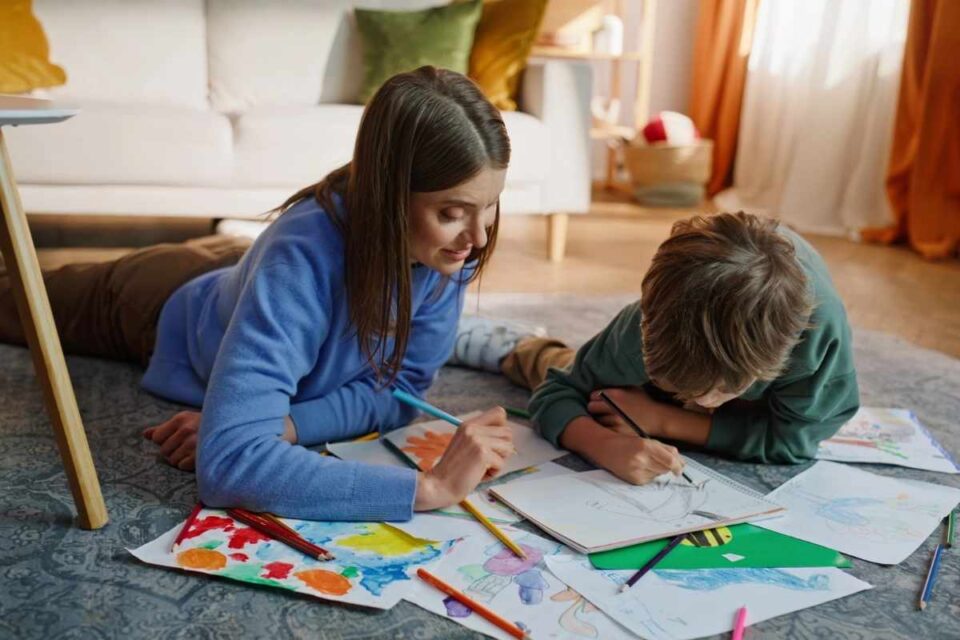
When life starts to feel like one long to-do list, it’s easy to lose touch with the parts of yourself that once felt joyful, creative, and alive. Many adults today are carrying the invisible weight of constant responsibility — balancing work, relationships, parenting, caregiving, and the pressure to always be productive. Even moments meant for rest can feel filled with guilt. Instead of feeling connected and fulfilled, many people find themselves running on autopilot, emotionally exhausted, and unsure how to truly unwind.
That disconnection doesn’t just impact the individual — it quietly reaches into relationships, too. Maybe conversations with your partner feel repetitive and distant, more like roommates than teammates. Maybe spending time with your children feels harder than it “should,” especially when imaginative play or being fully present feels uncomfortable or forced. Or maybe your free time has slowly turned into scrolling, zoning out, or simply trying to numb the stress enough to get through another week.
If any of this feels familiar, you are not alone — and there is another way forward.
The upcoming webinar, From Stress to Connection: Using Play to Strengthen Relationships, facilitated by Rae Morris, invites adults to rediscover something many have unknowingly lost: the healing and transformative power of play.
This webinar is designed for adults 18+ who feel overwhelmed by the demands of everyday life and disconnected from themselves or the people they love most. Whether you are a parent struggling to engage with your child, a partner craving emotional intimacy again, or simply someone who no longer feels present in your own life, this experience offers a compassionate and refreshing perspective on connection, mindfulness, and stress relief.
Play is often misunderstood as something childish or unproductive, but in reality, it can be one of the most powerful tools for emotional regulation, authenticity, creativity, and relationship-building. Through this webinar, attendees will explore how integrating play into daily life can lower the pressure of perfectionism and create space for genuine connection — both internally and externally.
Imagine being able to try something new without worrying whether you’re “good” at it. Imagine reconnecting with hobbies and interests that once brought you joy. Or, imagine feeling more emotionally available with your children, more playful and connected with your partner, and more at ease simply being yourself. These are the kinds of shifts this webinar hopes to inspire.
Participants will learn how play can:
- Reduce the feeling that everything in life is “high stakes.”
- Encourage creativity and self-expression
- Support mindfulness and presence
- Help rebuild emotional intimacy in relationships
- Strengthen parent-child connection and emotional security
- Decrease shame and self-consciousness
- Create healthier ways to decompress from stress
- Restore excitement and joy in everyday life
At its core, Anyone Can Play is about permitting yourself to exist beyond survival mode.
Over the last three years, Rae Morris has had the privilege of working with hundreds of clients ages 3 through adulthood in play, individual, and couples counseling settings. Using an eclectic approach rooted in Person-Centered and Child-Centered Play Therapy, Rae supports clients navigating anxiety, depression, perfectionism, overwhelm, low self-esteem, neurodivergence, LGBTQIA+ topics, and relationship challenges. Sessions incorporate interventions such as Polyvagal Theory and Emotionally Focused Therapy to help clients deepen self-understanding, strengthen relationships, and reconnect with authenticity and self-compassion.
This webinar offers more than information — it offers a chance to breathe, reconnect, and remember that joy, curiosity, and play are not luxuries. They are essential parts of being human.
If you’re tired of feeling disconnected, emotionally drained, or stuck on autopilot, this may be the invitation you need to reconnect with yourself and the people who matter most.
Watch a replay of the presentation here.
This webinar is facilitated by Ray Morris, an LPC Associate. It is part of our monthly webinar series. Today, we’re going to be talking about play and how we can all do it. We can use it for deeper connections and all sorts of things that we’ll get into.
At the conclusion of the presentation, we’ll also have a feedback form that’ll be sent out in the chat, so please do us a favor and open that up and give us some feedback. Let us know what your thoughts are and how we can create some other relevant topics for you all in the future.
Play as a Developmental Framework
So let’s start with play as a theory—what it is and what we have to work with.
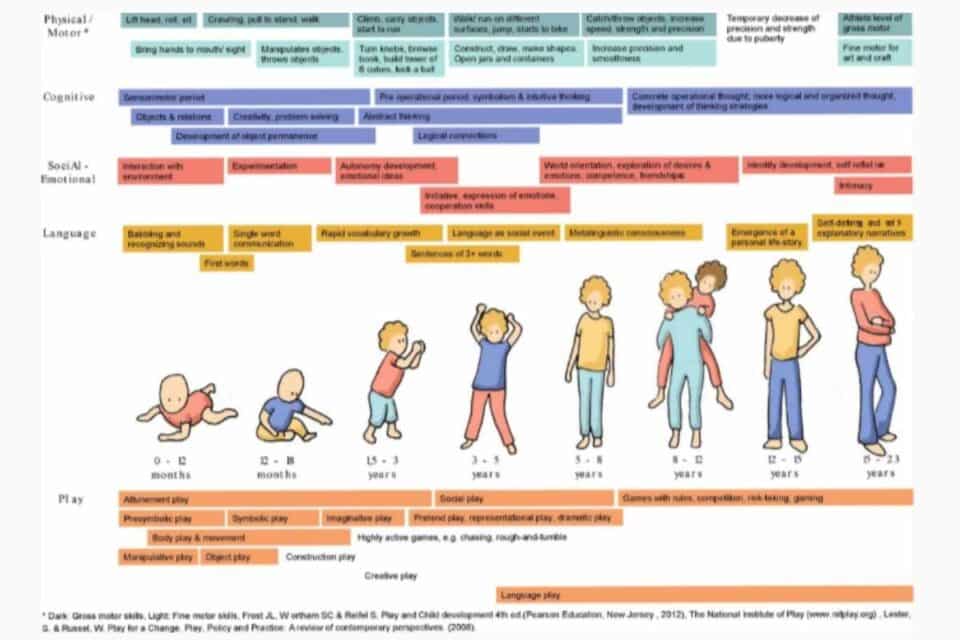
Like all people, we go through different stages of development. We’ll briefly gloss over these. We have physical and motor development, cognitive development, social-emotional development, and language development.
We also have play development, which is a primary way we learn how to navigate different roles and understand complex social systems. It’s where we get to learn more about ourselves, explore empathy, and so much more.
Neuroscience shows that play is a biological necessity—it’s embedded in us from birth. We’re going to keep it light, but for those of us who enjoy true crime, there’s also research showing just how essential play is.
Several analytical studies of infamous psychopaths have found that their early childhood lacked play or was characterized by very rigid environments with little or no opportunity for play. That’s one theory various researchers have proposed.
Maslow’s Hierarchy of Needs
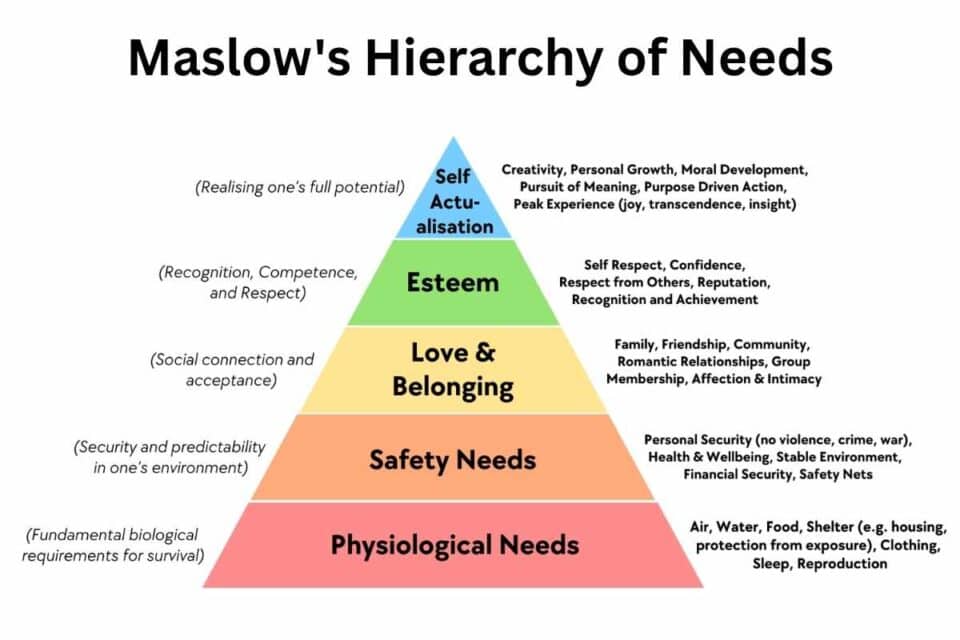
https://commons.wikimedia.org/wiki/File:Maslow%27s_Hierarchy_of_Needs_Diagram.png
But keeping it light, let’s look at what we can actually see from play in terms of our needs. Think about Maslow’s hierarchy of needs. We have a pyramid, and the lower levels need to be met before we can reach the top.
At the very top, we have creativity, and creativity is, in many ways, a privilege. It’s something that can exist even when we’re in distress, or our safety needs aren’t fully being met. But we can see that we truly thrive and reach our potential when our other needs are met, including personal growth, moral development, and the foundational levels below self-actualization.
We also have love and belonging. Family connections, relationships, and a sense of community all include elements of play. It’s helpful for us to shift how we view and approach play as adults because it’s something that’s deeply embedded within us and can be a very intimate experience. That’s something we can all begin to understand and appreciate about play in a different way.
How Does Play Apply to me Now as an Adult?
So how can we really understand what play looks like for us? It’s not just one question—there’s a lot that goes into it.
Do we feel like we have difficulty connecting with our partners? Do we struggle to stay present with our kids? Or maybe we feel like we’re stuck on autopilot.
We might feel overwhelmed because so much is outside of our control, or we may carry a lingering sense of stress. Maybe we’re uncertain about who we are, our interests, or our hobbies. Maybe it’s really hard for us to unwind without feeling guilty because it doesn’t seem productive.
There are a lot of ways we can feel pressured, or like there’s a certain way we’re supposed to be. Maybe we’ve tried traditional talk therapy, habit tracking, or working out. Maybe we’ve gone the route of self-isolation or relying on substances.
We offer play as another option to consider—one that’s ingrained in all of us. Together, we can explore where and how it might apply to us as individuals and within our relationships.
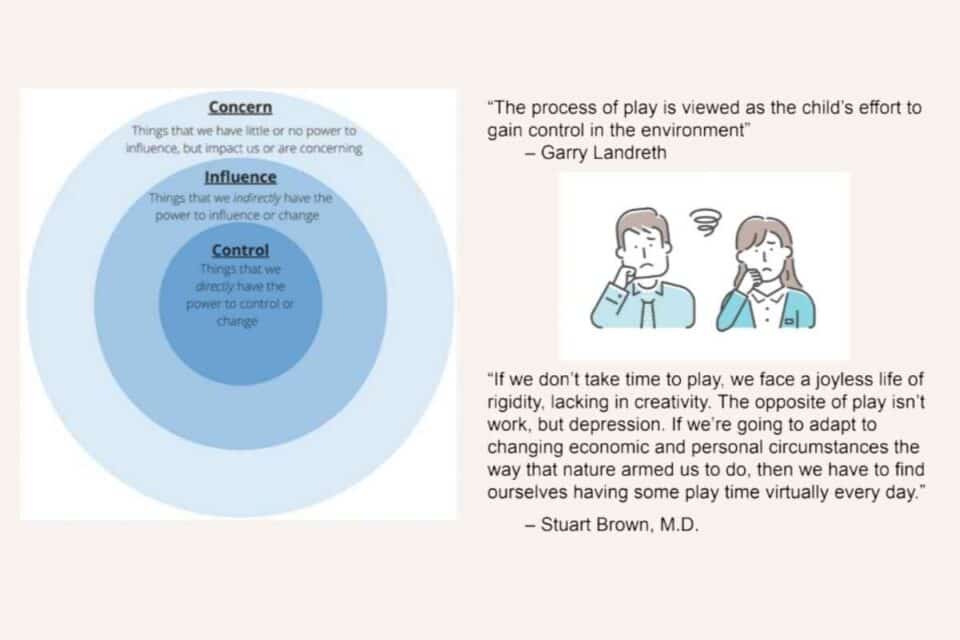
So what we have here is a quote from Gary Landreth, one of the leading theorists in play therapy: “The process of play is viewed as the child’s effort to gain control in the environment.”
When we’re working with a child, we default to them. Whatever they need that space to be—whether it’s taking the sofa apart and putting all the cushions on the ground, or playing while directing us in each and every thing we’re doing—we understand there’s a purpose behind it.
Kids don’t have a lot of control over their lives. They don’t really get to choose when and where they go or many of the decisions that affect them. One of the main benefits of play therapy is that it helps children gain a sense of control.
So let’s apply that idea to adults. Let’s take a look at Stuart Brown, another leading theorist in play who works with the National Institute for Play. He extends the concept of play to adults and says,
“If we don’t take time to play, we face a joyless life of rigidity lacking in creativity. The opposite of play isn’t work but depression. If we’re going to adapt to changing economic and personal circumstances the way nature equipped us to do, then we have to make time for play virtually every day.”
That’s much easier said than done. If we look at the Circle of Control, we can see that the center circle—what we have direct control over—is actually the smallest.
We don’t have direct control over many things in our lives, including our relationships. We can make requests of others, but we can’t guarantee they’ll follow through. And we can have expectations, but those can sometimes lead to disappointment.
Ultimately, we can only control a limited number of things within ourselves—our behaviors, to some extent our emotional responses, our self-expression, and how we choose to respond. The vast majority of our lives falls outside those inner circles.
There are also things we can influence indirectly, such as our relationships, our work, the projects we choose to pursue, or the ideas we propose. Beyond that are the things we can only be concerned about—larger societal issues, systems, and circumstances that affect our lives but are outside our direct influence.
That’s one way we can understand the connection between play and adult life. We all have responsibilities that can easily bury our natural sense of curiosity, creativity, and joy. But when we intentionally create environments where we can engage in play, we gain a different kind of sense of control. We refill our cup, restore some energy, and bring that renewed energy into other areas of our lives.
Back to Development…
Going back to development, if you tilt your head to the side, the orange bars represent our play development—it resembles a pyramid. We need the foundational stages before we can build toward the more complex ones. As we get older, our play becomes more sophisticated.
It starts with babies simply moving their bodies, then tracking objects with their eyes, imitating behaviors, and eventually developing imaginative play, pretend play, and social play.
Then we reach our late childhood and adolescent years, and we begin to develop the ability to engage in more complex games with rules, strategy, and problem-solving. Take a game like Dungeons & Dragons, for example.
We can’t play a game that requires strategy, rule-following, risk-taking, and collaboration without also using the skills we developed earlier. Pretend play, imaginative play, and social play are all still there. As adults, we still have the ability to access those forms of play. It’s as simple as this: we don’t lose the ability to crawl just because we learn how to walk.
As we continue to build on those skills, our capacity for play grows with us.
Age Is No Limit!
The benefits are lifelong
There’s no age limit for play. There’s extensive research showing that maintaining play in our relationships and personal lives has long-term benefits. One area that’s especially fascinating is dementia care.
Studies have found that patients with dementia often experience decreased agitation—and in some cases, even a reduced need for medication—when play-based interventions are incorporated into their treatment. This is especially true when those activities are tailored to the patient’s previous interests or hobbies.
We can often see patients come to life, with reduced distress and confusion. It really highlights that play is an intrinsic part of who we are. Even with cognitive decline, we’re still able to access that part of ourselves.
As we’ve worked in play therapy and then expanded into individual adult and couples therapy, we’ve seen this firsthand. Many of our adult clients eventually reach a point where we begin incorporating play, playfulness, self-exploration, and self-acceptance into our work together.
Whether it’s for themselves or their relationships, it often involves deconstructing ideas about who they thought they needed to be or what society told them was expected of them as adults.
Many of us underestimate the importance of play in adulthood. We may default to thinking about video games, or activities like pottery nights or paint-and-sip events. Many adult activities are paired with substance use or some other type of incentive. But research continues to show that we can engage in play for its own sake, and that doing so provides meaningful, long-term benefits.
Play for All!
So again, play is for all of us. Whether we’re looking to connect with our kids, our partners, our family, our friends, or even ourselves, play is a powerful way to build those connections.
Play Potential:
1. Helps regulate emotions and reduce stress.
2. Supports coping during challenging or adverse experiences.
3. Aids in processing new information cognitively and emotionally by promoting understanding and integration.
4. Provides a safe environment to practice new behaviors and explore possible solutions.
5. Encourages imagination, creativity, and flexible thinking.
6. Fosters the development of empathy and understanding of others.
Virginia Axline, another leading theorist in play therapy, said that “Play is the child’s natural medium of self-expression. It’s an opportunity which is given to the children to “play out” their feelings and problems just as, in certain types of adult therapy, an individual “talks out” his difficulties.”
Children do the same thing, but through play. Sometimes words aren’t enough, or it helps to have additional tools because some experiences are difficult to grasp through words alone. Play has tremendous potential to help people, whether we’re working with couples, adults, or children.
Some of the benefits of play include helping us regulate emotions and reduce stress, supporting coping during challenging or adverse experiences, helping us process new information and truly digest and integrate it cognitively and emotionally, providing safe environments to practice new behaviors and explore possible solutions, encouraging imagination, creativity, and flexible thinking, and fostering empathy and understanding of others. As we’ve been saying, there are countless applications and many benefits.
What Does Play Look Like?
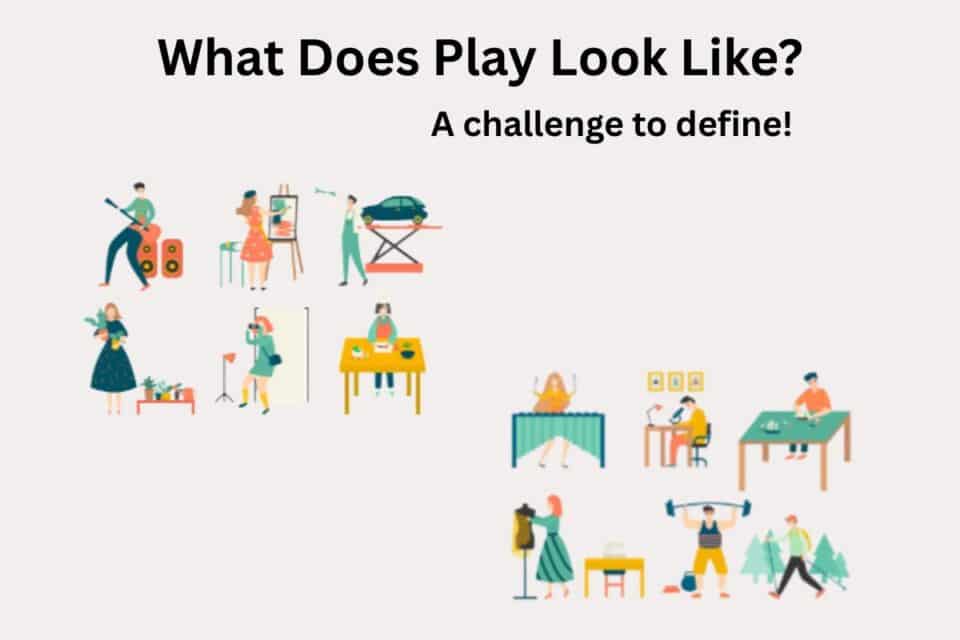
So what does play actually look like? That’s a less clear answer. One of the defining characteristics of play is that it isn’t outcome-based. Each of these pictures shows someone engaged in an activity, and they could easily be practicing part of their career. We have a photographer, a chef, a seamstress, and someone leading a hiking tour. The difference is that there isn’t a specific goal or outcome beyond enjoyment, curiosity, and exploration.
In the most recent Winter Olympics, Alysa Liu changed the narrative for many athletes with her gold medal accomplishment. She had retired from competition for a couple of years to focus on herself and her mental health. After training for most of her life, the pressure had become overwhelming. When she returned, it didn’t look like she was simply performing. It looked like she was fully present and taking the moment in for herself. That shift in mindset brought a different kind of life to her performance, and she was ultimately able to blend her profession with play.
After winning, she shared this quote: “Winning isn’t all that, and neither is losing. It’s just something that happens. It’s an outcome. What matters is the input and the journey.”
That captures the central idea of play—it’s not about the outcome; it’s about the process.
6 Play Types
And yes, they can blend!
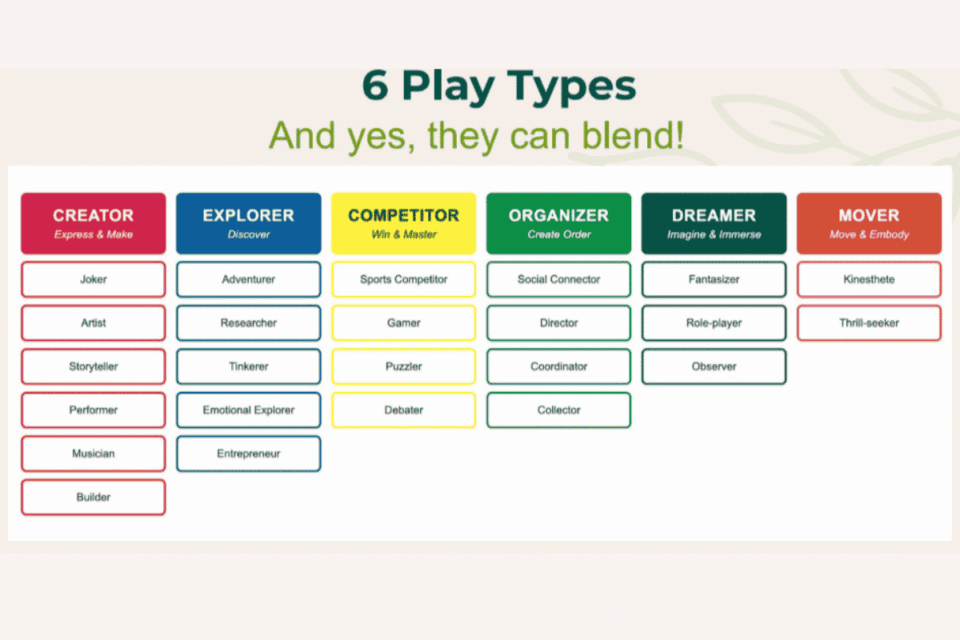
There are many different types of play, so let’s narrow it down a bit. While play is a broad concept, the National Play Institute, led by Dr. Stuart Brown, recently organized it into six categories. There used to be eight, but now we have different ways of expressing ourselves through play.
We have the Creator—people who enjoy making things, telling jokes, creating art, or telling stories. We have the Explorer—researchers, people who like to tinker with things, emotional explorers. Also, we have the Competitor…
Again, it’s not about the outcome. That’s an important distinction between competitive play and competing for a title, recognition, or some other external goal. Beyond the Competitor, we also have the Organizer, Dreamer, and Mover. Each of these play personalities is unique, and they can overlap and blend together.
There’s so much we can learn about ourselves and our loved ones through this kind of exploration—not just by engaging in play itself, but also by learning about the different ways we naturally play. It’s a fascinating and expansive field of study.
We were honestly surprised by how much research there was while putting this together. We actually had to narrow down what we wanted to include here.
Engaging in Play with Children: Tips & Tricks
Moving forward, one of the most obvious ways we can use this presentation is for engaging with children in play. It’s a somewhat simple algorithm, but it does require us to be present and engaged.
That might mean putting our phones away, avoiding multitasking, and giving our full attention to our child. It’s best if we can schedule dedicated playtime, or at the very least, go into it with the intention of saying, “I’m here to play and be present.” Remember that sense of control children gain through play—something they don’t have many opportunities to experience in other parts of their lives.
In addition to being present, we want to follow the leader. That can look different in different situations. Of course, we always want to make sure there are appropriate safety considerations. Beyond that, though, the rules don’t have to be overly rigid.
If a child wants to take a roll of tape and stretch it throughout the house, our first instinct might be to say, “No, don’t do that,” or, “That’s wasteful,” or, “That’s going to make a mess.” If that’s what they want to do, we invite ourselves to pause and ask, “What’s the harm?” and “What’s the purpose?” Maybe they’re exploring freedom, experiencing a sense of control, or expressing themselves in a way that’s meaningful to them.
Really allowing children that space can be incredibly valuable. Sometimes, when we’re working with a child in session, we’ll be playing together, and they’ll stop to correct us because we didn’t have the character do something the “right” way. Sometimes they’ll even guide us through every line of dialogue between the characters. It’s not simply about controlling us. They’re playing out social dynamics in their minds, and we’re fortunate enough to be invited into their world—to witness what they’re processing and work through it alongside them.
Another important principle is that the objective is greater than the subjective. This can be challenging because it requires mindfulness and presence. For example, when a child shows us a drawing, our instinct is often to say, “Oh, I love it.” That shifts the attention to our opinion.
Instead, we might say, “You added a lot of detail,” or, “I noticed you used sparkles over here,” or, “You connected these lines together.” Notice that we’re simply describing what we observe rather than labeling the picture or assigning meaning to it. Children often perceive things differently than we do.
If you’re familiar with The Little Prince, the opening of the story centers on an adult misunderstanding what the narrator drew as a child and how deeply that experience affected them, leading them to give up art altogether.
We’re not saying the stakes are always that high, but allowing children to take the lead reduces the likelihood of creating a disconnect or misunderstanding. Whether we’re reflecting the behavior they’re acting out or the feeling we think we’re seeing, children will absolutely correct us if we’re wrong. And we let them take the lead.
Connecting and Collaborating
Part of that connection and collaboration is recognizing that we can only have that kind of invested playtime for so long. That’s one reason we have play therapists—because it’s hard to give our children that level of attention all the time. A lot of the time we’re interacting with our kids, we’re trying to get them off to school, get them to clean up, or handle all the other day-to-day responsibilities.
So we can use play. We keep it simple, but we make it strategic. Kids really want to be engaged. They want that connection. So we can use play as a way to create it. If we’re feeling overwhelmed because we have to vacuum and unload the dishwasher, we can ask our child to help by playing kitchen. They can hand us dishes while we put them away, or they can run the vacuum.
Is it going to be a spotless, clean, perfect job? Maybe. Likely? We don’t know. But that’s okay.
They’re engaging in the task. They’re seeing that we trust them with it. It gives them a sense of autonomy, control, and all of those things. So that’s a great way we can engage kids and create more collaborative, productive play for that age group.
We can also use play to help with indecisiveness. If a child is having a hard time deciding between two shirts, we can hold them up and play out a little battle scene or a conversation between them. Maybe one shirt says, “Well, we know we’re going to Jimmy’s house today,” and we start talking about what the day might look like. As they’re watching the two shirts “talk,” they might suddenly blurt out, “I want to wear the one with the truck,” because maybe we mentioned playing in the sandbox or something similar.
Then there are time constraints—a big part of life in general, but definitely of parenting. We can use a little play magic to help move the process along. That’s not always something we have the luxury of doing.
A lot of our adult clients who are parents mention the same frustration. They feel frustrated with themselves because they become frustrated with their child over how long it takes to put their shoes on. That’s actually why preschools have licensing rules that children can’t take their shoes off, even during nap time. So it is a real frustration.
But if we use our imagination and engage with our child, we can take the shoes and make them dance or pretend they’re magic. We can say, “Alright, we’re going to magically slip them onto your feet, and then you’re going to do a little dance because your shoes are happy, magical, and ready to dance.” That helps accomplish the task, and it also keeps the pressure and distress off the child when there’s a time constraint.
Research shows that rushing a child increases the likelihood of anxiety later in life. So whenever we have the opportunity, using play is a fun way to move things along in a developmentally appropriate way.
Versatility of Play
Keep an open mind
Play is versatile. We’ve talked about engaging with children, and now we’re moving into the more personal side of play—for ourselves and for our relationships. So we encourage everyone to keep an open mind.
Unmasking
- Examples of masking include:
- Forcing eye contact despite discomfort.
- Rehearsing conversations in advance.
- Hiding feelings of stress or sadness behind a smile.
- Mimicking others’ behaviors to fit into a group.
Play encourages self-exploration and helps us break down perceived limitations of self-expression.
We’re going to start with the idea of unmasking. Masking is something all of us experience. It’s often associated with autism and ADHD, but it affects all of us in different contexts. We all present different versions of ourselves depending on the situation, whether that’s at work or in other social settings.
Masking is essentially the act of hiding, suppressing, or altering our natural behaviors, thoughts, emotions, or traits in order to fit social expectations or avoid negative reactions.
A little self-disclosure from us: we are neurodivergent, and over the last several years we’ve been working on our own process of unmasking. Much of it was happening before we even realized it. It really started during COVID, when there was suddenly time for isolation and fewer people around to judge what we were doing or how we needed to support ourselves.
For us, a lot of what came up involved sensory needs and stimming activities. That’s why we included the picture of someone with a beanbag, sand, shoes, and headphones.
That person is meeting their needs. Beanbags are actually a wonderful resource for children with sensory needs because they can crash into them or sink into them, and the beanbag provides deep pressure
around the body. That’s where the beanbag comes in. Then there are many people who struggle with things like sand, beach days, or noise.
We wanted to include an image that reflects the idea that we can go out into the world while still giving ourselves what we need. And that person looks pretty peaceful.
Play can help us become more authentic. If you’re reading the slide, you’ll see that masking can look like forcing eye contact or rehearsing conversations in advance—which many of us do.
It can also look like hiding behind a smile, trying to hide stress, or wiping away tears before walking into work. Whatever it looks like, bringing play into our individual lives, our self-expression, our self-exploration, and our relationships is a process that often requires us to begin unmasking and allowing ourselves to be authentic.
Part of what we find interesting is our societal view of development as it relates to play. Somewhere around ages 11 or 12, around middle school, we’re suddenly expected to stop playing.
It is true that this is a primary period of play development. But all of a sudden, it becomes socially “uncool” to keep playing with dolls or whatever it might be. It’s the same with Halloween. Around 8th grade, at the latest, we’re expected to stop trick-or-treating. It’s kind of comical in a sad way.
Then we look around and see that so many people’s favorite holiday is Halloween. It’s a time when we get to really be ourselves, try new things, and explore. It’s a holiday that’s centered around play. There’s a lot of great energy that comes with it, but there’s also a very high rate of substance use associated with Halloween. There’s probably a pretty strong correlation there, but it’s just another interesting example of masking and unmasking.
Professional Success
- Play helps teams become more collaborative, creative, and effective.
- Employees who play together are more engaged, resilient, and productive.
- Play fosters innovation, trust, communication, and psychological safety.
- It creates opportunities for learning, experimentation, and stronger team connections.
Once we understand that we can simply be ourselves and be okay with whatever it is we need—whether that’s sensory needs, social needs, or something else—we can begin applying that to other areas of our lives.
One of those places is the workplace. At Eddins, we have staff hangouts every so often, and we tend to do play-based activities like painting. Soon we’ll be doing one with clay, making different clay creations. These activities really do provide opportunities to connect, network, and de-stress.
Play helps teams become more collaborative, creative, and effective. Employees who play together tend to be more engaged, resilient, and productive. Play fosters innovation, trust, communication, and psychological safety. It creates opportunities for learning, experimentation, and stronger team dynamics.
Play is simple, but it’s also a powerful way to build high-performing teams and create a positive workplace culture. We’re sure many of us can think back to rolling our eyes at icebreakers or company retreats that we were dreading.
Ultimately, though, there is a purpose behind them, and there’s a great deal of research showing the positive benefits that come from those experiences.
ADHD in Kids and Adults
Gamification to support motivation and executive functioning!
- Break tasks into levels
- Use a visual progress bar or visual consistency tracker
- Create a reward system
- Set a timer and race against the clock.
- How many dishes can I wash in three minutes?
- Tidying up? Give yourself or your kiddo the options
- “Do you want to find all of the blue toys or play librarian and put the books back on the shelf?”
- Difficulty getting someone’s attention? Instead of starting with instruction, try a specific target to get them engage with you.
- “Hook pinkies with me! Awesome, now can you touch your elbow to my elbow? Look at you go! It’s time to pack up and go home.”
- Use parallel play! Find a friend and body double to get those pesky tasks out of the way. Inattention during homework time? Sit with your kiddo while they work and do some light reading.
Moving forward, let’s look at ADHD in both adults and children. All of these play interventions can be used with adults and kids, including the idea of following the leader. If our partner is showing us one of their hobbies, we can observe them, let them take the lead, refrain from immediately sharing our own opinions, and simply watch them enjoy what they’re doing. Then, of course, afterward we can debrief and share our own thoughts, feelings, and perspectives.
ADHD is another area where play and gamification can be especially helpful. ADHD is closely connected to our dopamine receptors and motivation, so play can support our executive functioning.
Some examples include breaking tasks into levels, using a visual progress bar or consistency tracker, or creating a reward system. Depending on the person, another strategy is setting a timer and racing against the clock.
For adults, that might look like asking ourselves, “How many dishes can we wash in three minutes?” Most of us don’t enjoy doing dishes, but we can usually do something for three minutes. Then it becomes fun to see how much we can accomplish if we add one more minute, and then another. That’s a common strategy many people with ADHD find helpful.
The same idea applies to tidying up. We can give ourselves—or our child—options for how to approach the task. We might ask, “Do you want to find all the blue toys first, or play librarian and put all the books away?” For adults, it might be, “I’m going to find all the dishes around the apartment first,” or, “I’m going to pick up all the clothes.”
It’s about narrowing the task down and breaking it into levels. We can think of it as earning experience points or building toward something that keeps us motivated.
Another example is getting someone’s attention. This comes up often with children at the park, or even with our partners when they’re focused on something else. Instead of starting with an instruction or repeating their name over and over, we can use a playful target and make it into a game.
That might sound like, “Hey, hook pinkies with me. Awesome. Now touch your elbow to mine. Nice. It’s time to go home. We’ve got to pack up. This is your two-minute warning.” Time warnings are very helpful for children in general.
We can also use parallel play, which goes back to some of our earlier stages of play development. Parallel play is when two people engage in focused activities alongside one another. That might be with a friend, a family member, or a child who’s having a hard time sitting still and focusing on homework.
We simply sit together. We’ve even done this virtually. We use the time to get those pesky tasks done or do some light reading while our child focuses on their work, offering redirection as needed. That modeling, and simply having someone else present and engaged in a focused activity, can really help people with ADHD stay connected to the task and get things done. That’s one of the many ways play can support people with ADHD.
Connecting with Your Partner(s)
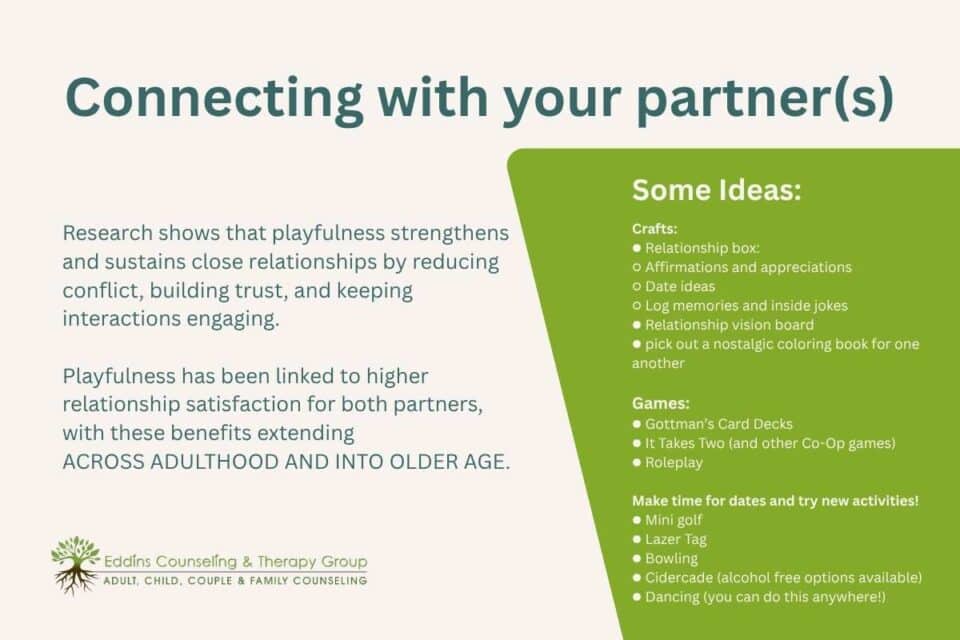
Then we have connecting with our partner or partners. Research does show that playfulness is a major strength in relationships, and it can help maintain closeness and excitement, create new experiences, build trust, keep things engaging, and also reduce conflict, of course depending on the situation. It’s also been linked to longer-term relationship satisfaction that lasts well into later life. One of the studies we were reading looked at couples into their 80s.
Focusing on connecting through intentional time spent together: One of the biggest things is really being intentional—carving time out and making time for dates. A date can be sitting across from each other eating food, or it can be sitting on the couch at home. There’s no right or wrong way to date. But if we’re feeling like we’re having a hard time connecting or we’ve kind of lost the spark, then we can look at some of these other ideas.
So, crafting is one of them. We can get a relationship box—a tissue box or something similar—bring out the craft supplies, and really just go all out on it. It doesn’t have to look good. There’s no specific end goal for what it needs to be. It’s just about working on something together. Then we can use it to put little pieces of paper in—keeping logs of our memories, inside jokes, date ideas, affirmations, appreciations, and so on. Every once in a while, we can reach in and pull something out. We could also make a collage or a relationship vision board.
Another example that’s a little more nostalgic and playful is using a coloring book. There are tons of adult coloring books out there, but the Care Bears coloring book from the $2 section works just as well. We can each pick one out for the other person, swap them, and connect through that.
Then there are games. The Gottmans actually have a variety of card decks with open-ended questions and different ideas and ways of connecting. We know at least one of them is a free resource in the App Store, so check that out if you’re interested.
Then there’s It Takes Two. It’s a co-op game that’s on PlayStation, and we’re sure it’s on other consoles as well. It’s something that was actually suggested to us during couples therapy, and we were surprised because it seemed kind of non-traditional. But if you check out the game, you’ll see why and where it’s relevant.
Any board game or video game that helps us engage with each other—where there’s some collaborative element or playful competitive aspect—involves that same idea.
Then there’s role-playing. That can be role-playing to better understand different social scenarios. It can also be a way to support one another if one of us is anticipating seeing a family member or going into a situation that’s already weighing on our minds. We can bring a playful element into it by saying, “Hey, you’re already thinking about it. Let’s talk about it together,” and maybe bring some humor into it to lighten the load.
And then, of course, there are other forms of intimacy that can be incorporated into all of those things. Some examples of dates and activities we can do are mini golf, laser tag, bowling, arcades, dancing, or anything else that gives us an opportunity to play together.
There are a ton of different things we can do. A lot of the time, when adults go out and engage in activities we used to enjoy as kids, they’re paired with substance use. So it might feel uncomfortable at first, but we encourage everyone to give it a shot. Be intentional, try a new activity, and maybe try it with a clear mind.
Check in on your values
What values did you have when you were a kid?
What do you currently value?
Another way we can get a better sense of play and how it applies to us is by checking in with our values. There are tons of resources online. Even something as simple as a list of 100 values is easy to find. We can look at what we valued when we were kids and compare that to what we value now. Are there things from our childhood that we miss and want to bring back into our lives? Do we have the ability to incorporate those things more?
As we understand our values, we can also ask ourselves in the moment, “Are we living by our own values, or are we following a narrative or pre-prescribed milestones that might not be as fulfilling for us?” Is there a way we can incorporate more of our values, more play, more fun, and get more out of our individual and shared experiences?
Accept the Side Quest
We like to frame a lot of things as side quests. It just sounds more fun.
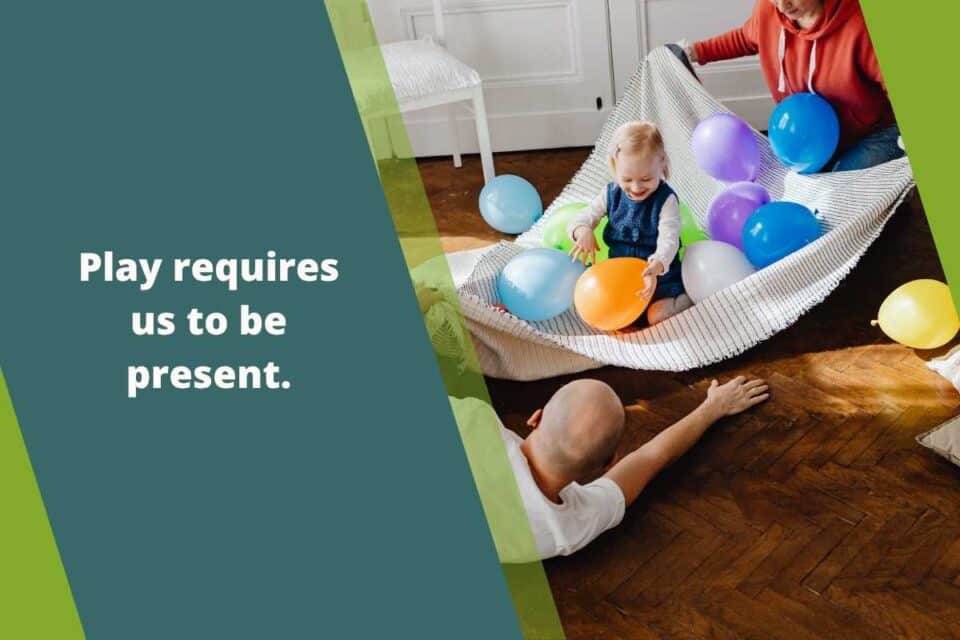
Play requires us to be present. We’ve said that a couple of times throughout this presentation. One of the things our professors in graduate school summarized very simply was that depression has to do with the past, anxiety has to do with the future, and living happens in the present. That ties in really well with play and that mindfulness element.
There’s also research on how play influences our perspective on the world. One study, which was conducted during COVID, found that people had much more positive outlooks, even when they were engaging in the same types of self-care activities. Those who approached those activities with more playfulness—being open-ended and less outcome-focused—tended to report more positive perspectives during that pivotal time.
Reflecting back, thinking about our values, thinking about the kinds of things we want in our lives, and making the time for them is important. We have to be intentional. It’s very easy to get bogged down by adult life, responsibilities, and everything else, but we also have to follow through.
There are a lot of times when we feel too stressed or too busy, so we give up our self-care.
But when we feel too busy, that’s often when we need to slow down the most. Play can be one of those ways to do that.
A lot of the time, when we’re dealing with a lot of stressors, it’s hard to imagine taking time for ourselves and using it for something that feels as “unproductive” as play. But research shows—and many of the clients we’ve worked with after incorporating play into their lives have reported—that it can create a shift in perspective or help lift some of that emotional weight.
So it’s really about committing to the side quest and seeing where it takes us.
Takeaways
Practice Self-care through play!
- Challenge yourself by allowing yourself to be bad at something!
- Make a list of activities you like to do by yourself or with others. Visit it regularly.
- Check out the National Institute of Play’s website and discover your unique play style!
Some of our takeaways: we can practice self-care through play. And we want to challenge everyone to allow themselves to be bad at something.
Just because we want to perform well in our careers doesn’t mean we can’t start a new painting hobby and simply see what happens. If we’re going out for karaoke, we’re all there to sing and have a good time. We’re not there to earn a gold star or deliver a perfect performance.
Try making a list of activities you enjoy doing by yourself—things you can spend a long time doing and really get lost in. Make that list, and come back to it regularly.
You can even incorporate a craft into it. Put your activities on popsicle sticks, color-code them, and pick one out. You can separate activities that are free from activities that require other people. Or, if you’re not doing the popsicle sticks, simply make a list and try to incorporate that play with intention.
We also mentioned the different play styles. The National Institute of Play has a quiz on their website that you can take to better understand yourself and your preferred forms of play. That can be a great resource to take with you and consider for your future play sessions.
This webinar was facilitated by Rae. Rae works with kids, teens, adults, and couples in areas including anxiety, ADHD, neurodivergence, depression, LGBTQIA+ topics, parenting, self-esteem, and much more. They use a person-centered approach and a child-centered play therapy approach, while also integrating a variety of other theories, ranging from Polyvagal Theory, which focuses on the brain and nervous system, to Emotionally Focused Therapy, Cognitive Behavioral Therapy, and Dialectical Behavior Therapy. They really try to tailor the work they do to their clients based on their individual needs.
For more information, you can check out our information and reach out for a free consultation.
Thank you for joining us. The feedback form will be in the chat. We really appreciate you taking the time to be here.
Sources:
- https://www.tandfonline.com/doi/full/10.1080/13607863.2024.2372471#abstract
- https://www.tiimoapp.com/resource-hub/gamification-adhd
- https://www.teambonding.com/the-power-of-play/
- https://aifs.gov.au/growing-australia/news-hub/pretend-play
- https://link.springer.com/article/10.1007/s10643-026-02150-7
- https://www.cdc.gov/parenting-toddlers/communication/special-playtime.html
- https://ars.els-cdn.com/content/image/1-s2.0-S0149763418305116-gr1_lrg.jpg
- https://humanperformance.ie/the-properties-of-play/
- https://nifplay.org/science/play-style
- https://www.npr.org/transcripts/395065944
- https://pmc.ncbi.nlm.nih.gov/articles/PMC11847638/
- https://www.sciencedirect.com/science/article/pii/S0149763418305116
Feel free to visit additional resources:
1. Articles on specific topics on our blog.
2. RSVP for one of our free monthly webinars (or view past webinars)
3. Follow us on Facebook and Instagram for additional interviews and tips
4. Take another one of our self-test quizzes
5. Schedule a consult and find out how we can support you.
If you have any questions or would like additional information, our team is always here to support you. If you’re interested in exploring services at Eddins Counseling & Therapy Group, we offer in-person counseling at two convenient Houston locations: our Heights office near T.C. Jester and our Montrose office on West Alabama. We also provide virtual counseling and therapy services for added flexibility and accessibility.
We offer a variety of services, including individual therapy, play therapy, career counseling, trauma-informed therapy, EMDR, Brainspotting, and many other approaches designed to support children, teens, adults, couples, and families.
To learn more about our services or schedule an appointment, give us a call at 832-559-2622 or schedule online. We’re here to provide compassionate support whenever you need it.